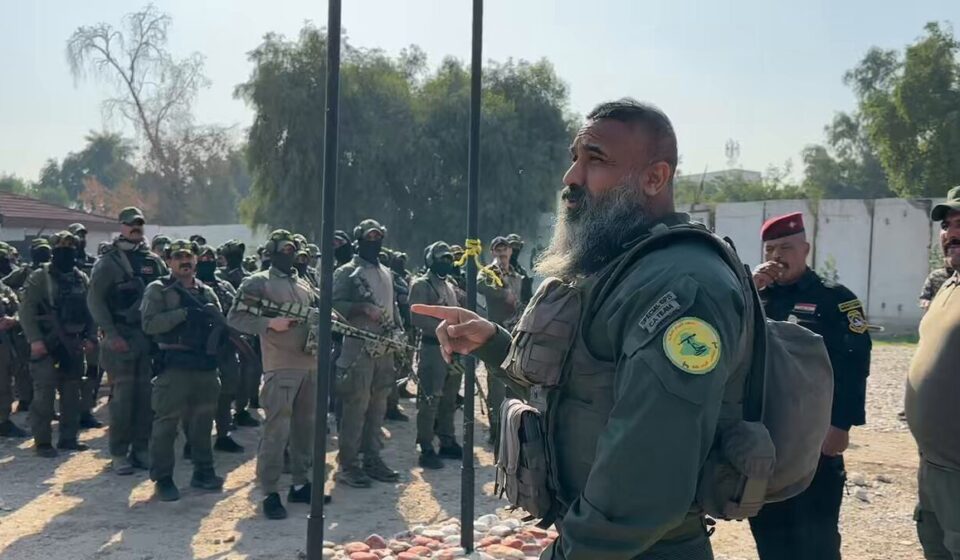
2024-12-04: Shia Militias Vow to Defend Shrines in Syria

According to Miqrab AI’s analysis of 680 trending X / Twitter posts in Iraq on December 4, 2024, the primary digital conversations were dominated by the escalating conflict in Syria and its direct implications for Iraq. A significant narrative, driven by high-engagement accounts linked to Shia militias, revolved around vows to defend Shia holy sites in Syria, particularly the Sayyidah Zaynab Shrine, using strong sectarian rhetoric. This was coupled with widespread discussion about a potential official Iraqi military intervention, as the Iraqi Parliament granted Prime Minister Mohammed Shia Al Sudani authorization to take necessary measures to protect national security. Accounts also commemorated the past role of figures like Qasem Soleimani in protecting Shia areas in Syria, while others expressed deep concern about the conflict spilling over into Iraq and warned against renewed sectarian strife. These conversations reflect a country on high alert, grappling with the immediate security threats on its border and the resurgence of sectarian tensions fueled by the regional turmoil.
Table Of Content
- 1. Shia Militias Vow to Defend Shrines in Syria
- 2. Possible Iraqi Military Intervention in Syria
- 3. Commemorating Qasem Soleimani’s Role in Syria
- 4. Reports on the Military Situation in Syria
- 5. Factions Reforming to Fight in Syria
- 6. Warnings of Sectarian Strife Spilling into Iraq
- 7. Critique of Political Islam and Past Regimes
- 8. PM Al-Sudani Addresses Parliament on Regional Threats
- 9. Concerns Over Information and Disinformation
- 10. Sectarian Mobilization and Criticism
Today’s Top 10 X (Twitter) Trends in Iraq:
1. Shia Militias Vow to Defend Shrines in Syria
The most prominent narrative centered on Iraqi Shia militia figures vowing to intervene in Syria to protect religious shrines. Abu Azrael (Post Impact: 100%), a commander in the Popular Mobilization Forces (PMF), posted a video with the declaration, “Zaynab will not be taken captive twice,” and stated, “We are the soldiers of Abbas.” Shaho Al-Qaradaghi (Post Impact: 7%) amplified this message, quoting Abu Azrael as being ready to be the “first martyr to go to the shrine of Sayyida Zaynab.” This sentiment was echoed by others like Issam Hussein (Post Impact: 23%), who cursed historical figures associated with the Battle of Karbala, linking the historical event to the current conflict. The posts frame the potential intervention as a sacred duty to prevent a repeat of historical traumas, galvanizing support along sectarian lines.
2. Possible Iraqi Military Intervention in Syria
Discussions surged around an official Iraqi military intervention in Syria following authorization from the Iraqi Parliament. Hassan Al-Kaabi (Post Impact: 13%) announced that “The Iraqi army will enter Syria” and issued a warning to the opposition forces. Omar Al-Janabi (Post Impact: 9%) noted that Prime Minister Mohammed Shia Al Sudani received authorization from parliament to make a decision on war, describing it as potentially “the most dangerous decision since the establishment of the current regime in 2003.” Adnan Al-Taie (Post Impact: 3%) similarly reported that Parliament granted Al Sudani a “license to carry arms abroad.” This reflects a significant political development, signaling Iraq’s readiness to become directly involved in the Syrian conflict to protect its national security.
3. Commemorating Qasem Soleimani’s Role in Syria
Amidst the renewed conflict, several accounts commemorated the late Iranian general Qasem Soleimani for his role in defending Shia areas in Syria. Hassan Al-Kaabi (Post Impact: 16%) praised him as the “Che Guevara of the Shia,” crediting him with protecting the besieged towns of Nubl and Al-Zahraa for four years. Similarly, Issam Hussein (Post Impact: 12%) wrote, “May God have mercy on you, Qasem Soleimani… for four years the Shia area of Nubl and Al-Zahraa was besieged and you did not give it to the terrorists.” These posts draw a contrast between Soleimani’s perceived success in protecting these communities and the current advances by opposition forces, invoking his memory as a symbol of resistance and effective leadership.
4. Reports on the Military Situation in Syria
Users closely followed and shared unconfirmed reports about the rapidly changing military landscape in Syria. Hassan Al-Kaabi (Post Impact: 23%) claimed that Russia would launch “unprecedented” airstrikes in Idlib and that the Turkish army had completely withdrawn from the area. Omar Abd Al-Sattar Mahmud (Post Impact: 12%), citing Algerian news, reported that Polisario Front fighters, brought by Algeria and Iran to support the Syrian regime, were captured by rebels near Aleppo. David Yassin (Post Impact: 6%) commented that Russia was withdrawing from Syrian cities but would maintain its presence in Tartus, leaving the field open for rebels. These posts highlight the intense monitoring of foreign military movements and battlefield developments by the Iraqi audience.
5. Factions Reforming to Fight in Syria
The escalation in Syria has prompted Iraqi militia leaders to reactivate their forces. Aus Al-Khafaji (Post Impact: 3%), leader of the Abu al-Fadl al-Abbas forces, issued a statement announcing the “temporary and emergency” reformation of his group and opened the door for volunteers to protect the shrines of Sayyidah Zaynab and Sayyidah Ruqayyah in Syria. His announcement was reported by other accounts, including Shaho Al-Qaradaghi (Post Impact: 3%) and Haider (Post Impact: 2%). Al-Khafaji’s statement specified that any action would require permission from the Iraqi government and religious leadership in Najaf and that their presence would be limited to the vicinity of the shrines.
6. Warnings of Sectarian Strife Spilling into Iraq
Amid the turmoil, voices emerged warning of the conflict’s potential to reignite sectarian violence within Iraq. Sheikh Thair Al-Bayati (Post Impact: 5%) issued a stark warning to residents of Sunni-majority provinces to avoid any demonstrations or calls to arms, fearing a “dirty game and a malicious plot… to crush the Sunni component.” In contrast, Haider (Post Impact: 7%) shared a statement from the “Association of Iraqi Scholars” condemning the Syrian opposition for killing innocents and affirming that “the Sunnis of Iraq will not be dragged into this valley again” and will fight alongside their “brothers” against extremists. These posts illustrate the deep-seated fears and conflicting pressures facing Iraq’s diverse communities as the Syrian war intensifies.
7. Critique of Political Islam and Past Regimes
A notable counter-narrative emerged criticizing the current political order dominated by religious parties and militias. Faig Al-Sheikh Ali (Post Impact: 15%), a self-described secular liberal, stated he would not support “fake political Islam” and argued that former leaders like Saddam Hussein and Hosni Mubarak were “more honorable” than the Muslim Brotherhood and the Shia and Sunni militias that replaced them. This sentiment was echoed in a different form by Dr. Laith Shubbar (Post Impact: 6%), who questioned why Gulf countries have progressed while Iraq has been left behind, implicitly criticizing the post-2003 political system.
8. PM Al-Sudani Addresses Parliament on Regional Threats
The Iraqi government’s official response to the crisis was also a topic of discussion. The official account of Mohammed Shia Al Sudani (Post Impact: 5%) reported on his meeting with the Council of Representatives, where he and his ministers reviewed “policies and measures taken to confront the challenges of the region.” He emphasized the importance of integration between the executive and legislative authorities to achieve government objectives. Similarly, political leader Ammar Al-Hakim (Post Impact: 3%) posted extensively about meetings in Diyala, stressing the need for national unity, a unified political stance in support of the government, and diplomatic engagement to manage the fallout from the Syrian crisis.
9. Concerns Over Information and Disinformation
The flood of news from Syria has been accompanied by a parallel information war, with some users actively trying to counter what they see as dangerous narratives. Mahdi Majeed (Post Impact: 7%) posted a detailed rebuttal to claims that Syrian Islamist groups would invade Iraq, citing alleged conversations with Israeli intelligence and security sources. He accused figures like Muhammad Ali Al-Husseini of spreading false information to create a pretext for pro-Iran militias to enter Syria and suppress Iraqi Sunnis. This highlights the deep mistrust and competing narratives surrounding the conflict’s potential impact on Iraq.
10. Sectarian Mobilization and Criticism
The sectarian rhetoric used by militia figures to rally support for intervention in Syria drew sharp criticism from other users. Othman Al-Mukhtar (Post Impact: 10%) shared a video of “ideological guidance” for the PMF, describing its discourse as a “despicable sectarian speech” that promotes division and incitement, making coexistence impossible. The video, according to Al-Mukhtar, showed the speaker talking about Syria as if it were a town in Iraq, not a separate country. This captures the critical perspective that views the militia mobilization not as a defense of national security, but as a dangerous and divisive sectarian project.