2024-12-06: Syrian Regime Collapse and Border Security Fears

Based on an analysis of 898 X / Twitter posts by Miqrab AI on December 6, 2024, the primary narrative dominating Iraqi social media is the rapid collapse of Bashar al-Assad’s regime in Syria and its direct implications for Iraq. Key themes include widespread fear of a security vacuum on the Iraq-Syria border, the potential resurgence of extremist groups like ISIS, and an intense debate over whether Iraq should intervene militarily. Pro-Iranian accounts express alarm, warning that the fall of Damascus will lead to the fall of Baghdad, while others argue that Iraq must not send its citizens to die for a foreign dictator, framing the conflict as a Syrian internal affair. This event is widely viewed as a significant geopolitical shift, with discussions touching on Iran’s waning influence, Russia’s perceived abandonment of its ally, and the potential for further destabilization across the Middle East.
Table Of Content
- 1. Syrian Regime Collapse and Border Security Fears
- 2. Alarms Over Extremist and Sectarian Violence in Syria
- 3. Intense Debate on Iraqi Military Intervention in Syria
- 4. Geopolitical Interpretations of the Syrian Conflict
- 5. Reports of Iranian Withdrawal and Waning Influence
- 6. Support for Muqtada al-Sadr’s Non-Intervention Stance
- 7. Predictions of Further Regional Destabilization
- 8. Highlighting US Hypocrisy Towards Syrian Rebel Leader Al-Jolani
- 9. Condemnation of Sectarianism as a Destructive Force
- 10. Reports on the Rapid Fall of Major Syrian Cities
Today’s Top 10 X (Twitter) Trends in Iraq:
1. Syrian Regime Collapse and Border Security Fears
The most prominent story is the concern over the rapid collapse of the Syrian government and the subsequent security vacuum on the Iraqi border. Faiq Al-Sheikh Ali/Kalimati Lil Tarikh (Post Impact: 100%) reported that Syrian army forces and the Iranian Revolutionary Guard were fleeing from Syrian cities like Deir ez-Zor and Abu Kamal into Iraq, describing the situation as “very dangerous” based on international and Iraqi intelligence. This sentiment was echoed by Hassan Al-Kaabi | Hassan Alkaabi (Post Impact: 71%), who warned, “If Damascus falls, Baghdad will fall.” In another post, Hassan Al-Kaabi (Post Impact: 43%) elaborated on this fear, stating that if Damascus falls, everyone in the region should prepare to defend themselves. This narrative is fueled by reports from Hayder (Post Impact: 6%) of the Syrian army’s 4th Division withdrawing from Abu Kamal on the Iraqi border.
2. Alarms Over Extremist and Sectarian Violence in Syria
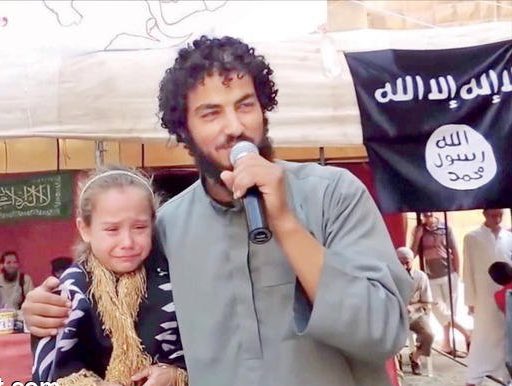
A significant number of posts express alarm over the nature of the opposition groups advancing in Syria, drawing parallels to ISIS. Hassan Al-Kaabi | Hassan Alkaabi (Post Impact: 72%) shared an image of an ISIS member with a Yazidi child, stating that the followers of al-Jolani are no different. Similarly, Huroof Sumaria (Post Impact: 23%) posted a video allegedly showing Chechen, Afghan, and Turkish militants searching for Shia families and Syrian government employees to “liquidate and slaughter them.” Dr. Hayder Al-Barzanji (Post Impact: 17%) condemned the “hateful sectarian tone,” comparing it to the rhetoric that led to the rise of ISIS in Iraq. The concern over sectarian targeting was also highlighted by Mazen Al-Zaidi (Post Impact: 15%), who questioned why the first thing Syrian “revolutionaries” ask citizens is, “What is your sect?”
3. Intense Debate on Iraqi Military Intervention in Syria
The possibility of Iraqi intervention in Syria is a major point of contention. Some voices strongly oppose involvement, such as Ahmad Mulla Talal (Post Impact: 18%), who urged Iraq to “fortify your country, and do not send your sons to be killed to defend a criminal, deposed Ba’athist dictator.” Former Prime Minister Haider Al-Abadi (Post Impact: 13%) adopted a more measured tone, stating Iraq should avoid “adventures” but is ready for war “if it is imposed on us.” Conversely, others see intervention as necessary for Iraq’s own security. Hassan Al-Kaabi (Post Impact: 13%) argued, “If we do not defend the regime in Syria, the next target will be Iraq, Jordan, and the Gulf.” Ezzat Alshabandar | Ezzat Alshabandar (Post Impact: 19%) framed the conflict in starker terms, claiming Iraq is the “final square for a large project” that began in Gaza and has now reached Iraq’s doorstep.
4. Geopolitical Interpretations of the Syrian Conflict
Several commentators analyzed the broader geopolitical dynamics behind the events in Syria. Ali Fadhil _ Ali Fadhil (Post Impact: 19%) claimed he had long predicted a trade-off: “Ukraine in exchange for Syria,” suggesting that Putin abandoned Assad as part of a larger deal. He criticized Iraqis who align with either Putin or Biden, calling them both unreliable. Sufian Al-Samarrai (Post Impact: 16%) interpreted comments from Bashar al-Assad’s cousin, Rami Makhlouf, as a sign that the Alawite community is preparing to retreat to its heartlands, indicating an impending partition of the country. This partition theory was also supported by David Yassin (Post Impact: 9%), who predicted Syria is heading towards a “tripartite division,” including an autonomous Kurdish region.
5. Reports of Iranian Withdrawal and Waning Influence
The perceived withdrawal and defeat of Iranian-backed forces in Syria is a recurring theme. The highest-impact post from Faiq Al-Sheikh Ali/Kalimati Lil Tarikh (Post Impact: 100%) explicitly mentioned the flight of the Iranian Revolutionary Guard alongside the Syrian army. This is seen by some as a major blow to Tehran’s regional power. Salim Al-Jomaili (Post Impact: 7%) argued that “Iran is abandoning its ally Assad,” and predicted that the “fall of Damascus means the fall of the turban in Tehran.” David Yassin (Post Impact: 8%) stated bluntly, “Iran is finished in Syria,” adding that Iran has lost its assets in Gaza, Lebanon, Syria, Iraq, and Yemen.
6. Support for Muqtada al-Sadr’s Non-Intervention Stance
The position of Shia cleric Muqtada al-Sadr, who has called for non-intervention in Syria, received significant attention and praise from several accounts. Salim Al-Jomaili (Post Impact: 8%) described al-Sadr’s call as an act of “wisdom and foresight” that would spare Muslim blood. Salam Al-Husseini (Post Impact: 8%) contrasted al-Sadr’s stance with the pro-Iran Coordination Framework factions, questioning why they criticize al-Sadr for his position when they themselves, despite holding power, are not intervening, calling them cowards hiding behind internal excuses. Hassan Al-Kaabi (Post Impact: 21%) noted that the leader of the Houthis in Yemen, Abdul-Malik Badr al-Din al-Houthi, holds a similar view to al-Sadr on the Syrian events.
7. Predictions of Further Regional Destabilization
The collapse in Syria is viewed by some as a precursor to wider instability in the Middle East. Alshabandar (Post Impact: 28%) posted an image of Saudi Crown Prince Mohammed bin Salman and warned, “After Syria… we will witness a popular movement in Saudi Arabia.” Liqaa Maki (Post Impact: 8%) stated that the victory of the revolution in Syria is the “beginning of a change in everything we know in the Arab Mashreq since the invasion of Iraq in 2003,” predicting that Iraq in particular will be affected by violent repercussions. Alshabandar (Post Impact: 8%) also bleakly predicted that “Syria will be the second version of Libya.”
8. Highlighting US Hypocrisy Towards Syrian Rebel Leader Al-Jolani
Several posts highlight what they describe as American hypocrisy regarding Syrian rebel leader Abu Mohammad al-Jolani. Mahdi Majeed (Post Impact: 14%) pointed out that the U.S. has offered a $10 million reward for al-Jolani’s capture since 2017, yet CNN recently conducted a face-to-face interview with him. He described the U.S. as a “hypocritical, lying state” responsible for the world’s problems. In another post, Mahdi Majeed (Post Impact: 5%) drew a parallel, stating that just as the global press, including CNN, initially highlighted the “merits” of ISIS after they took Mosul, history is repeating itself with the positive coverage of al-Jolani.
9. Condemnation of Sectarianism as a Destructive Force
Amidst the conflict, some voices called for rejecting sectarianism and promoting coexistence. Dr. Hayder Al-Barzanji (Post Impact: 17%) lamented the “hateful sectarian tone” in Syria, warning that its promoters have not learned from the experience of ISIS in Iraq. He pleaded, “When will you purify yourselves from your filth, for God’s sake.” In a similar vein, Mustafa Al-Dulaimi (Post Impact: 6%) asserted that “sectarianism does not build countries,” and that coexistence, brotherhood, and tolerance are the foundation of a state. He advised people not to listen to extremists from either side, calling them the basis of sedition and the destruction of nations.
10. Reports on the Rapid Fall of Major Syrian Cities
Accounts on Iraqi X / Twitter provided rolling updates on the Syrian opposition’s rapid advances and the collapse of government control in key cities. Sufian Al-Samarrai (Post Impact: 15%) announced the “fall of the Assad regime forever in the proud city of #Suwayda,” later adding that the fall of Damascus was hours away. Hayder (Post Impact: 12%) also reported the fall of Suwayda province to “terrorist organizations” as the Syrian army collapsed. Omar Abd Al-Sattar Mahmud (Post Impact: 6%) and Hayder (Post Impact: 7%) both reported that the Syrian army had withdrawn from Homs, with the latter adding that they had also withdrawn from parts of Daraa and Deir ez-Zor.