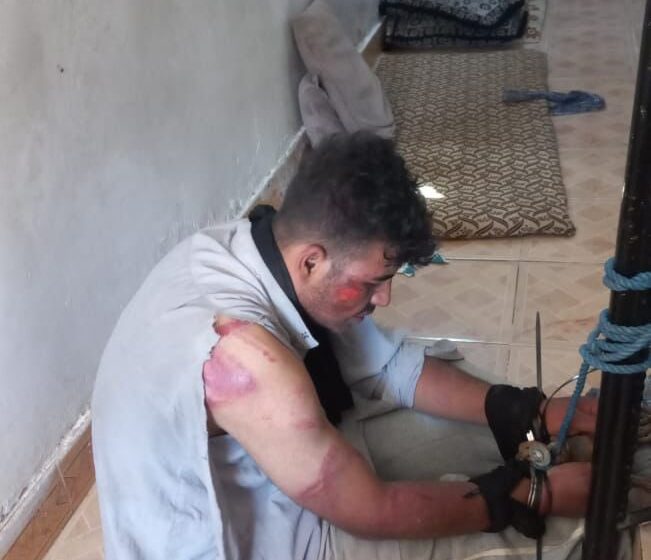
2024-12-14: Iraqi Man Tortured for Tearing Soleimani Poster

An analysis of 563 X / Twitter posts trending in Iraq on December 14, 2024, by Miqrab AI, reveals a landscape dominated by the regional fallout from the collapse of the Assad regime in Syria and its direct impact on domestic Iraqi politics. The most viral story, generating significant outrage, concerns an Iraqi youth allegedly arrested and tortured by pro-Iranian militias in Diyala for tearing down a poster of Qasem Soleimani. This incident has amplified narratives of Iranian overreach and the brutality of its proxies. Other major themes include rising sectarian rhetoric, with some Shia accounts urging self-preservation and distrust of Sunnis following events in Syria, while others warn of plots to destabilize Iraq. Discussions also centered on the role and future of the Popular Mobilization Forces (PMF), the implications of U.S. Secretary of State Antony Blinken’s visit to Baghdad, and accusations of property seizure targeting Iraqis in Damascus.
Table Of Content
- 1. Iraqi Man Tortured for Tearing Soleimani Poster
- 2. Syria’s Collapse Sparks Debate on Iran’s Influence
- 3. Rising Sectarian Tensions and Calls for Self-Defense
- 4. Blinken’s Baghdad Visit Fuels Speculation on US Policy
- 5. PMF Secures Syrian Border Amid Praise and Scrutiny
- 6. Syrian Opposition Reportedly Seizes Iraqi-Owned Hotels
- 7. Debating “Change” vs. Stability Under Current Government
- 8. Muslim Brotherhood Accused of Betrayal in Syria
- 9. Warnings of Renewed Sectarian Violence in Iraq
- 10. Contrasting Views on Turkish and Iranian Regional Roles
Today’s Top 10 X (Twitter) Trends in Iraq:
1. Iraqi Man Tortured for Tearing Soleimani Poster
A story of a young Iraqi man allegedly arrested and tortured in Diyala province for tearing down a poster of the late Iranian general Qasem Soleimani has gone viral, sparking widespread condemnation. Accounts like Othman Al-Mokhtar (Post Impact: 95%) and Mahdi Majeed (Post Impact: 46%) shared images of the man, showing signs of severe abuse, claiming he was detained by police and then subjected to torture by pro-Iranian militias. Bahaa khaleel (Post Impact: 19%) contrasted the incident with discussions about Syria’s notorious Sednaya prison, stating, “they condemn the crimes of the Ba’ath while they are more criminal than it.” The posts call for international human rights organizations to intervene and frame the incident as proof of the oppressive influence of Iranian-backed groups within Iraq, with Amer Ibrahim (Post Impact: 8%) referring to the perpetrators as “the despicable slaves of Khamenei.”
2. Syria’s Collapse Sparks Debate on Iran’s Influence
The recent collapse of the Assad regime in Syria has triggered extensive discussion about the weakening of Iran’s regional influence and the “Axis of Resistance.” Salim Al-Jumaili (Post Impact: 33%) contrasted an image of Qasem Soleimani on the ruins of Aleppo with one of Turkish officials in Damascus, highlighting Iran’s defeat. Ahmed Abdul Sada (Post Impact: 14%) blamed the “Muslim Brotherhood conspiracy” for undermining the Resistance axis, accusing them of treachery. Meanwhile, Omar Abdul Sattar Mahmoud (Post Impact: 12%) bluntly stated that “the fall of Bashar brought down Iran’s axis with it.” This sentiment was echoed by Liqaa Maki (Post Impact: 9%), who predicted the transformation in Syria will have a major and unstoppable impact on both Lebanon and Iraq.
3. Rising Sectarian Tensions and Calls for Self-Defense
The upheaval in Syria has fueled a surge in sectarian discourse in Iraq. Some Shia commentators are advocating for a focus on self-protection and disengagement from regional conflicts. Ahmed Al-Thawaq (Post Impact: 47%) posted an appeal to fellow Shias, saying, “We have nothing to do with them anymore… Let’s protect ourselves from their treachery… Don’t give up your weapons, and don’t defend anyone but yourselves and your children.” Similarly, Hassan Alkaabi (Post Impact: 19%) argued that after sacrificing leaders and youth for Gaza, it is now time for Shias to focus on building their own cities. Conversely, Omar Al-Janabi (Post Impact: 18%) warned that members of the Sadrist movement are threatening Sunnis with a return to sectarian killing.
4. Blinken’s Baghdad Visit Fuels Speculation on US Policy
A visit by U.S. Secretary of State Antony Blinken to Baghdad prompted a variety of interpretations regarding American intentions toward Iraq. Dr. Qusay Shafiq (Post Impact: 11%) highlighted the lack of official Iraqi reception, commenting sarcastically on the state of Iraq’s sovereignty. Some accounts shared a Bloomberg report, including Haidar (Post Impact: 5%), suggesting Blinken urged Prime Minister Al-Sudani to take “strict measures” against factions, exploiting Iran’s perceived weakness. In contrast, other posts from accounts like Haidar (Post Impact: 8%) quoted Blinken expressing amazement at the development and vitality of Baghdad, a statement seen by some as supportive of the current government and by others as disconnected from reality.
5. PMF Secures Syrian Border Amid Praise and Scrutiny
The Popular Mobilization Forces (PMF) were a prominent topic, with many posts highlighting their role in securing the Iraq-Syria border following the events in Damascus. Hassan Alkaabi (Post Impact: 24%) shared a photo of PMF forces at the border, captioned “Your Popular Mobilization.” Other accounts like Wasan Al-Shaikhli (Post Impact: 7%) and Haidar (Post Impact: 7%) praised the forces for continuing their duties despite a severe dust storm. However, a post from Dr. Qusay Shafiq (Post Impact: 23%) offered a critical political perspective, accusing the Coordination Framework parties of “handing over the head of the Hashd to the Americans” after they took power following Muqtada al-Sadr’s withdrawal from parliament.
6. Syrian Opposition Reportedly Seizes Iraqi-Owned Hotels
A highly impactful post alleges that Iraqi assets in Damascus are being seized by the new Syrian opposition forces. The account _. suhair Al_jumaili (Post Impact: 100%) reported that the Syrian opposition has taken control of more than 30 hotels owned by Iraqis near the Sayyidah Zaynab shrine in Damascus. This claim, which spread widely despite being from a single source in this dataset, stokes fears among Iraqis, particularly Shias who have invested in religious tourism infrastructure in Syria, about the financial and political consequences of the regime change.
7. Debating “Change” vs. Stability Under Current Government
Amid regional turmoil and calls for political change in Iraq, a counter-narrative has emerged emphasizing the country’s relative stability and progress under the current government. Ahmed Al-Thawaq (Post Impact: 11%) argued against an armed revolution, stating that Iraqis are living well, the economy is recovering, and the current government is the best so far. He warned that any attempt at an uprising would be considered a rebellion and suppressed. Similarly, Issam Hussein (Post Impact: 10%) mocked Ba’athists for seeking change in Iraq, quipping, “You were just changed in Syria a week ago.” These posts represent a viewpoint that prioritizes stability over the uncertainty of another political upheaval.
8. Muslim Brotherhood Accused of Betrayal in Syria
A distinct narrative has appeared accusing the Muslim Brotherhood of betraying the “Axis of Resistance” in Syria, thereby serving Israeli interests. Ahmed Abdul Sada (Post Impact: 14%) wrote a lengthy post describing the events in Syria as a “conspiracy” executed by the Muslim Brotherhood, accusing the group of being ungrateful for past Iranian support for Turkey’s Erdogan and Qatar. He argued that the goal is to eliminate Hezbollah and enable Israel’s regional plans. Al-Shabandar (Post Impact: 34%) also posted a warning to those who he says are dreaming of and seeking to create sedition in Iraq, stating “You are failures and your efforts are in vain.”
9. Warnings of Renewed Sectarian Violence in Iraq
Some accounts are drawing parallels between current tensions and the peak of Iraq’s sectarian civil war, warning of a potential resurgence. Othman Al-Mokhtar (Post Impact: 11%) marked the anniversary of a 2006 Sunday Telegraph report on a mass grave in Sadr City, blaming Muqtada al-Sadr’s Mahdi Army for killing Sunnis based on their identity. In a similar vein, Omar Al-Janabi (Post Impact: 7%) asserted that the Sadrist movement is the “nucleus” for extremist Shia groups and suggested it may be preparing its base for a new round of sectarian conflict by escalating inflammatory rhetoric.
10. Contrasting Views on Turkish and Iranian Regional Roles
The new geopolitical reality in Syria has led to comparisons between the roles and perceptions of Turkey and Iran in the region. Salim Al-Jumaili (Post Impact: 33%) contrasted Iran’s military presence, symbolized by Qasem Soleimani in a destroyed Aleppo, with Turkey’s diplomatic presence, represented by its ministers drinking coffee in Damascus. This post portrays Turkey’s influence as more civil and successful. In direct opposition, Abu Azrael (Post Impact: 24%) posted an image with the hashtag #Erdogan_Trojan_Horse_Against_Muslims, reflecting a deep suspicion of Turkish President Erdoğan’s motives and portraying him as a threat to the Muslim world.