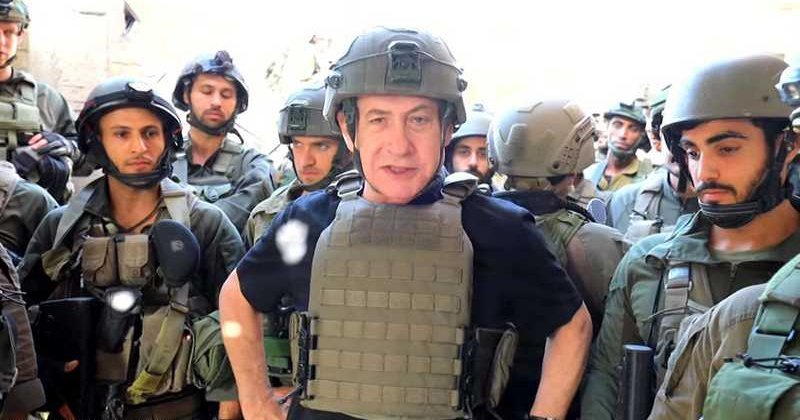
2024-12-16: Fears of Imminent Military Escalation in Syria and the Region

Based on a Miqrab AI analysis of 559 X / Twitter posts trending in Iraq on December 16, 2024, the primary digital conversations revolved around the volatile geopolitical situation in the region, with a significant focus on the aftermath of the regime change in Syria. Key narratives included widespread reports of an imminent major military event, with the United States warning its citizens to leave Syria and Israeli media alluding to a significant development. This atmosphere of tension was compounded by discussions about Israel’s potential military operations in Syria and a predicted strike against Houthi forces in Yemen. Internally, the execution of alleged ISIS members sparked a sectarian debate, with some accounts framing the sentences as a targeted action against Sunnis. Concurrently, analysts debated the role of Iran in regional instability, the future of Syria’s new leadership, and the potential for similar political changes to occur within Iraq’s own Sunni-majority provinces.
Table Of Content
- 1. Fears of Imminent Military Escalation in Syria and the Region
- 2. Sectarian Tensions Rise Following Syrian Regime Change
- 3. Executions of ISIS Members in Iraq Ignite Sectarian Debate
- 4. Analysis of Syria’s New Leadership and Foreign Influence
- 5. Iran Blamed for Regional Destabilization and Empowering Israel
- 6. Speculation on a “Syria Scenario” in Iraq’s Sunni Provinces
- 7. Raghad Saddam Hussein Congratulates Bahrain on National Day
- 8. Criticism of Bashar al-Assad’s Legacy and Final Statements
- 9. Former PM Haider al-Abadi Launches Initiative for Syria
- 10. The Military and Geopolitical Future of Syria Under HTS
Today’s Top 10 X (Twitter) Trends in Iraq:
1. Fears of Imminent Military Escalation in Syria and the Region
A sense of impending conflict dominated conversations, fueled by high-impact posts warning of major regional developments. Sufian Al-Samarrai (Post Impact: 100%) shared an urgent warning, stating, “America to its nationals: Leave Syria immediately. The situation will be overturned.” This was amplified by Haider (Post Impact: 89%), who cited Israeli media as saying, “all our enemies in the Middle East know that tomorrow something very big will happen.” The posts created a narrative of a coordinated or at least widely anticipated military action involving major regional and international powers, pointing towards a dramatic shift in the security landscape centered on Syria.
2. Sectarian Tensions Rise Following Syrian Regime Change
The fall of the Assad regime in Syria has triggered concerns over sectarian incitement and potential violence, particularly against minority groups. Hassan Al-Kaabi | H𝕒𝕤𝕤𝕒n A𝕝𝕜𝕒𝕒𝕓i (Post Impact: 89%) directly accused Al Jazeera host Faisal al-Qasim of fanning flames, asking, “When will the Druze Ikhwanji Faisal al-Qasim stop inciting against the Shiites and Alawites in Syria?” On the other hand, Mahdi Majeed (Post Impact: 31%) issued a direct appeal to Shiites, Alawites, and Ismailis in Syria, urging them not to form militias and to work with the new government for security, while asking Sunnis to “forget the past and accept everyone.” Another post by Mahdi Majeed (Post Impact: 32%) warned against figures claiming to be political references for Shia Arabs and threatening military intervention, comparing such calls to the pretexts used by Iranian-backed militias.
3. Executions of ISIS Members in Iraq Ignite Sectarian Debate
The Iraqi judiciary’s decision to execute dozens of ISIS members has become a point of contention, with some framing it as a sectarian act. Hassan Al-Kaabi | H𝕒𝕤𝕤𝕒n A𝕝𝕜𝕒𝕒𝕓i (Post Impact: 70%) reported that the judiciary issued a death sentence for 31 members of ISIS. However, other accounts viewed this through a sectarian lens. {Iraq Platform} (Post Impact: 40%) condemned the act as a “new crime in Al-Hout prison,” claiming that 33 Sunni youths were executed and labeling the government “Safavid.” Similarly, Enas Saad, the lawyer (Post Impact: 20%) stated that 33 individuals, all of them Sunni, were executed, calling the government the “Iranian community in Iraq.” Sheikh Thaer Al-Bayati (Post Impact: 20%) described the event as a “mass killing of Sunnis” and warned the government that its fate would be the same as Bashar al-Assad’s.
4. Analysis of Syria’s New Leadership and Foreign Influence
Commentators are closely analyzing the nature of the new leadership in Syria and the involvement of regional powers. Sufian Al-Samarrai (Post Impact: 59%) highlighted a meeting between Al-Qaeda mufti Abdullah al-Muhaysini, the leadership of Hay’at Tahrir al-Sham (HTS), and a Turkish presidential advisor. He described these actors as tools of a “Turkish-Qatari-Iranian trinity” moving against Sunni monarchies. In a different vein, Liqaa Maki (Post Impact: 59%) argued that Syria has shifted from a cautionary tale of a failed revolution to “a model for the victory of peoples” and an inspiration for others, a development he claims is frightening to regional regimes that had hoped for the survival of Assad’s tyranny.
5. Iran Blamed for Regional Destabilization and Empowering Israel
Several analysts on Iraqi X / Twitter pointed fingers at Iran, accusing its regional policies of backfiring and ultimately strengthening its adversaries. Salem Al-Jomaili (Post Impact: 44%) argued that thanks to Iran’s policies, “Israel has become a savage state and a thousand times stronger than it was before Al-Aqsa Flood.” He claimed that Iran entangled its allies in the “axis of resistance” and then abandoned them, leading to losses for Hamas, Hezbollah, and the Assad regime. This sentiment was echoed by Sufian Al-Samarrai (Post Impact: 52%), who predicted a “devastating strike is on the way for the Houthi-Khomeinist gangs” in Yemen. Omar Abd Al-Sattar Mahmoud (Post Impact: 38%) agreed, stating that targeting the Houthis would be a “decisive blow to Iran.”
6. Speculation on a “Syria Scenario” in Iraq’s Sunni Provinces
The swift political change in Syria has led to speculation about whether a similar scenario could unfold in Iraq, particularly in Sunni-majority governorates. Essam Hussein (Post Impact: 42%) suggested that any change scenario in Iraq could only apply to Mosul, Tikrit, and Anbar, the same cities once occupied by ISIS. He framed the potential conflict not as Sunni vs. Shia, but as an internal struggle among Sunni political leaders like Al-Halbousi and Al-Khanjar, who would have to be displaced before any new leadership could emerge. Adding to this context, Othman Al-Mokhtar (Post Impact: 25%) highlighted that Iranian-backed Shiite militias still occupy 13 Sunni-majority areas in Iraq, such as Jurf al-Sakhar, preventing residents from returning for over a decade, which he contrasts with their claims of defending Gaza.
7. Raghad Saddam Hussein Congratulates Bahrain on National Day
Raghad Saddam Hussein (Post Impact: 60%), the daughter of the late Iraqi President Saddam Hussein, posted a message congratulating the Kingdom of Bahrain on its National Day. In her post, which garnered significant engagement, she extended her best wishes to the leadership and people of Bahrain, saying, “I congratulate the Kingdom of #Bahrain, its leadership and people, on the occasion of its National Day. Every year, may you be in goodness, glory, security, and safety.” The post was a straightforward diplomatic gesture that nonetheless attracted attention due to her public profile.
8. Criticism of Bashar al-Assad’s Legacy and Final Statements
Following the collapse of his regime, online commentators heavily criticized Bashar al-Assad’s rule and dismissed his recent statements. Liqaa Maki (Post Impact: 31%) described Assad as a “sick, psychopathic, narcissistic, and dull creature” whose statement from Moscow has no value and only highlights his delusion. Aayad Al-Twfan (Post Impact: 36%) condemned those who now call for accepting the “criminal Bashar the Donkey” for the sake of regional stability, arguing it is an absurd position for those who claim to be secular and moderate. Salem Al-Jomaili (Post Impact: 21%) also quoted Assad’s claim of being a national project leader and dismissed it simply as “delusion.”
9. Former PM Haider al-Abadi Launches Initiative for Syria
Former Iraqi Prime Minister Haider al-Abadi’s “Al-Rafidain Initiative” to support Syria received mixed reactions. Shaho Al-Qaradaghi (Post Impact: 21%) announced that al-Abadi’s Al-Nasr Coalition launched the initiative to provide humanitarian and political support to the Syrian people. Haider Al-Abadi (Post Impact: 12%) himself promoted the initiative as part of Iraq’s responsibility to help build a “smooth, positive, civil, and democratic transition” in Syria. However, the move was met with skepticism by others. Sheikh Thaer Al-Bayati (Post Impact: 11%) sarcastically called al-Abadi “Iraq’s Kissinger,” criticizing him for launching initiatives for Syria while Iraq itself is mired in crisis and corruption. Haider (Post Impact: 11%) framed the initiative as providing aid to the “Al-Nusra Front organization.”
10. The Military and Geopolitical Future of Syria Under HTS
The future of Syria’s security and sovereignty under its new rulers is a subject of intense speculation, with a focus on Israel’s next moves. Dr. Hussein Al-Safi (Post Impact: 59%) shared a video of a military parade for the “Jolani Army,” questioning its ability to defend the country after Israel had already destroyed Syria’s weapons. Meanwhile, David Yassin (Post Impact: 28%) claimed that the Israeli leadership is planning “large-scale operations inside Syrian territory” and has begun moving construction equipment into Syria, suggesting long-term military presence. These posts reflect deep uncertainty about whether the new Syrian authorities can secure the country’s borders and prevent further foreign military intervention.