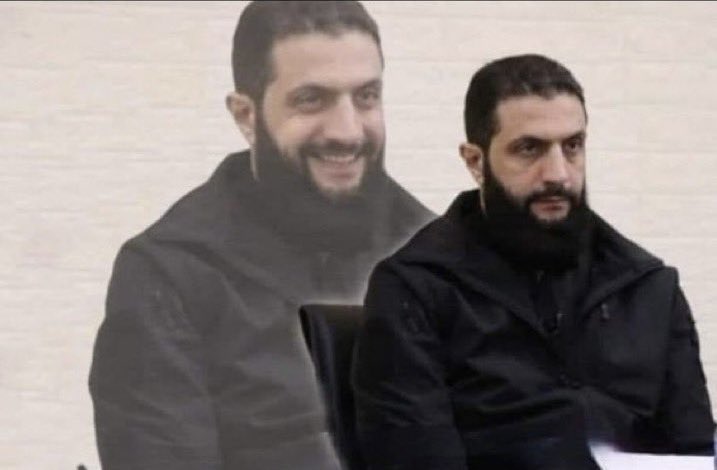
2024-12-24: Intense Debate Over Syrian Leader Ahmed al-Sharaa (al-Jolani)

Based on Miqrab AI’s analysis of 549 posts trending on X / Twitter in Iraq on December 24, 2024, the key themes include intense debate over the political transformation of Syrian leader Ahmed al-Sharaa (formerly al-Jolani), with many comparing his recent actions favorably to the performance of Iraqi politicians over the past two decades. This discussion has fueled a secondary narrative centered on freedom of expression, as numerous journalists and activists rallied in solidarity with media personality Saleh Al-Hamdani, who was reportedly dismissed from his job for praising al-Sharaa’s progress. Concurrently, political figures and the public shared Christmas greetings, though this was overshadowed by controversy surrounding the decision by authorities in Karbala to ban New Year’s celebrations, citing the city’s religious sanctity. Other prominent topics included criticism of Iranian influence in the region, ongoing political maneuvering by figures like Faiq Al-Sheikh Ali, and reports of security incidents involving militias.
Table Of Content
- 1. Intense Debate Over Syrian Leader Ahmed al-Sharaa (al-Jolani)
- 2. Solidarity with Journalist Saleh Al-Hamdani
- 3. Christmas Greetings from Political Figures
- 4. Criticism of Iranian Influence in the Region
- 5. Faiq Al-Sheikh Ali’s “Crushing Force” Narrative Mocked
- 6. Attacks and Criticism Directed at Ghaith Al-Tamimi
- 7. Ban on New Year’s Celebrations in Karbala Sparks Controversy
- 8. Calls to Protect Press Freedom Amidst Lawsuits
- 9. Iraqi Social Cohesion Praised Amid Political Sectarianism
- 10. Reports of Assassination and Military Activity
Today’s Top 10 X (Twitter) Trends in Iraq:
1. Intense Debate Over Syrian Leader Ahmed al-Sharaa (al-Jolani)
The transformation of Syrian leader Ahmed al-Sharaa, formerly known as Abu Mohammad al-Jolani, is the most dominant topic of discussion. A stark divide is visible in the posts. Accounts like Muna Sami (Post Impact: 100%) and Katab Fulan (Post Impact: 15%) share content labeling al-Sharaa as a terrorist, with the latter sharing a 2013 Al-Itijah TV report where al-Jolani allegedly called for the killing of Iraqi Shiites. Conversely, other users praise his recent moves. Ghaith Al-Tamimi (Post Impact: 17%) analyzes the “fall of al-Jolani” as a strategic success that ended Iran’s “terrorist axis” narrative and replaced it with a model of citizenship. Najeh Abbas Al-Mizan (Post Impact: 21%) describes al-Sharaa’s stance as a “great national position.” Meanwhile, Ahmad Abdulsada (Post Impact: 12%) refutes what he calls al-Sharaa’s “laughable lie” about historical grievances, arguing that resistance fighters came to Syria to save minorities from terrorists who wanted to repeat the events of Karbala.
2. Solidarity with Journalist Saleh Al-Hamdani
A widespread campaign of solidarity has emerged for journalist and media personality Saleh Al-Hamdani following his alleged dismissal from the Iraqi Media Network over a post praising Ahmed al-Sharaa’s achievements in Syria compared to two decades of Iraqi politics. Prominent figures are condemning the move as an attack on free speech. Ahmed Albasheer (Post Impact: 26%) expressed his solidarity with Al-Hamdani, Ahmad Mulla Talal, and all journalists facing pressure, stating, “Attempting to silence voices will only produce more of them.” Similarly, Ahmad Mulla Talal (Post Impact: 10%) posted defiantly, “You will not be able to silence us,” using the hashtag #Solidarity_with_Saleh_Al-Hamdani. Accounts like Hussam Alhaj (Post Impact: 14%) and Ghaith Al-Tamimi (Post Impact: 11%) also voiced their support, framing the incident as part of a broader crackdown on dissent.
3. Christmas Greetings from Political Figures
Political figures and public personalities are extending Christmas greetings to Iraq’s Christian community and the world. Raghad Saddam Hussein (Post Impact: 27%) congratulated the “authentic Christians” of her people and all Christians globally, hoping for security and stability in the Arab world. The Prime Minister’s Media Office (Post Impact: 7%) shared images of Prime Minister Mohammed Shia’ Al Sudani attending Christmas Eve Mass. Political leader Ammar Al-Hakim (Post Impact: 5%) shared details of his attendance at mass, emphasizing that religions carry a message of peace and coexistence. Former Prime Minister Mustafa Al-Kadhimi (Post Impact: 3%) also sent his congratulations, calling Christ a symbol of humanity and love.
4. Criticism of Iranian Influence in the Region
Discussions surrounding Iran’s role in the region are prevalent, with a focus on its historical and current influence. Omar Abdul Sattar Mahmoud (Post Impact: 29%) recounted a story about former Iranian Foreign Minister Mohammad Javad Zarif offering to bring Qasem Soleimani to negotiate over Bahrain, Yemen, Iraq, Syria, and Lebanon, only to be rebuffed by Saudi Prince Saud Al-Faisal, who allegedly said, “The Arab world… is none of your business.” In another post, Othman Al-Mukhtar (Post Impact: 12%) describes how Iran’s Revolutionary Guard Corps allegedly co-opted a sulfur spring in Syria’s Al-Bukamal countryside, building a shrine under the pretext that Imam Ali passed through there, using it to attract religious pilgrims and seize land.
5. Faiq Al-Sheikh Ali’s “Crushing Force” Narrative Mocked
Politician Faiq Al-Sheikh Ali and his long-promised “crushing force” have become a subject of ridicule and speculation. Ghaith Al-Tamimi (Post Impact: 29%) sarcastically commented on the end of 2024 with Iraqis still waiting for this force, questioning if it has been postponed to the new year. Political commentator Al-Shabandar (Post Impact: 10%) criticized Al-Sheikh Ali, stating, “You did not achieve the dream of the crushing [force] in Iraq, [and now] you want to turn it on Syria so that fools will believe your heresies.” These comments followed posts by accounts like Wasan Al-Sheikhli (Post Impact: 13%) sharing an image purporting to show Al-Sheikh Ali meeting with figures in Syria.
6. Attacks and Criticism Directed at Ghaith Al-Tamimi
Political analyst and cleric Ghaith Al-Tamimi is a focal point of sharp criticism and personal attacks from opposing accounts. Mulla Aboud Al-Karkhi (Post Impact: 14%) launched a vitriolic attack, calling Al-Tamimi “innately filthy,” “intellectually polluted,” and a “rabid dog,” while referencing past affiliations and accusing him of harboring grudges. The post uses the hashtag #Escape_Faiq_is_coming, linking Al-Tamimi to political figure Faiq Al-Sheikh Ali. Another account, Abu Azrael (Post Impact: 16%), posted a picture of Al-Tamimi with the caption, “Hypocrisy and fear… have unfortunately eaten away at the foundations of the Islamists.” These posts indicate a concerted effort to discredit Al-Tamimi amidst his critical commentary on Iraqi and Syrian politics.
7. Ban on New Year’s Celebrations in Karbala Sparks Controversy
A decision by authorities in Karbala to ban New Year’s celebrations has ignited controversy and criticism online. Shaho Al-Qaradaghi (Post Impact: 8%) reports that the head of the “Committee for the Sanctity of Karbala,” Majida Al-Ardawi, stated that celebrations are banned out of respect for the city’s religious shrines and warned against any activities that “violate the sanctity of the city and its traditions.” Tamara Alkhazraji (Post Impact: 12%) contrasted this with Christmas celebrations in Syria, lamenting that in Karbala, “if someone puts up a tree, they come and break it over his head.” Hiba Al-Nnaayib (Post Impact: 4%) also questioned the decision, asking if the authorities are more concerned with celebrations than with drug dealers or the exploitation of young women.
8. Calls to Protect Press Freedom Amidst Lawsuits
Beyond the specific case of Saleh Al-Hamdani, there is a broader call to protect press freedom against what is described as a systematic campaign of suppression through legal action. Ahmad Mulla Talal (Post Impact: 8%) urged fellow journalists and program hosts to dedicate airtime to confronting the “methodical attack” on freedom of expression by executive authorities and some MPs. Dr. Qusay Shafiq (Post Impact: 8%) reported that he was facing a one-million-dinar fine or four months in jail based on a complaint filed by the Prime Minister. Iyad Al-Anbar (Post Impact: 9%) argues that the ruling powers want journalists to be “cheerleaders” and that what annoys them most is being reminded of their failures.
9. Iraqi Social Cohesion Praised Amid Political Sectarianism
Several posts highlight a narrative of enduring social cohesion among the Iraqi people, contrasting it with the perceived sectarianism of the political class and militias. Mahdi Majeed (Post Impact: 13%) asserts that Iraq is one of the only countries where it is impossible to plant sectarian or ethnic strife, arguing that “only the leaders and militias are sectarian for their interests, while the Iraqi people of all stripes coexist.” The Prime Minister’s Media Office (Post Impact: 4%) also promoted this idea, quoting PM Al Sudani as saying the birth of Christ is an occasion to “emphasize a diverse and unified Iraq,” which is a source of strength. This theme emphasizes national unity as a bulwark against political division.
10. Reports of Assassination and Military Activity
Security-related incidents involving militias are being reported, indicating ongoing tensions. Hanan Abdullatif (Post Impact: 12%) shared a report alleging the assassination of a security official from the Hezbollah Brigades and a military commander in the Popular Mobilization Forces in Jurf al-Sakhr, Babil. In a separate post related to regional movements, Ahmed Al-Hamdani (Post Impact: 12%) reported the alleged “arrival of the first batch of Iranian mercenaries to Syrian territory,” using hashtags referencing Sinjar and the “fifth column.” These posts reflect concerns about the continued activity and influence of armed groups in Iraq and the wider region.