2024-12-26: Iraqi Intelligence Chief’s Controversial Visit to Syria

Based on an analysis of 622 X / Twitter posts by Miqrab AI, the primary narratives trending in Iraq on December 26, 2024, centered on the evolving situation in Syria and its direct implications for Iraq. The most dominant topic was the official visit by Iraq’s intelligence chief to Damascus to meet with Ahmed al-Sharaa, the leader of Syria’s new administration, which sparked a widespread and polarized debate. Commentators questioned the motives and implications of the meeting, with some viewing it as a pragmatic security necessity while others condemned it as a legitimization of a figure previously labeled a terrorist. This discussion was closely linked to broader themes, including fears for the safety of minority groups in Syria, particularly the Alawites and Kurds, and harsh criticism of perceived Iranian influence in fomenting regional instability. Domestically, there were renewed calls for fundamental political change in Iraq, alongside criticism of the current government’s perceived hypocrisy and its actions against journalists.
Table Of Content
- 1. Iraqi Intelligence Chief’s Controversial Visit to Syria
- 2. Warnings Issued to Syrian Alawites and Kurds
- 3. Accusations of Hypocrisy in Iraq’s Stance on Syria’s Leadership
- 4. Fears for Syrian Alawites Amid Reports of Killings
- 5. Journalist’s Cryptic “I Shook Hands with the Devil” Post
- 6. Renewed Calls for Political Change in Iraq
- 7. Criticism of Iranian Interference in the Region
- 8. Analysis of Al-Jolani’s Apparent Mistrust During Meeting
- 9. Allegations of Double Standards in Political Commentary
- 10. Concerns Over Lawsuits Against Iraqi Journalists
Today’s Top 10 X (Twitter) Trends in Iraq:
1. Iraqi Intelligence Chief’s Controversial Visit to Syria
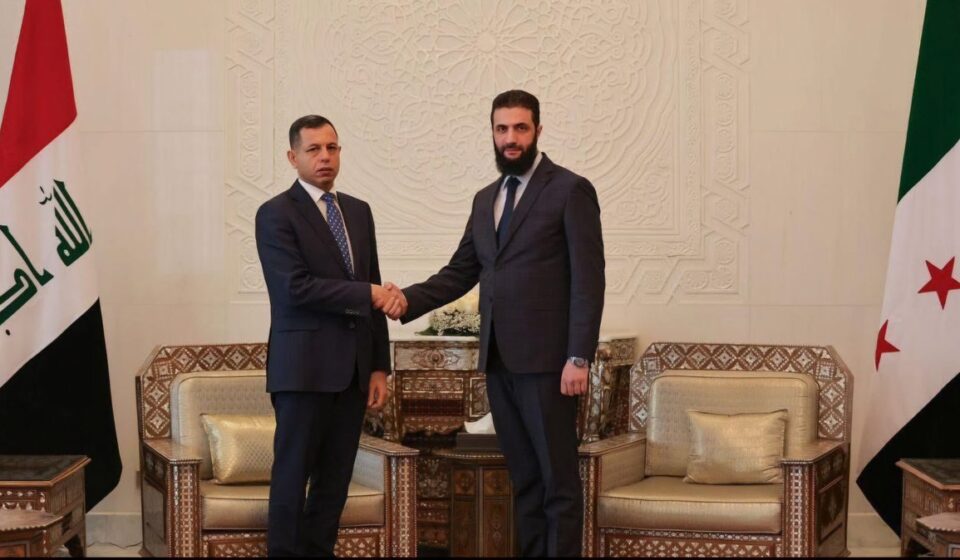
The most engaging topic was the visit of an Iraqi delegation, led by National Intelligence Service Chief Hamid al-Shatri, to Damascus to meet with Ahmed al-Sharaa (formerly known as Abu Mohammad al-Jolani), the head of the new Syrian administration. The reactions were highly divided. Faiq Al-Sheikh Ali/Kalimati lil-Tarikh (Post Impact: 100%) questioned why Iraq sent its intelligence chief instead of its foreign minister, suggesting the motive was to secure sensitive documents held in Syria and Turkey. Others framed the visit as a security imperative rather than a political endorsement. Dr. Haider Al-Barzanji (Post Impact: 35%) described the visit as “security-focused in its entirety” and not an official recognition. Conversely, Dr. Ahmed Al-Abbasi (Post Impact: 26%) expressed outrage, stating, “The head of the largest security agency in Iraq meets the head of the largest terrorist group in the region.” Sheikh Mohammed Al-Basri (Post Impact: 24%) interpreted al-Sharaa’s body language as submission, claiming the visit was to send a message that Iraq’s neutrality during the conflict was not a sign of weakness and that Syria’s new leaders are responsible for border security.
2. Warnings Issued to Syrian Alawites and Kurds
Several high-engagement posts issued stark warnings to minority groups in Syria following the change in leadership. Faiq Al-Sheikh Ali/Kalimati lil-Tarikh (Post Impact: 70%) directly addressed the Alawites of Syria, urging them not to be deceived by Iran again and to remain peaceful after their role in supporting a “hateful dictatorial regime.” He warned that if they did not, “you will be slaughtered like sheep!” In a similar vein, Hassan Al-Kaabi (Post Impact: 28%) advised the Kurds and the Syrian Democratic Forces (SDF) in northern Syria not to surrender their weapons, predicting they would be “at risk of being slaughtered by Jolani’s gangs” and could face a tragic fate similar to that of the Alawites. These posts reflect a deep concern among Iraqi observers about the potential for sectarian and ethnic violence in the new Syria.
3. Accusations of Hypocrisy in Iraq’s Stance on Syria’s Leadership
Users heavily criticized the Iraqi government for what they described as a hypocritical shift in its stance towards Ahmed al-Sharaa and his group. Mahdi Majeed (Post Impact: 12%) highlighted the irony that after thousands of young Shiite men were sent to Syria to fight al-Jolani’s group to “protect the shrine of Sayyida Zainab,” Iraqi leaders were now sending a delegation to “kiss his shoes.” Dr. Qusay Shafiq (Post Impact: 4%) and Zayed Al-Assad (Post Impact: 3%) pointed out that journalist Saleh al-Hamdani was fired for writing positively about al-Sharaa, yet now the head of Iraqi intelligence was officially meeting him. Dr. Ali Al-Jabiri (Post Impact: 4%) mockingly summarized the shift, stating the government went from a slogan of “Zainab will not be captive twice” to placing “Zainab in Jolani’s hands.”
4. Fears for Syrian Alawites Amid Reports of Killings
Beyond general warnings, specific posts raised alarms about ongoing violence against the Alawite community in Syria. Hassan Al-Kaabi (Post Impact: 14%) shared a report alleging that “terrorist gangs” had killed a number of young Alawite men in the city of Tartus. Omar Abd Al-Sattar Mahmoud (Post Impact: 9%) posted a video brief discussing the causes and repercussions of what he termed the “Alawite uprising.” In a more analytical tone, Salim Al-Jomaili (Post Impact: 7%) warned that Iran was beginning to exploit “Alawite blood as a pressure card” to incite sectarian strife and urged the Alawite community to realize that the Assad regime was gone and that they should not become “fuel for foreign interests.”
5. Journalist’s Cryptic “I Shook Hands with the Devil” Post
A highly impactful post by journalist Muna Sami (Post Impact: 64%) captured the sentiment of many critics of the Iraqi delegation’s visit to Syria. The post consisted solely of the phrase “I shook hands with the devil…” accompanied by a photograph of the Iraqi intelligence chief, Hamid al-Shatri, shaking hands with Ahmed al-Sharaa. The brevity and starkness of the message, combined with its high engagement, underscored the deep-seated opposition and moral revulsion felt by a significant portion of the Iraqi audience regarding the diplomatic engagement with Syria’s new leader, whom they continue to view as a malevolent figure.
6. Renewed Calls for Political Change in Iraq
The events in Syria appeared to reinvigorate discussions about the future of Iraq’s own political system. Faiq Al-Sheikh Ali/Kalimati lil-Tarikh (Post Impact: 42%) revisited his prediction about the end of Iraq’s political system in 2024, asserting that while it didn’t happen on that timeline, “the militia regime in Iraq will fall, just as Iran’s militias have fallen in the region.” Mahdi Majeed (Post Impact: 10%) outlined a strategy for change, arguing that a “national Iraqi opposition” should present a plan to the United States to replace Iran’s influence while guaranteeing US interests. Meanwhile, Rusly Al-Maliki (Post Impact: 13%) blamed former Prime Minister Nouri al-Maliki for the “failure of the Iraqi experience after 2003,” accusing him of wasting budgets, enabling Iran, and causing the rise of ISIS and subsequent militias.
7. Criticism of Iranian Interference in the Region
Iran’s role in the region, particularly in Syria, was a recurring subject of criticism. Many commentators viewed the instability and sectarian tensions as a direct result of Iranian policy. Faiq Al-Sheikh Ali/Kalimati lil-Tarikh (Post Impact: 70%) explicitly warned Syrian Alawites, “Do not let Iran deceive you again.” Sheikh Thaer Al-Bayati (Post Impact: 11%) shared a video montage depicting what he called the “crimes of Khamenei’s terrorist regime” in Syria, Iraq, Lebanon, and Yemen, declaring they will not be forgotten. Furthermore, Othman Al-Mukhtar (Post Impact: 5%) claimed that Iran has started its “new project in Syria,” using the same tactics as in Iraq to “ignite sectarian strife” by turning protesters into militia leaders.
8. Analysis of Al-Jolani’s Apparent Mistrust During Meeting
Several users focused their analysis on the body language of Ahmed al-Sharaa during his meeting with the Iraqi delegation, interpreting it as a sign of deep mistrust. David Yassin (Post Impact: 7%) noted that al-Sharaa appeared to have a “concealed weapon behind his back,” suggesting a lack of confidence between the two parties. Hassan Al-Kaabi (Post Impact: 5%) made a similar observation, posting a photo where the “outline of a pistol grip was clearly visible” under his suit jacket and concluding that al-Sharaa feared “arrest or assassination.” This focus on non-verbal cues suggests a belief among some Iraqis that despite the official meeting, the relationship between the two sides is tense and precarious.
9. Allegations of Double Standards in Political Commentary
A distinct narrative emerged accusing certain Iraqi political commentators, particularly secularists and liberals, of applying double standards in their analysis of Iraq versus Syria. Ahmad Al-thawaq (Post Impact: 8%) wrote a lengthy post criticizing what he called “the strangest creatures in the universe,” Iraqi secularists who demand minority rights in Iraq but dismiss similar movements in Syria as rebellion, and who oppose political Islam in Iraq but support it in Syria. He concluded they lack the courage to admit they are “with any terrorist rule as long as it is Sunni and against the Shiites.” Similarly, Al-Shabandar (Post Impact: 6%) noted the hypocrisy of voices that demand the elimination of Baathist remnants in Syria while defending them in Iraq, and vice versa, attributing this “duplicity” to sectarian hatred.
10. Concerns Over Lawsuits Against Iraqi Journalists
The issue of press freedom in Iraq was highlighted through posts discussing recent legal actions taken against journalists. Mahdi Jasem (Post Impact: 4%) directly addressed the Prime Minister, questioning the “attacks against journalists” and describing the trend as baffling. Dr. Qusay Shafiq (Post Impact: 3%) reported that fellow journalist Zainab Rabie was facing legal summons over a post on X, adding her to the list of journalists being pursued by the Prime Minister’s office. He framed his post as a message to international organizations and the United States that “the lives of journalists are in danger” and there is “no place for journalists in Iraq.” This topic reflects ongoing tensions between the Iraqi government and members of the media.