2024-12-28: Discussions on Terrorism and ISIS

Based on an analysis of 499 posts by Miqrab AI, X / Twitter conversations in Iraq on December 28, 2024, were dominated by regional security concerns, disappointment in national sports, and domestic political commentary. The most impactful discussions centered on the brutality of terrorism and the dramatic political shifts in neighboring Syria, with users analyzing the implications for the region and criticizing the new leadership. Domestically, there was widespread frustration over the Iraqi national football team’s poor performance and exit from the Gulf Cup, which many linked to broader systemic failures in the country. Conversations also tracked the interactions of prominent political figures, highlighted government projects like a new hospital opening, and commemorated past security events, reflecting a society engaged with both its present challenges and its turbulent history.
Table Of Content
- 1. Discussions on Terrorism and ISIS
- 2. Commentary on the New Government in Syria
- 3. Iraqi National Football Team’s Exit from Gulf Cup
- 4. Dialogue Between Faiq Al-Sheikh Ali and Mashaan Al-Jabouri
- 5. Commemoration of Security Anniversaries
- 6. Prime Minister Opens Al-Shaab Hospital in Baghdad
- 7. Criticism of Iraq’s Political System and Leadership
- 8. Historical Narratives on Ottomans and Umayyads
- 9. Shifting Alliances of Politician Mashaan Al-Jabouri
- 10. US-Iran Tensions and the Role of Iraqi Militias
Today’s Top 10 X (Twitter) Trends in Iraq:
1. Discussions on Terrorism and ISIS
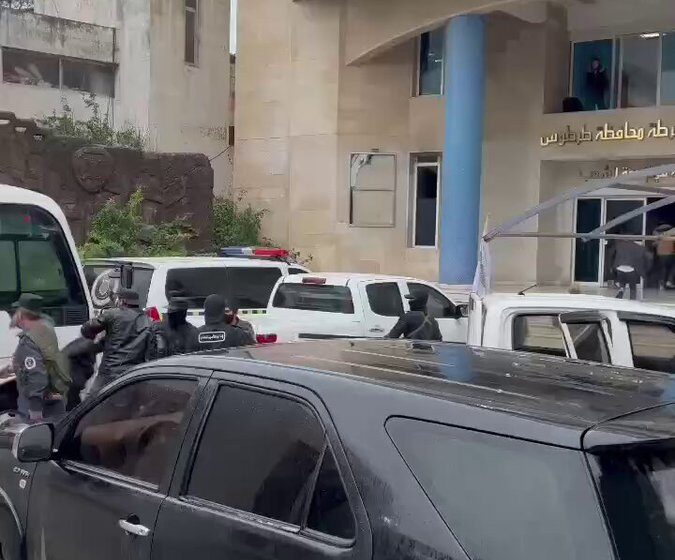
Conversations about terrorism and its perpetrators generated high engagement, sparked by graphic content and questions about the origins of extremist groups. Fadel Abu Ragheef (Post Impact: 100%) shared a video depicting a brutal act, expressing shock and dismay with the caption, “There is no power nor strength except in God, the Most High, the Great.” Meanwhile, Hiba Alnnayib (Post Impact: 26%) posted a video questioning the backers of ISIS, asking her followers, “What do you think about the explanation of the truth of this organization and its funding!!” These posts indicate a continued focus on the violence of extremism and a public desire to understand the forces behind it.
2. Commentary on the New Government in Syria
The new leadership in Syria is a major topic of discussion, with commentators offering critical analysis and sharp opinions. Hassan Alkaaebi | Hassan Alkaaebi (Post Impact: 63%) posted a video of what he described as “Uyghur, Turkestan, and Tajik terrorists” parading in Damascus under the Syrian Arab Army banner, noting that none of them speak Arabic. Political analyst Liqaa Maki (Post Impact: 22%) examined the West’s acceptance of the new Syrian government, attributing it to pragmatism and Turkey’s role as a guarantor. In a more critical take, Dr. Hussein Al-Safi (Post Impact: 19%) contrasted revolutionary figures like Che Guevara with Syria’s new leader Abu Mohammad al-Jolani, whom he accused of allowing foreign occupation. Ghaith Altamimi (Post Impact: 19%) condemned what he called Iraqi followers of Iran’s Supreme Leader for aligning with both the former Assad regime and al-Jolani.
3. Iraqi National Football Team’s Exit from Gulf Cup
There was widespread disappointment and anger following the Iraqi national football team’s elimination from the Gulf Cup. Journalist Muna Sami (Post Impact: 62%) described the team’s exit from the tournament as a “scandal!!” Many commentators linked the sporting failure to the country’s political situation, such as Najah Abbas Al-Mizan (Post Impact: 14%), who blamed “the ruling team that took Iraq 1400 years back.” Former official Hoshyar Zebari (Post Impact: 7%) pointed to poor management and outdated tactics. The sentiment was shared by users like Ahmad Mulla Talal (Post Impact: 12%) and Firas W. Alsarray (Post Impact: 7%), who expressed frustration over the team’s performance.
4. Dialogue Between Faiq Al-Sheikh Ali and Mashaan Al-Jabouri
Iraqi politicians Faiq Al-Sheikh Ali and Mashaan Al-Jabouri captured public attention with posts about their ongoing meetings and dialogue. Mashaan Al-Jabouri (Post Impact: 31%) announced he had met with Al-Sheikh Ali for the fourth time, hoping one could persuade the other of their viewpoint and planning further meetings with others to address Iraq’s challenges. In a separate, highly engaged post, Faiq Al-Sheikh Ali/My Word for History (Post Impact: 51%) responded to a fake post attributed to him, engaging with a commenter in his characteristic provocative and humorous style, which further fueled discussions around his public persona and political interactions.
5. Commemoration of Security Anniversaries
Several accounts marked anniversaries of significant security events in Iraq’s recent history. Wasan Al-Sheikhli (Post Impact: 24%) commemorated the anniversary of breaking the siege of Al-Dhuluiya on December 28, 2014, and honored the martyrdom of Major General Abbas Al-Hamidawi from the Badr Organization, who joined the Popular Mobilization Forces (PMF). Other accounts, including Haider (Post Impact: 6%) and Abu Drandesh Al-Askari (Post Impact: 6%), shared posts by the PMF commemorating the anniversary of the 2019 US airstrike on their positions in Al-Qaim, which resulted in the death of over 25 members.
6. Prime Minister Opens Al-Shaab Hospital in Baghdad
The inauguration of a new hospital in Baghdad by Prime Minister Mohammed Shia’ Al Sudani was a prominent topic. The Prime Minister’s Media Office (Post Impact: 16%) announced the opening of Al-Shaab General Hospital, describing it as a previously stalled project that will now operate under a joint public-private management system. The news was received positively by commentators like Rusly Al-Maliki (Post Impact: 11%), who praised the modern design as “an achievement that opens the soul” and urged the government to continue such productive work. Dr. Majed Shingali (Post Impact: 4%) also congratulated Baghdad’s residents on the new medical facility.
7. Criticism of Iraq’s Political System and Leadership
Sharp criticism of Iraq’s political class was a recurring theme, with users highlighting corruption and systemic failure. Hisham Ali (Post Impact: 13%) shared a clip of former Justice Minister Hassan Al-Shammari stating, “80% of the country’s leaders are not loyal to Iraq but are ‘company bosses’.” Political analyst Dr. Ihssan Al-Shmary (Post Impact: 8%) drew a parallel between the failures of the national football team and the government, remarking that “both are in need of radical reform.” Yasser Eljuboori (Post Impact: 8%) posted a list of contradictory political positions held by an unnamed politician, implying hypocrisy and a lack of principle among the political elite.
8. Historical Narratives on Ottomans and Umayyads
Historical grievances and sectarian narratives were actively discussed, particularly by the account Abbas Shamsuddin (Post Impact: 18%). In one post, he recounted what he termed as nine major massacres committed by the Ottoman Empire, focusing on the 1516 “Massacre of the Hill” against Alawites in Aleppo. In another widely viewed post, Abbas Shamsuddin (Post Impact: 11%) condemned the Umayyad Caliphate, claiming its version of religion was based on negative principles and concluding with “May Allah curse the Umayyads, all of them.” These posts reflect a perspective that interprets current events through the lens of historical conflicts.
9. Shifting Alliances of Politician Mashaan Al-Jabouri
The perceived political opportunism of politician Mashaan Al-Jabouri, especially regarding the recent events in Syria, was a focus of critical commentary. Shaho Al-Qaradaghi (Post Impact: 15%) contrasted Al-Jabouri’s past statements defending the Assad regime with his recent praise for the new Syrian leader Ahmed al-Sharaa, highlighting a stark shift in his position. Similarly, Dr. Ali Al-Jabiri (Post Impact: 8%) posted a photo of Al-Jabouri with the pointed caption, “Glimmers of hypocrisy flash from his eyes,” reinforcing the narrative of his political inconsistency.
10. US-Iran Tensions and the Role of Iraqi Militias
Growing tensions between the US and Iran in the region, and their potential impact on Iraq, were a source of concern. Omar Abdulsattar Mahmoud (Post Impact: 9%) shared a report from The Cradle magazine claiming the US government had notified Baghdad of its intent to target Iran-aligned figures within Iraq. This was discussed alongside the role of Iraqi armed factions, as highlighted by Mazin Al-Eshaiker (Post Impact: 9%), who posted a video of a militia leader declaring, “We and the Hashd [PMF] are one,” blurring the distinction between state institutions and non-state armed groups.