2025-01-06: Muqtada al-Sadr’s Army Day Message on State Monopoly of Arms

An analysis of 609 X / Twitter posts from Iraq on January 6, 2025, by Miqrab AI reveals a social media landscape dominated by the 104th anniversary of Iraqi Army Day and intense discussions about the volatile situation in neighboring Syria. The most engaging post came from cleric Muqtada al-Sadr, whose message calling for a state monopoly on weapons and a non-sectarian army set the tone for much of the day’s debate. Simultaneously, Iraqi users closely followed and commented on events in Syria, sharing videos and reports of sectarian violence, alleged atrocities by Hay’at Tahrir al-Sham, and the mistreatment of civilians, reflecting deep-seated anxieties about regional instability. Other prominent topics included domestic grievances, such as controversial deductions from retiree pensions, and reactions to the arrest of a Kuwaiti media personality for insulting the Iraqi prime minister.
Table Of Content
- 1. Muqtada al-Sadr’s Army Day Message on State Monopoly of Arms
- 2. Sectarian Violence and Atrocities in “New Syria”
- 3. Iraqi Army Day Commemorations and Critiques
- 4. Viral Video Sparks Sectarian Religious Debate
- 5. Outrage Over Pension Deductions to Support Lebanon
- 6. Arrest of Kuwaiti Media Figure Fajr Al-Saeed
- 7. Criticism of Iranian Influence in Iraq
- 8. Regional Diplomacy and the New Syrian Government
- 9. Alleged Sectarianism Within the Iraqi Army
- 10. Security Operations and Updates Across Iraq
Today’s Top 10 X (Twitter) Trends in Iraq:
1. Muqtada al-Sadr’s Army Day Message on State Monopoly of Arms
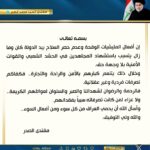
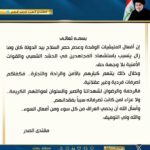
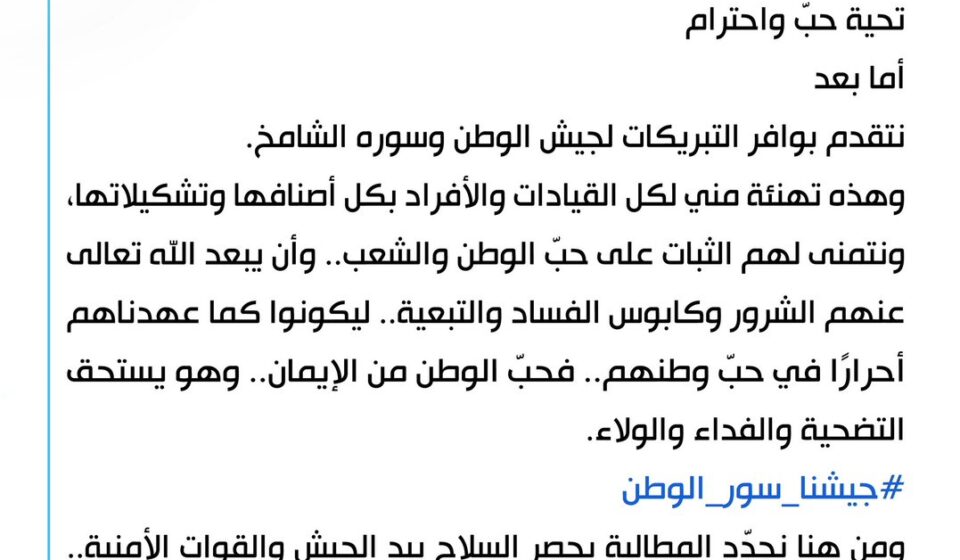
The most impactful story of the day was a message from cleric Muqtada al-Sadr (Post Impact: 100%) on the 104th anniversary of the Iraqi Army’s founding. In a widely circulated graphic, Sadr called for strengthening the army to be a protector of the nation, independent of corruption, sectarianism, and foreign subordination. His message emphasized a core demand: “No and a thousand no’s to uncontrolled weapons.” This sentiment was echoed by supporters and commentators. Wasan Al-Shaikhli (Post Impact: 3%) pointed out the irony of the “owner of the largest armed militia in Iraq” renewing his call to restrict weapons to the state. Safaa Al-Asadi (Post Impact: 3%) noted that Sadr’s use of terms like “uncontrolled weapons,” “militias,” and “subordination” infuriates his opponents because it reflects their reality. Similarly, Ahmed Al-Rubaie (Post Impact: 2%) and other Sadrists amplified the message, making it a central theme of the Army Day discussions.
2. Sectarian Violence and Atrocities in “New Syria”
The situation in Syria following the fall of the Assad regime was a major topic, with numerous accounts sharing graphic videos and reports of sectarian violence. Ahmed Al-Thawaq (Post Impact: 67%) and Essam Hussein (Post Impact: 61%) commented on a video showing the harassment of a disabled Iranian visitor, criticizing the perpetrators for targeting a helpless individual instead of confronting Israeli forces. Hassan Al-Kaabi (Post Impact: 44%) shared a video allegedly showing “Al-Nusra terrorist gangs” assaulting a mayor in Homs. Other posts from Hassan Al-Kaabi (Post Impact: 18%) and Najah Muhammad Ali (Post Impact: 6%) circulated videos of field executions and claimed that being an Alawite or a Shiite was grounds for being killed. Nora (Post Impact: 28%) made an unverified claim that “35,000 Alawites are being slaughtered in the city of Homs by Daesh.”
3. Iraqi Army Day Commemorations and Critiques
The 104th anniversary of the Iraqi Army’s founding was marked by both official praise and sharp public criticism. Prime Minister Mohamed Shia Al-Sudani (Post Impact: 6%) praised the army as the “impregnable wall against terrorism” and a pillar of the democratic state. However, other users questioned its non-sectarian credentials. Jqlmba (Post Impact: 21%) shared a video of uniformed soldiers performing a Shia mourning ritual (latom) and asked, “Does this army represent Iraq with all its sects?!” In contrast, Faig Al-Sheikh Ali (Post Impact: 20%) dedicated a song to the army “in defiance of Iran and its militias.” Othman Al-Mukhtar (Post Impact: 6%) highlighted the “farce” of figures like Hadi al-Amiri and Ammar al-Hakim, who he claims fought against the Iraqi army alongside Iran, now congratulating it on its anniversary.
4. Viral Video Sparks Sectarian Religious Debate
A video showing an Egyptian man challenging an Iranian cleric about the Shia belief in the Mahdi went viral, sparking a sectarian debate among Iraqi users. Hiba Alnnayib (Post Impact: 47%) shared the clip with the caption, “An Egyptian embarrasses an Iranian Majusi Sayyid by asking him about the Mahdi.” The post was interpreted by many as exposing a weakness in Shia theology. On the other hand, Ali Al-Mohandes (Post Impact: 15%) viewed the same video as a display of Shiite steadfastness, stating, “The Shiite embarrassed the Sunni with Qur’anic verses,” and praised the Iranian cleric for his courage while being alone “amidst the Sunni Umayyads.”
5. Outrage Over Pension Deductions to Support Lebanon
A government decision to deduct 1% from retiree pensions sparked widespread anger, with many users claiming the funds were being diverted to support Lebanon. Adnan Al-Taii (Post Impact: 13%) called the decision “wrong” and unjustified, suggesting that officials who are keen on Lebanon should donate from their own billions. Mithal Al-Alusi (Post Impact: 7%) addressed Iranian official Esmail Qaani directly, blaming him and his “lackeys” for the deduction to “fund terrorism and your whims in Lebanon and Gaza.” Hisham Ali (Post Impact: 4%) and Ali al-Khalidi (Post Impact: 3%) questioned the fairness of targeting retirees, arguing that deductions should be taken from high-ranking officials and beneficiaries of state corruption instead.
6. Arrest of Kuwaiti Media Figure Fajr Al-Saeed
Iraqi social media users widely reported on the detention of Kuwaiti media personality Fajr Al-Saeed in Kuwait. According to posts by Haydar (Post Impact: 7%), her arrest was for “insulting and slandering” the Iraqi Prime Minister. The news was met with approval by many Iraqis, who saw it as a victory for national dignity. Dr. Hussein Al-Safi (Post Impact: 5%) thanked Kuwait for arresting the “Zionist” Fajr Al-Saeed. Ahmed Al-Thawaq (Post Impact: 4%) stated, “Today our feeling of having a state and government in Iraq is stronger than ever,” viewing the accountability of a Gulf media figure as a positive sign of the Iraqi government’s strength.
7. Criticism of Iranian Influence in Iraq
Beyond general Army Day celebrations, some prominent voices used the occasion to explicitly criticize Iranian influence over Iraq’s political and military affairs. Faig Al-Sheikh Ali (Post Impact: 20%) posted a patriotic song which he dedicated to the Iraqi armed forces “in defiance of Iran, Khamenei, all the political clerics, Iran’s tails, its militias, and all the despicable Iraqis who are infatuated with Iran.” Mithal Al-Alusi (Post Impact: 7%) directly blamed Iranian official Esmail Qaani for various ills in Iraq, including the controversial deduction from retiree pensions, theft of oil, and targeted assassinations, demanding over 300 billion dollars in compensation from Iran for its crimes.
8. Regional Diplomacy and the New Syrian Government
Iraqi commentators closely monitored the diplomatic engagements of the new Syrian transitional government with regional powers. Haydar (Post Impact: 11%) analyzed the reception of the Syrian foreign minister in the UAE, noting what he described as disrespectful protocol, such as the Emirati official sitting “with one leg crossed, wearing informal shoes, and without a Syrian flag present.” He also noted that the UAE continues to refer to the Syrian leader as “al-Jolani” instead of his preferred name, Ahmed al-Sharaa. Faig al-Sheikh Ali (Post Impact: 12%) commented sarcastically on news that Saudi investor Yazeed Al-Rajhi would enter Syria, remarking, “Wonderful!” Liqaa Maki (Post Impact: 4%) argued that Arab support would give the new Syrian administration opportunities to strengthen its regional presence and counter Western pressure, protecting the achievement of expelling Iran.
9. Alleged Sectarianism Within the Iraqi Army
A significant debate emerged regarding the sectarian identity of the Iraqi Army, challenging the official narrative of it being a national, non-partisan institution. The discussion was fueled by a video shared by Jqlmba (Post Impact: 21%) showing soldiers engaging in Shia mourning rituals. The user questioned the army’s ability to represent all Iraqis while displaying such overt sectarian practices. This sentiment was countered by accounts like Ahmed Al-Thawaq (Post Impact: 9%), who celebrated the army with a Shia religious chant, describing the soldiers as “men of Abbas and Hussein,” thereby reinforcing a sectarian identity for the institution. Abdulrazzaq Al-Hayali (Post Impact: 7%) also weighed in, stating the “authentic Iraqi army” will return with “the hero Ahmed al-Sharaa to cleanse the land” from Iranian proxies, linking the army’s identity to the recent changes in Syria.
10. Security Operations and Updates Across Iraq
Several accounts shared updates on security operations carried out by Iraqi forces in different parts of the country. Haydar (Post Impact: 6%) reported on the arrest of three Syrians without official papers who were attempting to enter Najaf province. The same account also reported the discovery of a new mass grave in Kirkuk province containing the remains of over 105 victims from when Daesh controlled the area in 2014, noting it was the eighth such grave found near Hawija. Separately, Abu Darandash Al-Askari (Post Impact: 3%) announced that police in Baghdad’s Karrada district had arrested a Daesh member nicknamed “Al-Qa’qa’.”