2025-01-08: Outrage Over Killing of Iranian Pilgrim in Syria

Based on a Miqrab AI analysis of 548 X / Twitter posts trending in Iraq on January 8, 2025, online conversations were dominated by regional geopolitical events and their repercussions on Iraq’s internal politics. The most prominent story involved outrage over the alleged killing of an elderly Iranian pilgrim and his grandson in Syria, sparking calls for a military response from Iran. Discussions also centered on the Lebanese presidential election, with many users interpreting it as a sign of waning Iranian and Hezbollah influence in the region. Prime Minister Mohammed Shia’ Al Sudani’s visit to Iran generated conflicting narratives, with some seeing it as a capitulation to Iranian influence while others viewed it as a step toward asserting Iraqi sovereignty by discussing the future of armed factions. Domestically, there were widespread calls for the dissolution of pro-Iran militias, criticism over the illegal granting of Iraqi citizenship to foreign individuals, and discontent with the government’s perceived dependency on Tehran.
Table Of Content
- 1. Outrage Over Killing of Iranian Pilgrim in Syria
- 2. Lebanese Election Signals Waning Hezbollah Influence
- 3. Competing Narratives on PM Sudani’s Iran Visit
- 4. Calls to Disband Pro-Iran Militias in Iraq
- 5. Israeli Tanks Reported in Southern Syria
- 6. Citizenship Granted to Foreign Armed Group Leaders
- 7. Destruction of Iraqi and Arab Heritage Sites in Syria
- 8. PM Al-Sudani Criticized for Iran Visit and Policies
- 9. Ghaith Al-Tamimi’s Anti-Militia Campaign
- 10. Ammar Al-Hakim Tours Kurdistan, Emphasizes Unity
Today’s Top 10 X (Twitter) Trends in Iraq:
1. Outrage Over Killing of Iranian Pilgrim in Syria
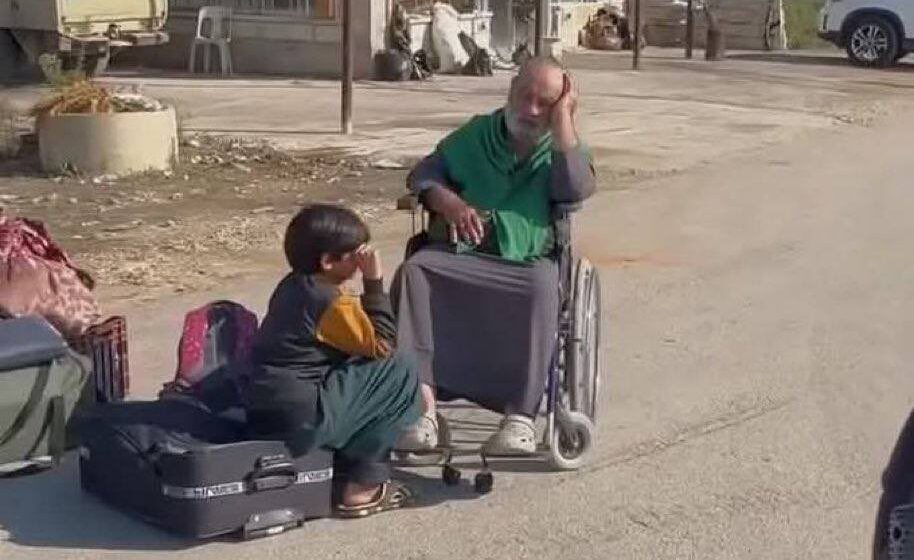
The most engaging story centered on reports of the killing of an elderly Iranian pilgrim and his grandson in Syria. The account Hassan Alkaaebi (Post Impact: 100%) shared what he described as the “last picture” of the two, stating they were killed “without any sin, only for being Shia!” In a separate post, the same account (Hassan Alkaaebi, Post Impact: 43%) reacted to the news by stating, “If the news… is true, then Iran is obligated to respond militarily.” The broader context of the Syrian conflict was touched upon by Abu Muziel (Post Impact: 5%), who shared a video of an Iranian man allegedly exposing the “civil project” of Hay’at Tahrir al-Sham leader Ahmed al-Sharaa (Abu Mohammad al-Jolani) as a facade, suggesting this incident reveals the true nature of extremist groups operating in Syria.
2. Lebanese Election Signals Waning Hezbollah Influence
Users closely followed the Lebanese presidential elections, widely viewing them as a barometer of regional influence. Faig Al-Sheikh Ali/My Word for History (Post Impact: 32%) stated he was monitoring the election, which he said had been delayed for two years by Hezbollah and the Amal Movement. He predicted that with Hezbollah’s defeat and Nabih Berri’s weakened position, the election will proceed, Lebanese Army Commander Joseph Aoun will win, and linked this outcome to the Tishreen protest movement’s ultimate victory. Adding to this narrative, Salim Al-Jumaili (Post Impact: 30%) reported that a Saudi envoy, Prince Yazid bin Farhan, had arrived in Beirut to “select Joseph Aoun as president of the Republic of Lebanon tomorrow.” The posts collectively suggest a perceived shift in Lebanon’s political landscape away from Iranian influence and toward Saudi Arabia.
3. Competing Narratives on PM Sudani’s Iran Visit
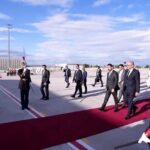
Prime Minister Al-Sudani’s visit to Iran sparked a variety of conflicting interpretations regarding its purpose and outcome. On one hand, critics like Mithal Al-Alusi (Post Impact: 22%) categorically dismissed the trip, posting an image of the prime minister with the repeated caption “Void.” On the other hand, Dr. Qusay Shafiq (Post Impact: 21%) reported that Iran’s Supreme Leader Ali Khamenei told the Iraqi delegation that “The Hashd and Iraqi factions are a red line.” Others interpreted the visit as a sign of Iran’s weakening grip. Ghaith Al-Tamimi (Post Impact: 9%) described it as a “farewell meeting,” arguing that the notable absence of rhetoric about “resistance” signaled an end to the “IRGC axis.” This view was echoed by Mustafa Al-Dulaimi (Post Impact: 6%), who claimed the IRGC commander told Sudani that the decision to dissolve armed factions was an internal Iraqi matter in which Iran would not interfere.
4. Calls to Disband Pro-Iran Militias in Iraq
A strong current of discussion focused on demands to dissolve or reform the Popular Mobilization Forces (PMF) and other armed factions, particularly those with allegiance to Iran. Hiba Alnnaayib (Post Impact: 19%) posted a video critical of the PMF, stating, “This is the Popular Mobilization Forces with a Khomeinist Iranian ideology that is foreign to Iraq… They must be removed and we must be rid of them.” This sentiment was part of a wider conversation, with Ghaith Al-Tamimi (Post Impact: 18%) thanking the “Iraqi Hashd” for what he termed a victory over the “pro-Iran Wilai Hashd.” The topic was amplified by comments from politician Sajjad Salem, who stated that “armed factions in Iraq are finished and will be buried soon.” This clip was shared by accounts like Yasser Eljuboori (Post Impact: 13%), while Sajjad Salem (Post Impact: 9%) himself posted it, arguing that the state’s failure to manage volunteers allowed factions to politicize the PMF and that fighters should now be integrated into official state institutions.
5. Israeli Tanks Reported in Southern Syria
Reports of Israeli military activity in southern Syria circulated among Iraqi accounts. Hassan Alkaaebi (Post Impact: 30%) shared a video clip reporting the incursion of Israeli army tanks into the towns of Al-Asha and Taloul al-Humr in the Quneitra countryside. This development prompted reactions critical of pro-Iran armed groups. Najeh Abbas Al-Mizan (Post Impact: 9%) sarcastically questioned the silence of factions like Asa’ib Ahl al-Haq, asking, “What’s the matter? It’s been a month since we heard them invoke ‘Zainab’s brothers’? Or hear ‘Zainab will not be captured twice’?” The comment implies these groups are failing to act on their declared principles of defending Shiite holy sites and interests in Syria.
6. Citizenship Granted to Foreign Armed Group Leaders
The issue of illegally granting Iraqi citizenship and passports to non-Iraqis emerged as a significant concern. The conversation was led by Hussam Alhaj (Post Impact: 20%), who described it as “one of the most dangerous chronic files in Iraq for more than 10 years.” He used Mazloum Abdi, the commander of the Syrian Democratic Forces (SDF), as a primary example, alleging that Abdi was granted an Iraqi passport in 2018, along with tens of thousands of other Syrian Kurds in Sulaymaniyah and Kirkuk alone. In a separate post, Hussam Alhaj (Post Impact: 8%) announced that he would dedicate an episode of his program to this “highly important and dangerous” file, promising to present documents and proof.
7. Destruction of Iraqi and Arab Heritage Sites in Syria
Users expressed sorrow and anger over the destruction of cultural and historical heritage sites in Syria. The account Haidar (Post Impact: 19%) reported on the complete demolition of the statue of the famed Iraqi poet Abu Firas al-Hamdani in Aleppo. The post states the destruction was carried out under the pretext that “statues are forbidden in the Islamic religion.” In another widely shared post, the same account, Haidar (Post Impact: 10%), summarized an Agence France-Presse (AFP) report on the painstaking work being done by Iraqi archaeologists to restore the ancient Assyrian city of Nimrud in Iraq, which was devastated by ISIS in 2014. The juxtaposition of these events highlights a continuing theme of cultural loss across the region.
8. PM Al-Sudani Criticized for Iran Visit and Policies
Prime Minister Mohammed Shia’ Al-Sudani was the subject of direct criticism from multiple commentators regarding his relationship with Iran and his domestic policies. Mithal Al-Alusi (Post Impact: 22%) was unequivocal in his opposition to the premier’s visit to Tehran, repeatedly labeling it “void.” In a different line of criticism, Najeh Abbas Al-Mizan (Post Impact: 19%) shared a video accusing Al-Sudani of making “moral accusations against the Iraqi army” without facing any pushback. The economic dependency on Iran was also a point of contention, with Tamara Alkhazraji (Post Impact: 7%) claiming the prime minister went to Iran to “beg” for gas and railway links, arguing that such deals prevent Iraq from developing its own infrastructure while noting his failure to protest when Iran previously struck Kurdistan.
9. Ghaith Al-Tamimi’s Anti-Militia Campaign
Activist Ghaith Al-Tamimi ran a prominent campaign on his page celebrating what he framed as a victory for the Iraqi state over pro-Iran militias. In one post, Ghaith Al-Tamimi (Post Impact: 18%) offered thanks to “the state which deterred the militias” and “the Iraqi Hashd which triumphed over the pro-Iran Wilai Hashd.” He specifically mentioned the freedom of an individual named Muqtada, presenting it as a moment where the “Iraqi flag won” over sectarian banners. He continued this theme in another post (Ghaith Al-Tamimi, Post Impact: 11%), celebrating Muqtada’s return to his family and stating that their collective voices “were heard by Khamenei and his cursed party.” His posts frequently employed hashtags like #WeWillTriumph and #Iran_and_Iraq_divorce_and_separation, as seen in his analysis of Sudani’s Iran visit (Ghaith Al-Tamimi, Post Impact: 9%).
10. Ammar Al-Hakim Tours Kurdistan, Emphasizes Unity
Ammar Al-Hakim, leader of the National Wisdom Movement, heavily documented his political tour through Iraq’s Kurdistan Region on his official account. Through a series of posts, he shared details of his meetings with tribal leaders, local government officials, and citizens in Halabja and Sulaymaniyah. In a post from Halabja (Post Impact: 6%), he placed a wreath at the city’s memorial, stating the crime “requires being known” globally. A central theme across his engagements, including a meeting with the Kakai community (Ammar Al-Hakim, Post Impact: 6%) and tribal leaders in Sulaymaniyah (Post Impact: 5%), was the deep historical relationship between Arabs and Kurds and the need for national unity. Al-Hakim repeatedly advocated for the Iraqi Parliament to officially recognize Halabja as a new governorate, arguing it would be the best tribute to the city’s martyrs and would bring economic opportunities and greater political representation.