2025-01-16: Commemoration of Resistance Leaders

Based on Miqrab AI’s analysis of 558 X / Twitter posts trending on January 16, 2025, the primary narratives circulating in Iraq revolve around regional geopolitical shifts and domestic political scrutiny. The most prominent theme involves the commemoration of slain Iranian and Iraqi militia commanders, signaling continued allegiance to the “axis of resistance.” Concurrently, there is a strong counter-narrative from political commentators declaring the strategic defeat of Hamas in Gaza and criticizing Iran’s regional influence, with specific attention on reports of Syria distancing itself from Tehran. Domestically, Prime Minister Al-Sudani’s visit to London is a key topic of debate, drawing criticism over his meetings and conduct. Other significant discussions include calls for disarming pro-Iran factions within Iraq, developments in Kurdish politics aimed at unity, and reflections on the anniversary of the 1991 Gulf War.
Table Of Content
- 1. Commemoration of Resistance Leaders
- 2. Debating Hamas’s “Defeat” and Iran’s Role in Gaza
- 3. Syria Reportedly Distancing Itself from Iran
- 4. PM Al-Sudani’s London Visit Draws Criticism
- 5. Iraqi Government’s Effort to Disarm Factions
- 6. High-Level Meetings to Promote Kurdish Unity
- 7. Governor Al-Eidani Confronted Over Activist’s Extradition
- 8. Praise for Iraqi Doctor in Gaza
- 9. Anniversary of Operation Desert Storm
- 10. Critical Commentary on Political Elites
Today’s Top 10 X (Twitter) Trends in Iraq:
1. Commemoration of Resistance Leaders
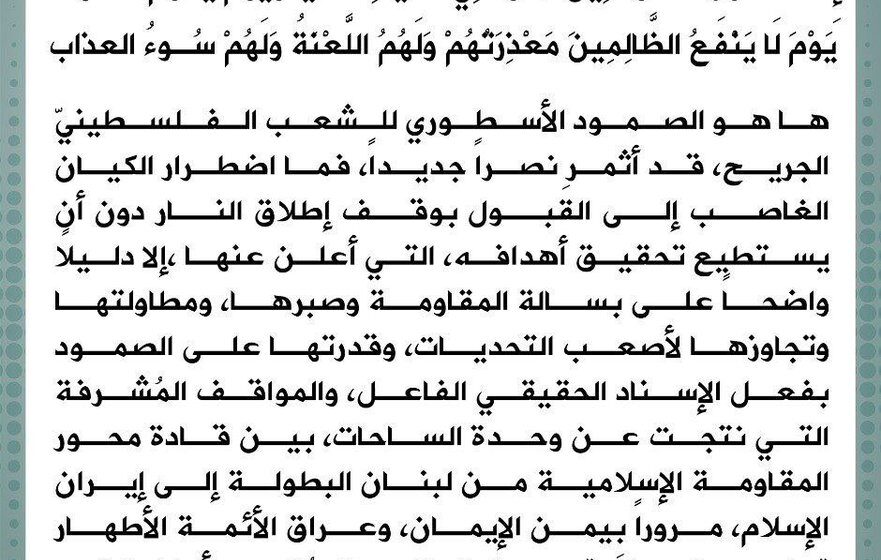
Accounts aligned with the “axis of resistance” are commemorating slain commanders, reinforcing a narrative of martyrdom and continued struggle. The highest-impact post on this topic came from Qais al-Khazali (Post Impact: 100%), who shared an image featuring Qassem Soleimani and Abu Mahdi al-Muhandis. Similarly, Abu Alaa Al-Wala’i (Post Impact: 16%) posted a tribute image of the same figures. Sabereen News (Post Impact: 4%) contributed to this theme by posting a video tribute, stating that their “martyred resistance fighters are an extension of the line of Hussein,” portraying their deaths as part of a historic struggle for honor and dignity.
2. Debating Hamas’s “Defeat” and Iran’s Role in Gaza
A contentious debate surrounds the outcome of the Gaza war, with prominent voices declaring a decisive defeat for Hamas and by extension, Iran. Political commentator Faig al-Sheikh Ali/My Word for History (Post Impact: 52%) forcefully argues that it is a “disgrace and shame to talk about Hamas’s victory in Gaza,” stating that Hamas was severely defeated, Israel destroyed Gaza, and Iran was removed from the conflict equation. This perspective is echoed by Mahdi Majeed (Post Impact: 11%), who questions Hamas’s motives, suggesting the October 7th attack was conducted on “Iranian orders” and that Hamas insisted on fighting to offer Gaza and its people as a “sacrifice to Iran.” Liqaa Maki (Post Impact: 12%) analyzes the situation as a deal where Netanyahu allowed Trump to claim credit for ending the war in exchange for future US support for Israel’s conflicts in the region.
3. Syria Reportedly Distancing Itself from Iran
A significant narrative emerging on Iraqi social media is the claim that the new Syrian administration is actively moving away from Iranian influence. Faig al-Sheikh Ali/My Word for History (Post Impact: 65%) reports that the “new Syrian administration” has banned the import of “shoddy” Iranian cars and is instead turning to German and Japanese manufacturers. Taking this claim a step further, Rusly Al-Maliki (Post Impact: 43%) makes a more direct and unverified statement, claiming, “Officially: The government of #Syria is preventing Iranians from entering its territory.” These posts collectively paint a picture of a major geopolitical realignment in the region, with Syria potentially pivoting away from its long-time ally.
4. PM Al-Sudani’s London Visit Draws Criticism
Prime Minister Mohammed Shia’ Al-Sudani’s trip to London has become a focal point for criticism and political commentary. Dr. Qusay Shafiq (Post Impact: 24%) highlights Al-Sudani’s meeting with former Prime Minister Ibrahim al-Jaafari, criticizing al-Jaafari for residing in London while still receiving a large pension of 58 million Iraqi dinars from the Iraqi government since 2006. The same account also posted a video criticizing the visit in another post Dr. Qusay Shafiq (Post Impact: 8%). Additionally, Najeh Abbas Al-Mizan (Post Impact: 15%) posted a video criticizing Al-Sudani’s posture during a meeting with the British Prime Minister, describing it as a “major scandal” that he was crossing his legs.
5. Iraqi Government’s Effort to Disarm Factions
Statements by Iraqi Foreign Minister Fuad Hussein during his visit to London have sparked discussion about the government’s intentions to deal with armed factions. According to reports shared by Husham Ali (Post Impact: 7%) and Shaho Al-Qaradaghi (Post Impact: 5%), the foreign minister stated that Iraq is attempting to persuade Iran-allied armed factions to lay down their arms. Haider (Post Impact: 3%) provided more detail from a Reuters report, quoting the minister as saying that it has become “unacceptable” in Iraqi society for armed groups to operate outside state control and that the government hopes to convince their leaders to disarm and join the official armed forces. Rafid Jaboori (Post Impact: 5%) analyzed these statements as a sign of negotiations but questioned what price would be paid to convince factions to disarm.
6. High-Level Meetings to Promote Kurdish Unity
There is significant discussion around recent meetings between major Kurdish political leaders, which are being framed as a crucial step towards strengthening Kurdish unity. Hoshyar Zebari (Post Impact: 27%) described the meeting in Erbil between Kurdistan Region President Masoud Barzani and SDF Commander Mazloum Abdi as a “significant achievement to strengthen Kurdish unity” in light of the new political situation in Syria. In another post, Hoshyar Zebari (Post Impact: 6%) also reported on a “smooth” and “constructive” meeting between KRG Prime Minister Masrour Barzani and PUK President Bafel Talabani. Kifah Mahmood (Post Impact: 5%) also highlighted both meetings as a sign of “peace and prosperity” in Kurdistan.
7. Governor Al-Eidani Confronted Over Activist’s Extradition
Basra Governor Asaad Al-Eidani is facing scrutiny over the extradition of political activist Salman Al-Khalidi from the UK to Kuwait. A video shared by Dr. Qusay Shafiq (Post Impact: 35%) shows an individual confronting Al-Eidani in London, linking him to the handover. Hassan Basket Ball – HASSAN AL HAMMADI (Post Impact: 4%) described the confrontation as a “shameful situation for Asaad Al-Eidani,” noting that the governor appeared to react aggressively before realizing he was in London, where laws would hold him accountable, unlike in Basra.
8. Praise for Iraqi Doctor in Gaza
A wave of national pride is evident across several accounts praising an Iraqi doctor who remained in Gaza to treat the wounded during the conflict. Asaad Al-Basri (Post Impact: 8%) shared a video of the doctor being carried on the shoulders of Palestinians, calling him a “hero” who “raised the name of Iraqis.” Similarly, Safaa Al-Asadi (Post Impact: 5%) celebrated the “brave Iraqi doctor” for refusing to leave the hospital and fulfilling his humanitarian mission. Abu Drandesh Al-Askari (Post Impact: 4%) also shared a video, identifying the doctor as Mohamed Taher and highlighting that he left his family in London to perform difficult surgeries under bombardment.
9. Anniversary of Operation Desert Storm
The 34th anniversary of the start of Operation Desert Storm is being commemorated with a sense of loss and nostalgia for a bygone era. A post by ahmed salim (Post Impact: 29%) marks January 16, 1991, as “the last day Iraqis enjoyed 24-hour electricity.” The post, accompanied by a video of the initial airstrikes on Baghdad, reflects a widespread sentiment that the war marked the beginning of a long decline in Iraq’s infrastructure and quality of life, from which the country has yet to fully recover.
10. Critical Commentary on Political Elites
Sharp criticism is directed at Iraq’s political class from various angles. Faig al-Sheikh Ali/My Word for History (Post Impact: 73%) posted a scathing critique of “political Islamists,” describing them as possessing a “huge amount of foolishness, stupidity, triviality, and shallowness.” On a different note, Salim Al-Jomaili (Post Impact: 7%) criticizes a new law passed by parliament that grants members and their families diplomatic passports for life, calling it an unprecedented privilege that misuses public resources and harms Iraq’s diplomatic reputation. This commentary reflects a deep public frustration with the perceived self-interest and incompetence of political figures.