2025-01-23: Muqtada al-Sadr Demands Release of Detainees

Based on its analysis of 592 X / Twitter posts, Miqrab AI reports that on January 23, 2025, the primary narratives in Iraq revolved around significant political statements from influential figures, heated debates over sectarian-tinged legislation, and reactions to regional geopolitical shifts. Discussions were dominated by a call from Muqtada al-Sadr for the release of specific detainees, widespread condemnation of a parliamentarian’s sectarian remarks regarding a new amnesty law, and threats from a prominent militia figure towards the new leadership in Syria. Other major topics included analysis of the incoming Trump administration’s impact on the region, particularly concerning US-Saudi relations and oil prices, as well as diplomatic activities by the Kurdistan Regional Government at the World Economic Forum.
Table Of Content
- 1. Muqtada al-Sadr Demands Release of Detainees
- 2. Abu Azrael Threatens Syrian Leader Al-Jolani
- 3. Outrage over Sectarian Remarks on Amnesty Law
- 4. Accounts Criticize New Syrian Leadership
- 5. Saudi Arabia’s Financial Pledges to the US Discussed
- 6. KRG Leaders Conduct Diplomacy at World Economic Forum
- 7. Geopolitical Commentary Focuses on Trump Presidency
- 8. Criticism of Domestic Social and Economic Conditions
- 9. ISIS Claims Responsibility for Tarmiyah Attack
- 10. Activists Raise Human Rights Issues with UK Embassy
Today’s Top 10 X (Twitter) Trends in Iraq:
1. Muqtada al-Sadr Demands Release of Detainees
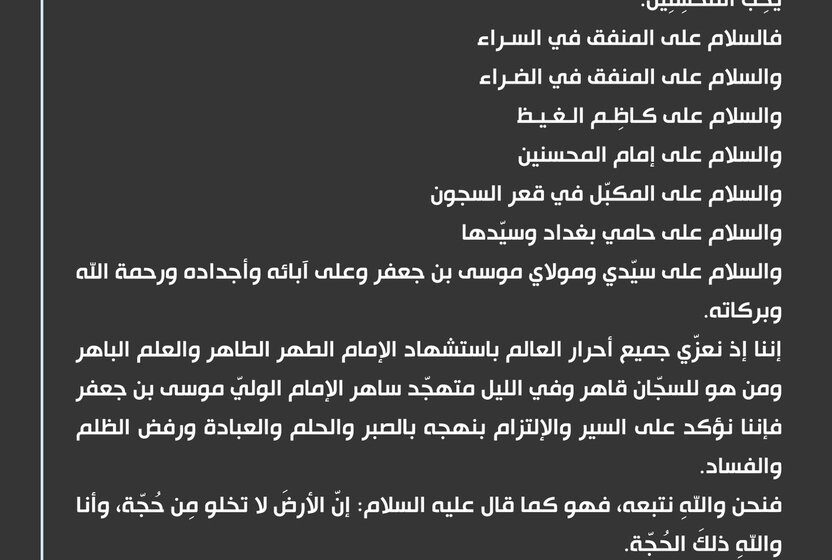
A highly engaged post by influential cleric Muqtada al-Sadr (Post Impact: 100%), presented as an image of text, called for the release of certain prisoners. Other accounts clarified the statement’s content. Safaa Al-Asadi (Post Impact: 3%) quoted the message directly: “I renew my demand for the release of the resistance detainees and the innocent #only_not_others”. Shaho Al-Qaradaghi (Post Impact: 4%) questioned the specific meaning behind the term “resistance detainees,” highlighting the political weight and potential ambiguity of al-Sadr’s demand, which comes amid broader discussions about a general amnesty law.
2. Abu Azrael Threatens Syrian Leader Al-Jolani
Prominent Popular Mobilization Forces figure Abu Azrael (Post Impact: 59%) issued a direct threat to the new leadership in Syria, stating, “Al-Jolani… your confrontation with us is inevitable, we have not and will not forget what you are doing to our people in Syria, you terrorist.” In the same post, he claimed that the Ain al-Asad base will be moved to Kuwait in the coming months. Shaho Al-Qaradaghi (Post Impact: 4%) commented on the timing of these statements, questioning the goal of such slogans now that the “axis of resistance” has been weakened in the region.
3. Outrage over Sectarian Remarks on Amnesty Law
A statement by Habib Al-Halawi, a member of parliament from the Sadiqoun bloc (the political wing of Asa’ib Ahl al-Haq), sparked widespread condemnation for its sectarian nature. Multiple accounts shared a video clip of his remarks. _. suhair Al_jumaili (Post Impact: 7%) quoted him as saying, “No Sunni detainee will have the prison door opened for them… The door will be opened for Shiite detainees only.” Omar al-Janabi (Post Impact: 7%) criticized this logic as indicative of how the Coordination Framework runs the country, while Dr. Ghalib Al-Da’ami (Post Impact: 6%) called the speech unfit for this stage in Iraq and urged the Sadiqoun bloc to review it. Steven Nabil (Post Impact: 4%) described the sectarian rhetoric from Asa’ib as a “deep-rooted problem.”
4. Accounts Criticize New Syrian Leadership
Beyond the specific threats from Abu Azrael, other accounts expressed strong criticism and suspicion toward the new administration in Syria. Yasser Eljuboori (Post Impact: 17%) reported that Ahmed al-Sharaa (Abu Mohammad al-Jolani), leader of Hay’at Tahrir al-Sham, mocked Iraq and its leaders, whom he labeled as militias that have destroyed the country despite its oil wealth. Separately, Abu Drandash Al-Askari (Post Impact: 20%) shared an image of a Syrian official, captioning it, “From a fighter in ISIS to the foreign minister of ISIS,” suggesting a continuity between the terrorist group and the new Syrian government.
5. Saudi Arabia’s Financial Pledges to the US Discussed
Several accounts discussed reports of major financial commitments from Saudi Arabia to the United States under the new Trump administration. Citing the Saudi Press Agency, Haider (Post Impact: 8%) stated that Crown Prince Mohammed bin Salman informed President Donald Trump of his readiness to pay $600 billion over the next four years. A subsequent post by Haider (Post Impact: 5%) quoted Trump as saying he would ask for the amount to be increased to a trillion dollars. MUNQITH DAGHER (Post Impact: 3%) framed the move not as mere generosity but as “Saudi intelligence,” predicting it will change the situation not just in Yemen but across the entire region.
6. KRG Leaders Conduct Diplomacy at World Economic Forum
Leaders from the Kurdistan Regional Government (KRG) were active at the World Economic Forum in Davos, holding several high-level meetings. Shaho Al-Qaradaghi (Post Impact: 12%) reported on the first official meeting between the KRG and the new Syrian administration, where Prime Minister Masrour Barzani expressed readiness to provide support to Syria. This was confirmed by Masrour Barzani (Post Impact: 9%) himself, who tweeted about his meeting with Syrian Foreign Minister Asaad Al-Shaibani to discuss Syria’s future and protecting the rights of the Kurdish people. President Nechirvan Barzani (Post Impact: 3%) also posted about a meeting with German Minister Tobias Lindner to discuss bilateral cooperation.
7. Geopolitical Commentary Focuses on Trump Presidency
Commentators analyzed the potential impact of a renewed Trump presidency on the Middle East. Sufian Al-Samarrai (Post Impact: 36%) posted a list of the world’s top 10 most powerful nations to argue that Saudi Arabia’s multi-billion dollar dealings with them are necessary for progress and prosperity. Rusly Al-Maliki (Post Impact: 9%) predicted that Trump will impose new sanctions on Iran, which in turn will sacrifice its regional proxies, telling them, “Oh tail, you will be sold cheaply.” In another post, Rusly Al-Maliki (Post Impact: 9%) cryptically warned that Iraq is now in the “April Glaspie” phase, a reference to the controversial meeting between the US ambassador and Saddam Hussein before the 1990 invasion of Kuwait.
8. Criticism of Domestic Social and Economic Conditions
Users on X voiced frustration over living conditions in Iraq and the priorities of its leaders. Mahdi Majeed (Post Impact: 15%) posted a video contrasting a residential complex in Najaf designated for Iranian and Pakistani Shiites with a young Iraqi Shiite child searching through garbage for food. He questioned why Iraq’s ruling Shiite leaders “despise the Shiites of Iraq… and prefer others over them.” Ezzat Alshabandar (Post Impact: 12%) wrote a message to an unnamed figure aspiring for the premiership, reminding him of past advice to withdraw from the race and warning that “those who are not nominated by their people will not be saved by Trump.”
9. ISIS Claims Responsibility for Tarmiyah Attack
The security situation north of Baghdad was a topic of discussion after ISIS claimed responsibility for a recent attack. Abu Drandash Al-Askari (Post Impact: 5%) shared a video with the caption, “The Daesh organization claims responsibility for the Tarmiyah operation that happened yesterday.” This contradicted official government reports. Yasser Eljuboori (Post Impact: 3%) pointed out the discrepancy, noting that government media had insisted an ammunition cache explosion was not a terrorist act, while the ISIS video showed an IED attack. He asked, “How can we believe you?!”
10. Activists Raise Human Rights Issues with UK Embassy
Iraqi activists and parliamentarians met with representatives from the British Embassy to discuss human rights and concerning legislation. Sajjad Salim (Post Impact: 9%) reported that the meeting reviewed Iraqi laws that violate rights and freedoms, and that they demanded diplomatic missions take a position guaranteeing Iraq’s commitment to international covenants against religious extremism in legislation. Noor Nafe’ Al-Jelihawi (Post Impact: 3%) also posted about the meeting, stating they pointed out the “weakness of the international community” in the face of laws that restrict rights.