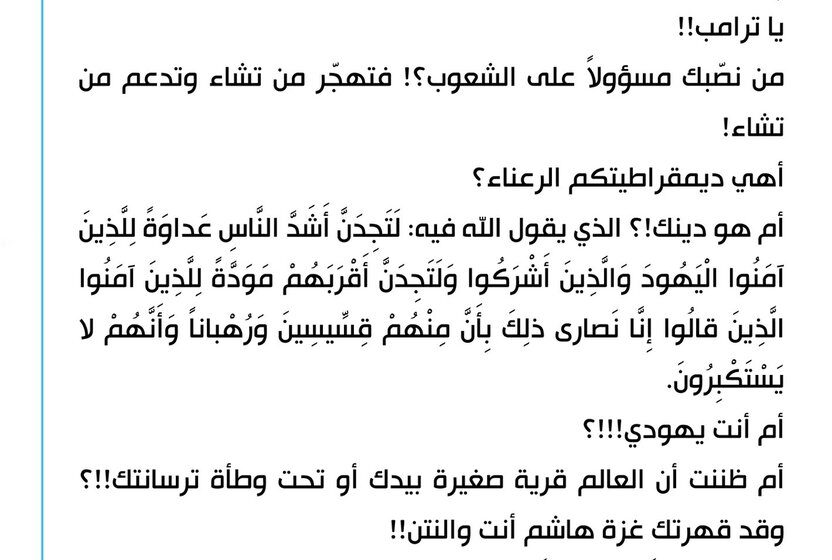
2025-02-05: Muqtada al-Sadr Condemns Trump and Netanyahu

Based on an analysis of 682 X / Twitter posts conducted by Miqrab AI on February 5, 2025, the primary conversations in Iraq were dominated by US President Donald Trump’s decision to reimpose sanctions on Iran and cancel the waiver for Iraq to import Iranian gas and electricity. This action sparked widespread alarm about a potential summer energy crisis and economic instability. In response, influential cleric Muqtada al-Sadr issued a widely circulated statement condemning Trump, which became the single most impactful post of the day. A secondary major narrative involved a domestic political crisis surrounding the General Amnesty Law, highlighting a sharp conflict between Iraq’s Supreme Judicial Council and the Federal Supreme Court, which fueled sectarian tensions and protests in Sunni-majority provinces. Overall, the discourse reflected a deep sense of anxiety about Iraq’s political stability, sovereignty, and the immediate economic future.
Table Of Content
- 1. Muqtada al-Sadr Condemns Trump and Netanyahu
- 2. Alarm Over US Canceling Iraq’s Energy Waiver
- 3. Judicial Clash Over General Amnesty Law
- 4. Fears of State Collapse and Political Instability
- 5. Wider US Sanctions on Iran and Its Proxies
- 6. Palestinian Issue and Regional Concerns
- 7. Protests and Tensions in Sunni-Majority Provinces
- 8. Criticism of Political Figures and Elites
- 9. Intra-Shia Political Divisions on Display
- 10. Ammar al-Hakim Highlights Diplomatic Meetings
Today’s Top 10 X (Twitter) Trends in Iraq:
1. Muqtada al-Sadr Condemns Trump and Netanyahu
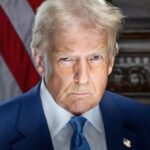
The day’s most impactful story was a statement from cleric Muqtada al-Sadr, shared by his official account Muqtada Al-Sadr (Post Impact: 100%), directly addressing US President Donald Trump. In the statement, al-Sadr questioned Trump’s authority, asking “who appointed you as a guardian over the nations?” and warned him to “stop your madness and arrogance.” This strong rebuke was widely amplified. Commentator Faiq Al-Sheikh Ali (Post Impact: 16%) sarcastically encouraged al-Sadr to escalate his rhetoric against Trump and Netanyahu. Others, like Wasan Al-Shaikhli (Post Impact: 3%) and Shaho Al-Qaradaghi (Post Impact: 3%), highlighted that al-Sadr was the only major Iraqi political leader to issue a direct response to Trump’s recent actions affecting the region.
2. Alarm Over US Canceling Iraq’s Energy Waiver
A major wave of concern spread across Iraqi social media following President Trump’s decision to revoke the waiver that allowed Iraq to import gas and electricity from Iran. This news prompted predictions of a severe crisis, with Muna Sami (Post Impact: 24%) stating, “The summer of 2025 will be the worst ever and it seems it has already started ‘today’!!!” Journalist Rusly Al-Maliki (Post Impact: 15%) warned that as a result, “The Toman will collapse… and Iraq will not see electricity.” The decision was framed by many as a direct blow to Iraq, with Abu Mzeal (Post Impact: 12%) arguing that America wants Iraq to “live in a blazing summer” by cutting off the Iranian gas that allows for stable electricity. The news was widely reported as a “first strike” against Iraq by accounts such as David Yassin (Post Impact: 6%).
3. Judicial Clash Over General Amnesty Law
A significant domestic story revolved around the controversial General Amnesty Law, creating a standoff between Iraq’s top judicial bodies. Mashan al-Jabouri (Post Impact: 6%) reported that the Supreme Judicial Council, under Judge Faiq Zidan, announced its commitment to implementing the law, deeming the Federal Supreme Court’s order to suspend it as a “temporary and non-binding measure.” This was celebrated by some, like Abdelrazzaq Al-Hayali (Post Impact: 6%), as a victory for releasing “innocents” from prisons. However, the law faced fierce opposition from others. Dr. Hussein Al-Safi (Post Impact: 9%) expressed outrage that a convicted rapist, Hikmat Al-Ani, could be released. The conflict prompted calls from figures like Hoshyar Zebari (Post Impact: 2%) to reform the Federal Court to ensure judicial neutrality.
4. Fears of State Collapse and Political Instability
A strong narrative of impending state failure and political turmoil circulated among prominent accounts. Lawyer Basim Khashan (Post Impact: 15%) posted a stark warning: “The state is on the verge of collapse, if it has not collapsed today.” This sentiment was shared by journalist Rusly Al-Maliki (Post Impact: 10%), who described the day’s events as the “beginning of a big snowball” and directly blamed former Prime Minister Nouri al-Maliki for “what was and what will be.” Analyst Dr. Ehsan Al-Shammari (Post Impact: 3%) interpreted the new US policy under Trump as a plan to change Iraq’s internal power dynamics and “radically reformulate the political process.”
5. Wider US Sanctions on Iran and Its Proxies
In addition to the energy waiver, users discussed the broader “maximum pressure” campaign by the Trump administration against Iran and its regional allies. Rusly Al-Maliki (Post Impact: 4%) cited a Trump directive aimed at isolating Iran and its Islamic Revolutionary Guard Corps (IRGC), asking, “Did you hear, agents of Iran in Iraq???” Ghaith Al-Tamimi (Post Impact: 4%) listed what he claimed were non-negotiable US demands for any future deal, including the complete dismantlement of Iran’s nuclear and missile programs. Conversely, Issam Hussein (Post Impact: 8%) downplayed the sanctions’ impact, arguing that Trump had already exhausted his options during his first term and that Iran had already notified Iraq of its inability to meet its gas demands.
6. Palestinian Issue and Regional Concerns
Donald Trump’s policies on the Israeli-Palestinian conflict were a significant focus. Raghad Saddam Hussein (Post Impact: 9%) praised Jordan, Egypt, and Saudi Arabia for their “shared Arab position… rejecting the proposal to displace Palestinians from their land.” Analyst Liqaa Maki (Post Impact: 6%) argued that Trump’s real strategy is to make life in Gaza “difficult and harsh” to encourage emigration for so-called “humanitarian” reasons. Issam Hussein (Post Impact: 4%) also discussed Trump’s statements suggesting the West Bank would be under Israeli administration and that the Gaza coast was a prime location for luxury apartments.
7. Protests and Tensions in Sunni-Majority Provinces
The political fallout from the Federal Court’s decisions triggered unrest and demonstrations, particularly in Anbar and Nineveh. Omar Abdul Sattar Mahmoud (Post Impact: 6%) shared a video clip of what he called “Halbousi’s massive demonstrations.” This civil disobedience drew sharp condemnation from Basim Khashan (Post Impact: 5%), who called for the impeachment of the “rebellious” governors of Anbar and Nineveh. Meanwhile, former Speaker Mohammed Al-Halbousi (Post Impact: 3%) posted about a meeting with the Interior Minister where they stressed the importance of using “sound legal and constitutional means” to express political views.
8. Criticism of Political Figures and Elites
Sharp and often cynical criticism was directed at various political figures. Abu Mzeal (Post Impact: 11%) shared a picture of political rivals together with the simple caption “Same shoes.” In a similar vein, Dr. Hamid Abdullah (Post Impact: 10%) posted an image with a cryptic comment comparing two figures. Dr. Qusay Shafiq (Post Impact: 5%) circulated a video allegedly depicting a government advisor named Salam Adel in a compromising situation and demanded a response from the Prime Minister’s office.
9. Intra-Shia Political Divisions on Display
Divisions within Iraq’s Shia political landscape were evident on social media, especially between supporters of Muqtada al-Sadr and rivals aligned with Nouri al-Maliki. Ahmed Al-Thawaq (Post Impact: 5%) pointed out the hypocrisy of Sadr’s followers criticizing figures like Issam Hussein while no one from other factions supported Sadr’s own statements. Bahaa Khaleel (Post Impact: 3%) complained that social media was filled with “Al-Maliki’s dogs,” who he claimed attack anyone online who expresses a different opinion.
10. Ammar al-Hakim Highlights Diplomatic Meetings
Ammar al-Hakim, leader of the National Wisdom Movement, used his platform to highlight diplomatic activities aimed at stabilizing Iraq. In a post, Ammar Al-Hakim (Post Impact: 3%) shared details of his meeting with the Russian President’s envoy, Mikhail Bogdanov, where he affirmed the strong ties between Baghdad and Moscow. In another update, Ammar Al-Hakim (Post Impact: 3%) described a meeting with Iraqi President Dr. Abdul Latif Rashid, in which they discussed regional events and emphasized the importance of national unity and maintaining the country’s current stability.