2025-02-07: U.S. Lawmakers Push to Sanction Iraqi Factions

Based on an analysis of 408 X / Twitter posts conducted by Miqrab AI on February 7, 2025, the primary conversations in Iraq revolve around escalating geopolitical tensions, particularly concerning the relationship between Iraq, Iran, and the United States. A dominant narrative involves a formal request by U.S. lawmakers to designate several Iraqi factions as terrorist organizations, sparking widespread debate about Iraq’s sovereignty and future security cooperation with America. Concurrently, there is significant discussion about Iran’s defiant rhetoric towards the U.S., with statements from Supreme Leader Khamenei being widely shared and analyzed. These external pressures are linked to growing internal fears of severe economic consequences, including new sanctions and a potential currency crisis. Domestic topics also feature prominently, including allegations of sectarian actions by militias against Sunni communities, historical reckonings with the Saddam Hussein era, and ongoing critiques of political corruption.
Table Of Content
- 1. U.S. Lawmakers Push to Sanction Iraqi Factions
- 2. Economic Fallout Feared from US-Iran Tensions
- 3. Iran’s Defiant Stance Against the United States
- 4. Allegations of Militia Aggression Against Sunnis
- 5. Woman Arrested for Threats at a US Jewish Center
- 6. Allegations of Crimes by Saddam Hussein’s Regime
- 7. Concerns Over Regional Stability in Syria and Lebanon
- 8. Iran’s Internal Political and Economic Challenges
- 9. Domestic Issues: Corruption and Political Criticism
- 10. Israeli PM Netanyahu’s Stance on a Palestinian State
Today’s Top 10 X (Twitter) Trends in Iraq:
1. U.S. Lawmakers Push to Sanction Iraqi Factions
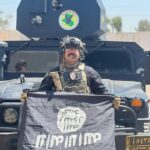
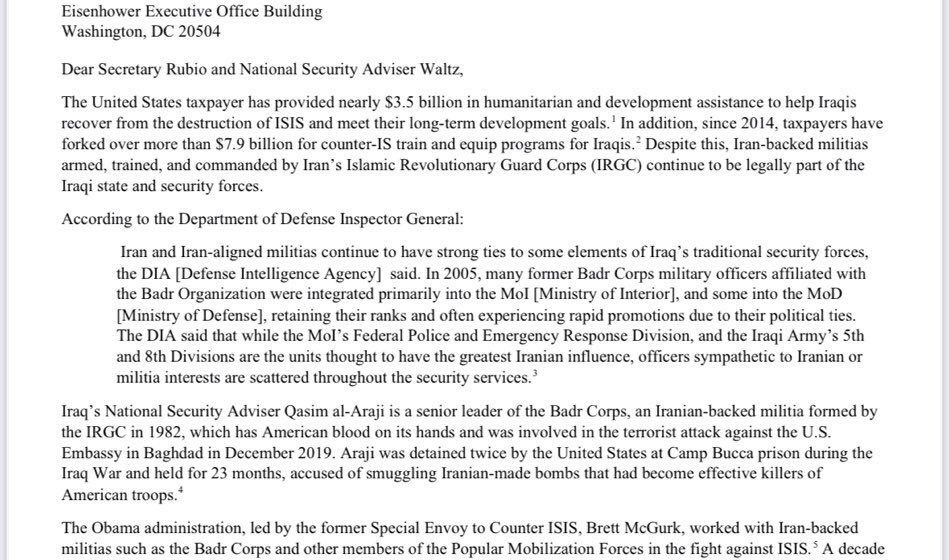
A major topic of discussion is a formal letter from several U.S. lawmakers to the Secretary of State and National Security Advisor demanding that multiple Iraqi factions be placed on terrorist lists. Accounts like Steven Nabil (Post Impact: 37%) and Dr. Zaid Abdulwahab Al-Adhami (Post Impact: 4%) shared images of the letter, which names groups such as Badr Organization and Jund al-Imam. The letter also calls for an end to U.S. security support for Iraq due to the integration of these factions within state security institutions. Rusly Al-Maliki (Post Impact: 18%) interprets this as the beginning of a “movement against the factions” accompanied by a “heavy stick.” Similarly, Omar Al-Janabi (Post Impact: 4%) lists the targeted factions and notes that Asa’ib Ahl al-Haq was surprisingly not included in the list.
2. Economic Fallout Feared from US-Iran Tensions
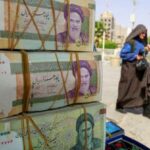
Fears of severe economic repercussions for Iraq are circulating widely, linked to potential U.S. sanctions and tensions with Iran. Dr. Ehsan Al-Shammari (Post Impact: 15%) states that the U.S. Treasury will prevent the $20 billion in trade between Iraq and Iran, viewing it as a circumvention of sanctions on Tehran. This sentiment is echoed by Mulla Aboud Al-Karkhi (Post Impact: 13%), who predicts a return to the “oil for food and medicine” era and warns the exchange rate could reach 5,000 dinars per dollar. Entifadh Qanbar (Post Impact: 10%) highlights a presidential order from Donald Trump imposing maximum sanctions on Iran, which he claims specifically names the Iraqi financial system, including the Ministry of Finance and Rafidain Bank. Hisham Ali (Post Impact: 8%) shares a clip of politician Hisham Al-Suhail warning that “what is coming is dangerous and the people will not bear the upcoming economic sanctions.”
3. Iran’s Defiant Stance Against the United States
Statements from Iran’s Supreme Leader Ali Khamenei regarding the U.S. are a prominent topic. Several accounts shared his remarks, in which he ruled out negotiations with the Trump administration. Dr. Hussein Al-Safi (Post Impact: 13%) quotes Khamenei as saying, “If the Americans attack our people’s security, we will attack their security without hesitation.” Shaho Al-Qaradaghi (Post Impact: 8%) and Amir Al-Mousawi (Post Impact: 6%) also posted videos of the speech, emphasizing the threat-for-threat policy. The context of these statements is further elaborated by Raad Hashim (Post Impact: 13%), who reports on warnings from IRGC commander Hossein Salami of a “harsh and unexpected” response if Israel were to target Iran’s nuclear facilities, highlighting the escalating regional tension.
4. Allegations of Militia Aggression Against Sunnis
Accusations of sectarian actions by militias against Sunni Iraqis are trending. Othman Al-Mukhtar (Post Impact: 21%) posted photos from the Bzeibiz area in Anbar, describing it as a “camp for the exile of Sunni Iraqis whose cities are occupied by militias.” He specifically names Kata’ib Hezbollah as preventing the return of displaced people from the Al-Awayisat area. In a similar vein, Mahdi Majeed (Post Impact: 16%) shared a photo allegedly showing an Iran-aligned PMF militia raising its flag inside a Sunni mosque in Anbar province. He questions why Iran and its affiliated militias “hate mosques and people who pray,” adding that international law guarantees freedom of worship.
5. Woman Arrested for Threats at a US Jewish Center
A widely shared story, promoted by Sufian Al-Samarrai (Post Impact: 100%), concerns a Palestinian woman with Jordanian citizenship who was arrested in the U.S. The post includes a video in which the woman is seen at a Jewish center allegedly threatening murder, jihad, and support for ISIS while insulting the Jewish religion. Al-Samarrai predicts that upon her arrest, outlets like Al Jazeera will frame the incident as an example of anti-Muslim racism in America, calling the situation a “farce.”
6. Allegations of Crimes by Saddam Hussein’s Regime
The legacy of Saddam Hussein’s rule continues to be a subject of debate, with new allegations of past atrocities being shared. Fadel Abu Ragheef (Post Impact: 26%) posted a video testimony from Hamed al-Jubouri, a former minister, who claims that Saddam personally supervised the rape of a general’s wife to blackmail him into espionage. In another post, Abu Ragheef (Post Impact: 10%) shares the story of an Iraqi officer, Abdul Wahid Al-Hajj, questioning what Saddam’s regime did to him and his wife after his graduation from a prestigious Russian academy, implying a tragic outcome.
7. Concerns Over Regional Stability in Syria and Lebanon
Developments in neighboring Syria and Lebanon are being closely watched with concern. Omar Abdulsatar Mahmoud (Post Impact: 15%) posted a video discussing the “repercussions of America’s withdrawal from Syria.” Separately, Othman Al-Mukhtar (Post Impact: 14%) warns Syrians to seek a UN Security Council resolution to counter what he calls sectarian incitement by figures like Nouri al-Maliki, which he fears is a prelude to crimes. In Lebanon, Dr. Hussein Al-Muayyad (Post Impact: 12%) discusses Hezbollah’s political defeat, citing a U.S. envoy’s statement that the group’s inclusion in a new government is “rejected” and that Lebanon’s future depends on removing Hezbollah from the political and military equation.
8. Iran’s Internal Political and Economic Challenges
The internal situation in Iran is another focus, with accounts highlighting economic and political pressures. Omar Abdulsatar Mahmoud (Post Impact: 14%) reports on the closure of government institutions, banks, and schools in several Iranian provinces due to shortages of gas and electricity, as well as currency instability. In another post, Mahmoud (Post Impact: 33%) notes the expected participation of Iran’s former crown prince, Reza Pahlavi, at the upcoming Munich Security Conference, signaling shifting dynamics in the Iranian opposition landscape.
9. Domestic Issues: Corruption and Political Criticism
Criticism of domestic corruption and the political establishment is evident in several trending posts. _. suhair Al_jumaili (Post Impact: 26%) shared a voice recording allegedly of Salman Atshan, a lecturer at the University of Basra’s College of Dentistry, threatening a female colleague. The post claims that higher education is controlled by “the terrorist Asa’ib organization and Hezbollah” and this is the result. In a different vein, Raad Hashim (Post Impact: 20%) posted a video of satirist Ahmed Al-Basheer from California delivering a cryptic warning, captioned, “By God, if only you knew!”, hinting at undisclosed negative developments.
10. Israeli PM Netanyahu’s Stance on a Palestinian State
Comments made by Israeli Prime Minister Benjamin Netanyahu regarding a Palestinian state are being discussed, primarily sourced from Israeli media. ZaidBenjamin (Post Impact: 9%) quotes a Jerusalem Post article in which Netanyahu reportedly told Channel 14 that if Saudis want a Palestinian state, “they can establish a Palestinian state in Saudi Arabia; they have a lot of land there.” The post details Netanyahu’s opposition to a Palestinian state after the October 7th attacks and links the discussion to potential normalization with Saudi Arabia. Mashaan Al-Jabouri (Post Impact: 4%) reacted to Trump’s recent statements on displacing Palestinians, calling them a “blatant colonial face” that ignores peoples’ rights in favor of Israeli interests.