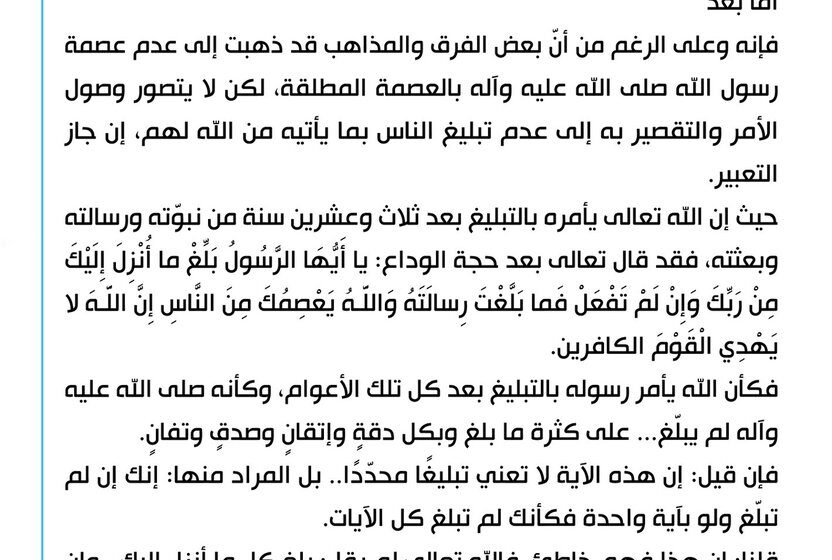
2025-02-08: Muqtada al-Sadr Issues Statement on Prophet’s Wives

Based on an analysis of 450 X / Twitter posts trending on February 8, 2025, Miqrab AI found that online conversations in Iraq were dominated by several key narratives. The most prominent topic was a widely shared religious statement by the influential cleric Muqtada al-Sadr regarding the status of the Prophet Muhammad’s wives. Significant attention was also given to a heated political exchange between Sunni leader Khamis al-Khanjar and former Prime Minister Nouri al-Maliki, focusing on their respective roles in the region’s conflicts. The evolving situation in Syria under its new leader, Ahmed al-Sharaa (formerly al-Jolani), generated extensive discussion, particularly concerning his group’s clashes on the Lebanese border and controversial comments made by an Iraqi politician about his wife. Other major themes included the death of a former Iraqi oil minister, the severe collapse of the Iranian currency, and the formation of a new government in Lebanon, which prompted varied reactions across the Iraqi political spectrum.
Table Of Content
- 1. Muqtada al-Sadr Issues Statement on Prophet’s Wives
- 2. Khamis al-Khanjar Clashes Verbally with Nouri al-Maliki
- 3. Al-Jolani’s Actions in Syria and Lebanon Spark Controversy
- 4. Tributes Pour in for Former Oil Minister Issam al-Chalabi
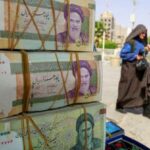
- 5. Alarms Raised Over the Collapse of the Iranian Currency
- 6. Iraqis React to Formation of New Lebanese Government
- 7. Basim Khashan’s Post on Al-Jolani’s Wife Sparks Backlash
- 8. Concerns Over Donald Trump’s Regional Influence
- 9. Discussion on Political Transformation of Ahmed al-Sharaa
- 10. Debates on the Legacy of the Ba’ath Party in Iraq and Syria
Today’s Top 10 X (Twitter) Trends in Iraq:
1. Muqtada al-Sadr Issues Statement on Prophet’s Wives
The most impactful story of the day was a statement from influential Shia cleric Muqtada al-Sadr. His official account, Muqtada al-Sadr (Post Impact: 100%), shared an image of a handwritten note which was then quoted by other accounts. Analyst Shaho Al-Qaradaghi (Post Impact: 31%) shared the core message of the statement, quoting Sadr as saying: “The wives of the Prophet are like the mothers of the believers by the ruling of the Quran.” The post by al-Sadr itself contained no text other than the link to the image, but its high engagement indicates its significance among his followers and the wider Iraqi social media landscape. Another user, Alaa Alabadi (Post Impact: 2%), commented on his influence, stating that “the future of Iraq is in the hands of our master al-Sadr.”
2. Khamis al-Khanjar Clashes Verbally with Nouri al-Maliki
A sharp political confrontation between Sunni leader Khamis al-Khanjar and former Prime Minister Nouri al-Maliki trended widely. According to Omar al-Janabi (Post Impact: 35%), al-Khanjar accused al-Maliki of hypocrisy, stating, “Syrians liberated their country with their own hands, while you came on the back of an American tank.” This sentiment was echoed by Shaho Al-Qaradaghi (Post Impact: 15%), who summarized al-Khanjar’s message as, “You came on the back of a tank, while they are liberators.” Commentator Salim Al-Jumaili (Post Impact: 11%) characterized al-Maliki’s statements as sectarian and claimed he “thrives on sectarian culture, hatred, and animosity.” Yasser Eljuboori (Post Impact: 6%) agreed with al-Khanjar’s criticism that al-Maliki “supports Bashar al-Assad’s Ba’ath and fights Saddam’s Ba’ath.”
3. Al-Jolani’s Actions in Syria and Lebanon Spark Controversy
The actions of Syria’s new leadership under Ahmed al-Sharaa (formerly al-Jolani) and his forces were a major topic of discussion, particularly regarding clashes on the Lebanese border. Politician Basim Khashan (Post Impact: 43%) sparked a significant debate by commenting on the nationality of “al-Jolani’s wife,” stating his main concern was whether she was genuinely his wife or one of the “captives from his invasions.” Meanwhile, accounts like Haidar (Post Impact: 14%) reported that the Lebanese Army had begun to confront the “Jolani aggression” after resistance from the Bekaa tribes, who reportedly downed “Shaheen” drones used by the Syrian forces. Pro-resistance axis accounts expressed alarm, with Wasan Al-Shaikhli (Post Impact: 21%) asking why “al-Jolani’s gangs don’t harass the Iraqi border as they do in Lebanon now!” and Abu Muzay’il (Post Impact: 6%) warning al-Jolani against attacking any Lebanese citizen.
4. Tributes Pour in for Former Oil Minister Issam al-Chalabi
The death of former Iraqi Oil Minister Dr. Issam al-Chalabi prompted condolences and tributes from several prominent figures. Raghad Saddam Hussein (Post Impact: 16%) offered condolences to his family and colleagues, asking God to grant him mercy. Journalist Zainab Rabee (Post Impact: 2%) recalled a meeting with the late minister, noting his sorrow over Iraq’s squandered wealth and his estimate that oil revenues exceeded $1,500 billion between 2003 and 2023. Sheikh Thair Al-Bayati (Post Impact: 3%) mourned that “Iraq is losing its great figures and statesmen,” who are being replaced by “mercenaries of Iran.” Al-Taghier TV channel also mourned his passing, as shared by Ahmed Al-Adhami (Post Impact: 3%).
5. Alarms Raised Over the Collapse of the Iranian Currency
The rapid depreciation of the Iranian currency was a significant point of discussion. Rusly Al-Maliki (Post Impact: 10%) reported on a “new collapse,” stating the exchange rate had reached 9 million toman for every $100. This was corroborated by Aayad Al Twfan (Post Impact: 10%), who noted the sharp fall from 8 million the previous day and observed that this decline was occurring even before potential new economic sanctions threatened by Donald Trump were implemented. Similarly, Dr. Zaid Abdulwahab Al-Azami (Post Impact: 7%) described the situation as a “dramatic and terrible collapse” driven by “Trump’s sanctions.”
6. Iraqis React to Formation of New Lebanese Government
The announcement of a new government in Lebanon under Prime Minister Nawaf Salam drew considerable attention and varied analysis from Iraqi commentators. Dr. Hussein Al-Muayed (Post Impact: 4%) provided a detailed, positive assessment, highlighting that the “Safavid duo” (Hezbollah and Amal) no longer holds a “blocking third” and that Iran’s direct influence has diminished. Conversely, Issam Hussein (Post Impact: 5%) argued against narratives of weakness, detailing the five ministries secured by the “Shia duo” and asserting that “as long as there are Shia defending their political rights and their country,” Lebanon will not bend to the will of its adversaries. Haidar (Post Impact: 5%) noted that the government was formed despite recent threats from a US envoy against Shia participation.
7. Basim Khashan’s Post on Al-Jolani’s Wife Sparks Backlash
A post by politician Basim Khashan (Post Impact: 43%) questioning the marital status of Syrian leader Ahmed al-Sharaa’s wife drew strong reactions, becoming a story about the nature of political discourse in Iraq. While Khashan claimed he was not interested in her nationality but whether she was a “captive,” his comments were criticized by others. Shaho Al-Qaradaghi (Post Impact: 6%) questioned Khashan’s focus, asking, “What is the relationship of this topic to the concerns and demands of citizens?” and stating that respecting his position requires rising above such “trivial matters.” On the other hand, Othman Al-Mukhtar (Post Impact: 9%) defended Khashan while attacking “followers of Iran in Iraq” for having an “honor complex” and failing to engage in honorable opposition.
8. Concerns Over Donald Trump’s Regional Influence
The potential impact of Donald Trump’s policies on the Middle East was a recurring theme. Mashaan Al-Jabouri (Post Impact: 7%) suggested that Trump retreated from his controversial proposal to relocate Gazans due to the “courageous stance” of US Congressman Al Green. Analyst Steven Nabil (Post Impact: 5%) highlighted recent “very dangerous” statements from an Iranian official revealing that Trump had demanded Iran’s complete disarmament, not just of its nuclear program. Nabil warned that if this position holds, pressure on pro-Iran factions within Iraq will intensify. Furthermore, Zaid Benjamin (Post Impact: 3%) shared a translated article from the Financial Times analyzing how Trump’s recent proposals on Gaza are complicating Saudi Arabia’s diplomatic balancing act in the region.
9. Discussion on Political Transformation of Ahmed al-Sharaa
Beyond the military clashes, Iraqi social media users discussed the political rebranding of Ahmed al-Sharaa, the new Syrian leader formerly known as Abu Mohammad al-Jolani. Wasan Al-Shaikhli (Post Impact: 7%) shared a video of a tearful al-Jolani mourning a fallen deputy “so that we can get to know our new neighbor ‘President Ahmed al-Sharaa’ better.” Commentator Ghaith Al-Tamimi (Post Impact: 6%) posted a photo of the International Criminal Court president shaking hands with al-Sharaa, criticizing it as a sign that “everything has been exposed and the despicable leftist international system has been disgraced.” Highlighting the irony of his rise, Hassan Al-Kaabi (Post Impact: 3%) recalled how Ayman al-Zawahiri appointed al-Jolani as an emir in 2013, only for al-Jolani to later appoint himself (as Ahmed al-Sharaa) president of Syria in 2025.
10. Debates on the Legacy of the Ba’ath Party in Iraq and Syria
A discussion emerged comparing the stances of Iraqi political factions towards the Ba’ath parties in Iraq and Syria. Dr. Zaid Abdulwahab Al-Azami (Post Impact: 3%) pointed out what he sees as a contradiction, stating, “They warn against the Ba’ath Party in #Iraq and support the Ba’ath Party in #Syria. A psychological paradox with a high price.” This theme was indirectly referenced in the broader clash between al-Khanjar and al-Maliki. Separately, commentator Fadhil Abu Ragheef (Post Impact: 4%) expressed surprise at the number of people who defend the “Black Ba’ath” regime, attributing this either to ignorance or a deliberate attempt to whitewash its crimes, while acknowledging that the current system has also been “disappointing.”