2025-02-12: Muqtada al-Sadr Calls for Pledge of Allegiance to Imam Mahdi

Based on an analysis of 573 X / Twitter posts trending on February 12, 2025, Miqrab AI identified several key narratives dominating online discourse in Iraq. The most significant story, driven by posts with the highest engagement, was Shiite cleric Muqtada al-Sadr’s call for his followers to sign a pledge of allegiance to Imam al-Mahdi, signaling a major political and religious mobilization. A second major topic of discussion involved widespread reaction to the meeting between Jordan’s King Abdullah II and U.S. President Donald Trump regarding the future of Gaza, with opinions divided between praising the king’s diplomatic maneuvering and condemning him for engaging with Trump’s controversial proposals. Other prominent themes included heightened rhetoric surrounding U.S.-Iran tensions, criticism of the Iraqi government’s decision to forgive Mozambique’s debt, concerns about the presence of foreign armed groups on Iraqi soil, and ongoing reports of security operations against ISIS remnants.
Table Of Content
- 1. Muqtada al-Sadr Calls for Pledge of Allegiance to Imam Mahdi
- 2. Widespread Reactions to King Abdullah II’s Meeting with Trump
- 3. US-Iran Tensions and Trump’s Stance on the Nuclear Program
- 4. Ahmed al-Bashir Predicts Political Change is Coming to Iraq
- 5. Debate Over Iraq Forgiving Mozambique’s Debt
- 6. Concern Over Government Hosting Foreign Armed Factions
- 7. Iraqi Security Forces Report Successes Against ISIS
- 8. Officials Mark Day for Preventing Violent Extremism
- 9. Criticism of Iraqi Silence on Trump’s Gaza Plan
- 10. KRG Engages in Diplomacy at World Government Summit
Today’s Top 10 X (Twitter) Trends in Iraq:
1. Muqtada al-Sadr Calls for Pledge of Allegiance to Imam Mahdi
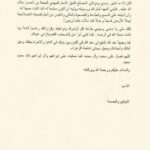
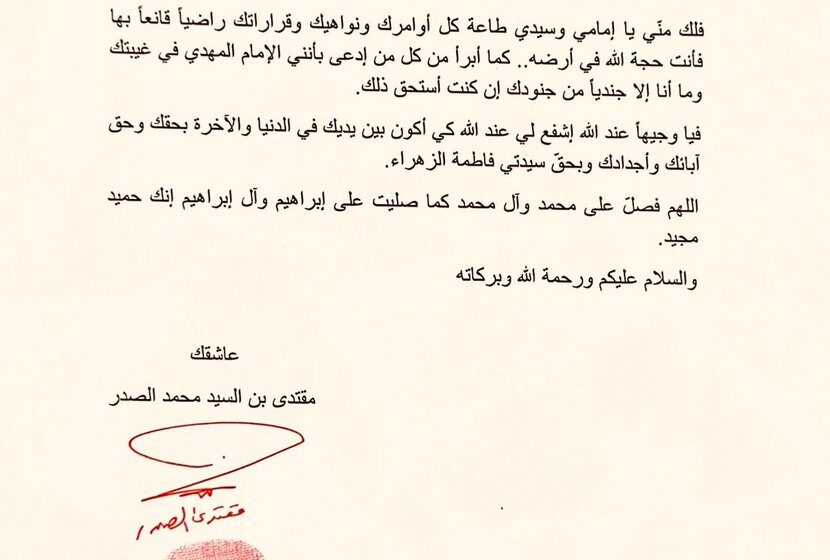
The most impactful story was a call to action from Shiite cleric Muqtada al-Sadr. Muqtada al-Sadr (Post Impact: 100%) posted an image of a document titled “Pledge of the Loyal,” a covenant with Imam al-Mahdi. His influential aide, known as Wazir al-Qaid – Salih Muhammad al-Iraqi (Post Impact: 45%), clarified the call, stating, “For those who want to pledge allegiance, note that signing and fingerprinting is from now until the end of the month of Sha’ban.” This move was amplified by supporters like Safaa al-Asadi (Post Impact: 2%), who shared that al-Sadr himself pledged and stamped the document with his blood for Imam al-Mahdi, indicating a significant mobilization effort within the Sadrist movement.
2. Widespread Reactions to King Abdullah II’s Meeting with Trump
The meeting between Jordanian King Abdullah II and U.S. President Donald Trump regarding Gaza generated significant and polarized debate. Supporters lauded the King’s approach. Faig al-Sheikh Ali (Post Impact: 37%) opined that the King “exercised the utmost degrees of restraint, patience, and political awareness to absorb the wrath” of Trump. Similarly, Hoshyar Zebari (Post Impact: 3%) defended the King against a “blind and fierce attack,” stating that he conveyed the Arab position with honesty. In contrast, critics, whom Faig al-Sheikh Ali (Post Impact: 27%) described as pro-militia figures, launched a “fierce retaliatory political-media attack.” Dr. Hussein al-Safi (Post Impact: 3%) claimed the King was ambushed by the media and tried to shift pressure onto Saudi Arabia and Egypt by making their approval a condition for any resettlement plan.
3. US-Iran Tensions and Trump’s Stance on the Nuclear Program
Tensions between the United States and Iran were a prominent topic, fueled by President Trump’s aggressive rhetoric. Abu Alaa al-Walai (Post Impact: 15%), a militia leader, issued a defiant message to “slaves of Trump,” warning that “the price of surrender is much higher than the price of resistance.” Rusly Al-Maliki (Post Impact: 5%) summarized a New York Post report stating Trump’s ultimatum to Iran: “Either a deal to stop the nuclear program, or open the hell of missiles on Tehran!” In response, Najah Mohammed Ali (Post Impact: 6%) reported that Iran’s Foreign Minister, Abbas Araghchi, warned via Egyptian mediators that continued US pressure would trigger “Promised Day 3.” The White House’s perspective was shared by Zaid Benjamin (Post Impact: 2%), who noted that President Trump “is seeking a deal with Iran from a position of strength.”
4. Ahmed al-Bashir Predicts Political Change is Coming to Iraq
Commentary from media personality Ahmed al-Bashir about Iraq’s political future spurred online discussion. Raad Hashim (Post Impact: 14%) shared a video in which al-Bashir “simply and spontaneously presents the idea of the moment democracy ended in Iraq.” In another clip shared by Raad Hashim (Post Impact: 5%), al-Bashir asserted that “change is inevitably coming” and claimed that pro-Iran militias are living in their “worst days” and fear they are next to be targeted. These statements were met with some skepticism by accounts like Mula Aboud Al-Karkhi (Post Impact: 4%), who challenged al-Bashir for now echoing predictions made by politician Faig al-Sheikh Ali two years ago, which al-Bashir had previously mocked.
5. Debate Over Iraq Forgiving Mozambique’s Debt
The Iraqi government’s decision to forgive a $256 million debt owed by Mozambique generated significant debate. Rusly Al-Maliki (Post Impact: 11%) questioned the move, asking, “Could someone explain to me why we waived a quarter of a billion dollars for Mozambique?” Ahmed al-Ziyadi (Post Impact: 2%) echoed this sentiment, arguing the money could have funded hundreds of schools or health centers. However, economist Ziyad al-Hashimi (Post Impact: 2%) offered a counter-perspective, explaining the debt was from the 1970s and was considered “bad debt” that was impossible to collect. He concluded that writing it off was a “sound financial and technical decision” that improves Iraq’s international reputation and reduces administrative burdens. Hisham Ali (Post Impact: 3%) also shared the news, citing Mozambique’s Ministry of Finance.
6. Concern Over Government Hosting Foreign Armed Factions
The presence of foreign armed groups in Iraq was highlighted as a major security threat. Parliamentarian Adnan al-Zurfi (Post Impact: 10%) warned that the Iraqi government’s hosting of “foreign armed factions classified on global terrorism lists…in official government camps constitutes a threat to Iraqi national security.” He questioned the state’s role in this “dangerous file,” especially given the fast-paced political and security changes in the Middle East. Adding to this concern, the account Haidar (Post Impact: 5%) claimed that Abu Aisha al-Shibani, identified as a leader in Al-Qaeda’s Syrian wing, announced he received an “official invitation” from the Coordination Framework government to visit Baghdad soon.
7. Iraqi Security Forces Report Successes Against ISIS
Iraqi security forces actively reported successful counter-terrorism operations against ISIS remnants across the country. The account Haidar (Post Impact: 8%) announced that an airstrike killed five ISIS members in a cave in the Anbar desert, quoting the Joint Operations Command which vowed to “continue to pound the elements’ burrows.” The same account reported additional operations, including the killing of several terrorists in four airstrikes in Anbar’s al-Jazeera desert, as well as the elimination of four ISIS members in strikes on Wadi Zghitoun in Kirkuk and the Balkana mountains in Salah al-Din. The official account for the Iraqi Special Operations (Post Impact: 3%) contributed to the narrative by posting a photo of its forces with the caption, “We are watching you.”
8. Officials Mark Day for Preventing Violent Extremism
Top Iraqi officials issued statements commemorating the International Day for the Prevention of Violent Extremism. National Security Advisor Qasim al-Araji (Post Impact: 9%) emphasized Iraq’s leadership in creating a “map of peace” after years of fighting terrorism and noted that the UN’s recognition of the day was a response to an Iraqi initiative. Prime Minister Mohammed Shia’ al-Sudani (Post Impact: 4%) stated that the Iraqi people “fought terrorism and defeated it on behalf of the free world” and are now committed to peaceful coexistence. Political leader Ammar al-Hakim (Post Impact: 3%) also used the occasion to urge global leaders to promote peace, particularly in light of the suffering in Gaza, and celebrated Iraq’s progress in overcoming extremism.
9. Criticism of Iraqi Silence on Trump’s Gaza Plan
President Trump’s proposals for Gaza, which included displacing its residents, prompted criticism and questions about the lack of a strong reaction from Iraqi leaders. Mahdi Jassem (Post Impact: 8%) asked, “Under what interpretation or title do we place this silence?” from the Iraqi government, Islamic parties, and the “Axis of Resistance.” Mishan al-Jubouri (Post Impact: 6%) observed that many Iraqis who had hoped a Trump presidency would curb Iranian influence were quickly disappointed to find his priority was “Israel’s interests,” including the displacement of Gazans. Adam (Post Impact: 4%) sarcastically suggested that the Popular Mobilization Forces (PMF), which costs Iraq over $2 billion a year, should either have its budget donated to Egypt and Jordan to help them resist Trump’s plan or be sent directly to Gaza to pre-empt an American occupation.
10. KRG Engages in Diplomacy at World Government Summit
Masrour Barzani, Prime Minister of the Kurdistan Region, actively promoted his diplomatic efforts at the World Government Summit (WGS25). He posted about meeting with UAE President Sheikh Mohamed Bin Zayed (Post Impact: 4%) to discuss “deeper ties” between the Kurdistan Region and the UAE. Barzani also shared updates on his meeting with Turkey’s Finance Minister, Mehmet Şimşek (Post Impact: 3%), focused on resuming the region’s oil exports and securing its role in the Development Road project. Furthermore, he announced the renewal of a Memorandum of Understanding with the UAE for another five years to apply their expertise in public sector reform, as detailed in a post by Masrour Barzani (Post Impact: 3%).