2025-02-14: Hezbollah Supporters Protest at Beirut Airport

Based on an analysis of 512 posts by Miqrab AI on February 14, 2025, the key themes trending on X / Twitter in Iraq revolve around intense regional political dynamics, domestic sectarian debates, and reflections on past national traumas. Discussions are dominated by events in Lebanon, where Hezbollah supporters’ protests sparked widespread commentary on Iranian influence and the stability of neighboring states. Simultaneously, a potent sectarian narrative emerged, with users debating the historical religious origins of Iranians and Arabs to frame contemporary geopolitical alliances. There is also significant attention on Saudi Arabia’s rising diplomatic stature, contrasting it with Iraq’s own challenges, while a statement from a former minister reignited painful conversations about accountability for the killing of protesters during the Tishreen movement.
Table Of Content
- 1. Hezbollah Supporters Protest at Beirut Airport
- 2. Debate Over Iranian and Arab Religious Origins
- 3. Saudi Arabia’s Rising International Influence
- 4. Former Minister: Foreigners Killed Tishreen Protesters
- 5. Defending the Image of Shia University Women
- 6. Calls for Iran to Adopt a More Aggressive Strategy
- 7. Iraq’s Potential Relations with Syria’s New Leader
- 8. KRG President’s Diplomatic Engagements in Munich
- 9. Commemorating the Assassination of Rafic Hariri
- 10. Criticism and Calls to Confront Turkey
Today’s Top 10 X (Twitter) Trends in Iraq:
1. Hezbollah Supporters Protest at Beirut Airport
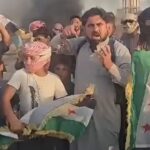
Multiple Iraqi accounts are covering protests by Hezbollah supporters who blocked the road to Beirut’s airport. Rusly Al-Maliki (Post Impact: 34%) reports that supporters threw garbage on the road to protest the Lebanese government’s refusal to allow an Iranian plane to land, sarcastically noting, “The axis of resistance is fine with the country becoming a dumpster as long as it sells Captagon!!” Sufian Samarrai (Post Impact: 9%) adds that the plane was allegedly carrying funds and that senior Hezbollah figure Naim Qassem was hiding among the passengers. Other accounts like Najeh Abbas Al-Mizan (Post Impact: 12%) called for a forceful response to protect the airport’s prestige, while Omar Abdul Sattar Mahmoud (Post Impact: 9%) shared a video of the Lebanese army firing in the air to disperse the crowds.
2. Debate Over Iranian and Arab Religious Origins
A significant sectarian debate was sparked by a post from Essam Hussein (Post Impact: 76%), who pushed back against claims that Iran’s pre-Islamic Zoroastrian (“Majus”) faith invalidates its current Muslim identity. He argued that if Iranians are labeled “Majus,” then Arabs could be labeled “pagans” for their pre-Islamic history of idol worship. He states, “Just as you entered Islam and left the worship of idols, Iran also entered Islam and left its ancient religions.” He concludes that reminding people of their ancient religions is an attempt to diminish Iran’s Shia identity. This viewpoint was echoed by Hassan Alkaaebi (Post Impact: 6%), who called such arguments “malicious bidding” and urged an end to “trading in sectarianism.”
3. Saudi Arabia’s Rising International Influence
Commentators are highlighting Saudi Arabia’s growing role as a major global player, contrasting it with Iraq’s situation. Rusly Al-Maliki (Post Impact: 33%) points out that the world’s two superpowers, the US and Russia, will negotiate an end to the Ukraine war in Saudi Arabia. He states that the Kingdom has become a “major international player” due to its quiet politics and successful economy. He suggests Iraq could achieve similar importance if it “gets rid of Iran’s influence, becomes its own master, manages its economy successfully, and develops its diplomatic capabilities.” Similarly, Aayad Al Twfan (Post Impact: 5%) celebrated the news, attributing it to Crown Prince Mohammed bin Salman and calling the Kingdom the “qibla of Arabs, Muslims, and the world.”
4. Former Minister: Foreigners Killed Tishreen Protesters
A statement from Jaafar Allawi, former Minister of Health in Adel Abdul Mahdi’s government, has resurfaced and is being widely discussed. Multiple accounts, including Husham Ali (Post Impact: 10%) and Raad Hashim (Post Impact: 8%), shared a video clip where Allawi claims, “The parties that killed the protesters were not Iraqi but foreign.” Ahmed Akho Mzaal (Post Impact: 5%) commented on the claim, suggesting Allawi could not explicitly name the Americans or the Kurdish presidential regiment, which he alleges were implicated at the time by Sadrist figure Sheikh Salah Al-Obaidi. The posts reignited discussions about accountability for the deaths during the Tishreen protests.
5. Defending the Image of Shia University Women
In a high-impact post, Dr. Hussein Al-Safi (Post Impact: 70%) shared a video to counter what he describes as a negative media portrayal of female university students. He argues that the media focuses on images of women dancing at graduation parties to suggest they are “frivolous.” In contrast, he presents an image of modesty, stating, “The reality is that the Shia girls of the center and south are committed and an example of the modest Muslim woman.” The post aims to challenge a prevailing narrative and highlight the religious commitment and conservative values he believes are more representative of women in these regions.
6. Calls for Iran to Adopt a More Aggressive Strategy
Analyst Ahmad Abdulsada (Post Impact: 15%) argues that Iran needs to take “urgent, bold, and decisive steps” to restore its deterrence capabilities and regional influence, especially after the “loss of Syria.” He proposes two immediate actions: first, to accelerate the creation of a “Shiite nuclear bomb” as a deterrent to the US and Israel, and second, to “discipline” Turkey and Qatar for their alleged betrayal in Syria. This call for a more confrontational posture comes amid other discussions about regional threats, such as a post by Shaho Al-Qaradaghi (Post Impact: 5%) citing US intelligence that Israel wants to strike Iran within months to dismantle its nuclear program and ultimately topple the regime.
7. Iraq’s Potential Relations with Syria’s New Leader
The future of Iraq’s relationship with Syria under its new leader, Ahmed Al-Sharaa (formerly known as Abu Mohammad al-Jolani), is a topic of discussion. Omar Abdul Sattar Mahmoud (Post Impact: 28%) shared a video clip from the program “Adasat Siyasiya” with the caption, “Sharia rejects the release of fighters from Algeria.” Meanwhile, other accounts like Zainab Rabee (Post Impact: 5%) and Husham Ali (Post Impact: 2%) circulated a claim that Iraqi Foreign Minister Fuad Hussein confirmed Iraq will invite Al-Sharaa to the upcoming Arab League summit in Baghdad. Ghaith Al-Tamimi (Post Impact: 4%) welcomed this potential development, supporting “the best relations with the new Syria.”
8. KRG President’s Diplomatic Engagements in Munich
The official account of Kurdistan Region President Nechirvan Barzani (Post Impact: 10%) has been actively posting updates from his meetings at the Munich Security Conference. He reported meeting with the President of the European Commission, Ursula von der Leyen, to discuss EU support for Iraq and the Kurdistan Region. In other posts, Barzani detailed meetings with Kuwait’s Prime Minister, Sheikh Ahmad Abdullah Al-Ahmad Al-Sabah, to strengthen relations (Nechirvan Barzani (Post Impact: 7%)), and with the President of Estonia, Alar Karis, to discuss cooperation and regional security (Nechirvan Barzani (Post Impact: 6%)). These posts highlight the KRG’s diplomatic outreach on the international stage.
9. Commemorating the Assassination of Rafic Hariri
On the anniversary of the assassination of former Lebanese Prime Minister Rafic Hariri, users reflected on its impact on Lebanon. Shaho Al-Qaradaghi (Post Impact: 3%) marked the date of the 2005 assassination, blaming it on the “hands of treachery and the Captagon cells” and stating that since that day, “Lebanon has been going backwards.” In a related post, Shaho Al-Qaradaghi (Post Impact: 12%) also shared a clip of Rafic’s son, Saad Hariri, saluting the Syrian people for overthrowing Bashar al-Assad, linking the family’s history with recent events in the region.
10. Criticism and Calls to Confront Turkey
Turkish President Recep Tayyip Erdoğan is the subject of sharp criticism and calls for confrontation from some Iraqi commentators. Sufian Samarrai (Post Impact: 14%) accused Erdoğan of being the one who can best embody a “hypocritical Islamized personality,” challenging anyone to rival him in hypocrisy. This sentiment is part of a broader narrative connecting Turkey’s actions to Iran’s regional challenges. For instance, Ahmad Abdulsada (Post Impact: 15%) explicitly called for Iran to “discipline Turkey and Qatar” for allegedly betraying Iran by handing Syria over to “terrorist Brotherhood organizations.” These posts reflect a view that Turkey is an adversary whose influence must be countered.