2025-02-24: Arab Summit Moved from Baghdad to Cairo

Based on an analysis of 499 X / Twitter posts trending on February 24, 2025, Miqrab AI identified several key themes and narratives dominating online discourse in Iraq. The most prominent discussion revolved around Iraq’s perceived diplomatic isolation following the decision to move the Arab League Summit from Baghdad to Cairo, which users linked to regional political pressures. Another major topic was the expansion of Israeli military influence into southern Syria, prompting concerns about the security implications for Iraq’s western border. There was also a starkly polarized reaction to the funeral of Hezbollah’s Hassan Nasrallah, which highlighted deep-seated sectarian divisions, with some accounts praising the loyalty of his followers and others condemning the mourning as hypocritical. Other significant conversations included speculation about Iran’s future role in Iraq, the high cost of Syrian visas for Iraqis, and domestic criticism of governance and the plight of internally displaced populations.
Table Of Content
- 1. Arab Summit Moved from Baghdad to Cairo
- 2. Israel’s Military Presence in Southern Syria
- 3. Nasrallah’s Funeral Exposes Sectarian Divides
- 4. Speculation on Iran’s Future Role and Muqtada al-Sadr
- 5. US-Iraq Relations and Threats from a Future Trump Admin
- 6. Syria Reduces High Visa Fees for Iraqis After Outcry
- 7. Critiques of Governance, Corruption, and Public Services
- 8. Plight of Displaced Sunnis in Freezing Conditions
- 9. Shifting US-Russia Relations Puzzle Iraqi Observers
- 10. Debate Over Iraqi National Identity vs. Sectarianism
Today’s Top 10 X (Twitter) Trends in Iraq:
1. Arab Summit Moved from Baghdad to Cairo
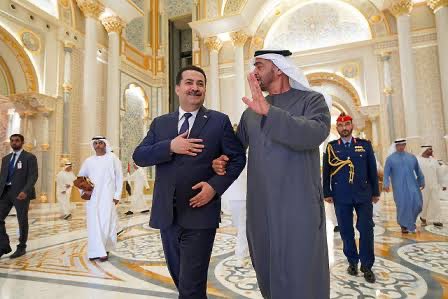
The most impactful story of the day concerns the cancellation of the Arab League Summit in Baghdad and its relocation to Cairo. According to Asaad Al-Basri (Post Impact: 100%), the move was prompted by Baghdad’s hesitation to invite the Syrian president and subsequent threats from Iraqi politicians that he would be returned to Syria “in a box.” This account frames the event as evidence of Iraq’s “diplomatic isolation,” pointing out that Prime Minister Al-Sudani was also unable to meet with the US Secretary of State at the Munich conference, while his rival Masrour Barzani was granted a meeting. Further complicating the summit’s politics, Haider (Post Impact: 14%), citing the Secretary-General of the Islamic Party of Iraqi Turkmen, notes that Turkish attempts to secure attendance for Abu Muhammad al-Jolani failed due to Iraqi popular and political opposition. The move was met with derision by users like Zina Al Saab (Post Impact: 4%), who expressed disgust with a simple post: “#همداكم!” (Shame on you!).
2. Israel’s Military Presence in Southern Syria
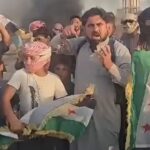
Significant discussion focused on Israel’s military occupation of the southern Syrian provinces of Daraa, Quneitra, and Suwayda, and the implications for Iraq. Ghazwan Jassem (Post Impact: 52%) argues that this development debunks the narrative of Israel as a peaceful nation and highlights a new threat, stating, “The presence of the occupation army in southern Syria means that it is now on the borders of Iraq.” This sentiment is echoed by Issam Hussein (Post Impact: 38%), who claims it’s natural for Netanyahu to declare the areas “Israeli protectorates” after witnessing what he describes as Sunni Arab support for Israeli air power. Accounts like Haider (Post Impact: 20%) and Sufian Al-Samarrai (Post Impact: 16%) report that local Druze populations are pledging allegiance to Israel and preparing to expel rival factions. Sarcastically, Hassan Al-Kaabi (Post Impact: 12%) observes that with Turkish, American, and Israeli protectorates established, “The important thing is that Syria was liberated from the national Asadi regime.”
3. Nasrallah’s Funeral Exposes Sectarian Divides
The funeral of Hezbollah leader Hassan Nasrallah generated intensely polarized reactions, exposing deep sectarian fault lines. On one side, accounts like Asaad Al-Basri (Post Impact: 21%) praised the massive turnout as a sign of Shi’a strength and loyalty, arguing that unlike other groups, “Shiites are not a defeated nation… filled with loyalty and their heads held high,” defying US and Israeli classifications of Nasrallah as a terrorist. Conversely, many users were highly critical. Emad Bajalan (Post Impact: 49%) shared a video of a mourner crying, dismissing it as a disingenuous performance. Rusly Al-Maliki (Post Impact: 21%) questioned the sincerity of the attendees, asking where they were when Lebanon was under attack and accusing them of attending only to take selfies and “please their masters.” Summarizing the divide, Mashaan Al-Jabouri (Post Impact: 12%) noted that historical events have deepened the Sunni-Shi’a rift, observing that “while the Shi’a buried him with their tears, the Sunnis did not grieve.”
4. Speculation on Iran’s Future Role and Muqtada al-Sadr
A significant narrative emerged from a concise but highly impactful post suggesting a major political shift in Iraq’s future. The account Rusly Al-Maliki (Post Impact: 39%) posted a speculative claim citing unnamed sources, stating, “Iran may hand over Iraq to Muqtada al-Sadr and leave.” This statement, though brief, sparked conversation about the potential for a dramatic change in Iran’s long-standing influence over Iraqi politics and the possible return of the Sadrist movement to the forefront of power. This aligns with sentiments expressed by supporters of the Sadrists, such as Dr. Ali Mohsen Al-Tamimi (Post Impact: 4%), who describes the Sadrists’ current political absence as a “strategic withdrawal” and asserts that any decision by Muqtada al-Sadr to re-engage in politics would undoubtedly “have a positive impact for the Iraqi people.”
5. US-Iraq Relations and Threats from a Future Trump Admin
Concerns over Iraq’s relationship with the United States, particularly in light of a potential Trump administration, were a key topic. Adnan Al-Taie (Post Impact: 34%) highlighted this anxiety, referencing “fiery statements” by politician Shakhawan Abdullah and noting that “Iraq has received real threats from the Trump administration!” He questioned how the current Iraqi government and the pro-Iran Coordination Framework would navigate this pressure. This conversation is contextualized by ongoing US actions, with Omar Abdul Sattar Mahmoud (Post Impact: 9%) reporting that US authorities have landed at Najaf airport amid rumors of impending sanctions on Iraqi airports and airlines over currency smuggling to Iran. In contrast, some voices see opportunity, as Ghaith Al-Tamimi (Post Impact: 7%) proposed a strategic partnership with a Trump-led US to solve Iraq’s energy crisis.
6. Syria Reduces High Visa Fees for Iraqis After Outcry
The cost for Iraqis to enter Syria became a contentious issue, leading to a policy reversal by the new Syrian administration. Initially, users like Hassan Al-Kaabi (Post Impact: 23%) expressed outrage over a $250 visa fee, sarcastically comparing it to free entry for Israelis. The criticism was widespread, but some, like Othman Al-Mukhtar (Post Impact: 11%), justified the fee, arguing that the “crimes committed by Iraqi militias” in Syria warranted even harsher measures. Following the backlash, the Syrian administration responded, as reported by Haider (Post Impact: 22%), by reducing the fee to $50. This move was praised by Mashaan Al-Jabouri (Post Impact: 11%), who commended the new leaders for listening to criticism, noting, “This is how nations are wisely managed.”
7. Critiques of Governance, Corruption, and Public Services
Iraqi users voiced strong criticism of government mismanagement, corruption, and the resulting decline in living standards. Prof. Dr. Ghalib Al-Da’amy (Post Impact: 18%) lamented the “waste of public funds” by sharing a video comparing a durable, German-built structure from 1983 with a dilapidated one built by the local municipality just five years ago. This narrative of state failure was reinforced by Dr. Zaid Abdulwahab Al-Adhami (Post Impact: 11%), who posted a picture of citizens in poverty with the caption, “These people live in a country with an annual budget of $153 billion.” The tangible consequences of this mismanagement were also highlighted by Raad Hashim (Post Impact: 4%), who reported on an armed robbery of 250 million dinars from a currency exchange company in Baghdad’s Sadr City.
8. Plight of Displaced Sunnis in Freezing Conditions
Multiple accounts drew attention to the dire humanitarian situation of internally displaced Sunni Iraqis living in camps amid severe cold weather. Othman Al-Mukhtar (Post Impact: 15%) shared a photo from the Bzeibiz camp, noting that the residents from Jurf al-Sakhar and Al-Awaisat have been displaced for 11 years by what he calls “Shiite militias.” He described their situation as something “the nationalists and civil society advocates in Iraq don’t talk about.” The harsh conditions were further emphasized by Omar Al-Janabi (Post Impact: 6%), who described the camp in the low temperatures as a “disgrace that will haunt the regime of displacement and forced disappearance.” The posts collectively serve as a powerful indictment of the ongoing failure to resolve the issue of displacement and hold those responsible accountable.
9. Shifting US-Russia Relations Puzzle Iraqi Observers
Recent developments in US-Russia relations prompted commentary and mockery from Iraqi analysts, who contrasted the geopolitical shifts with local pro-Russian sentiment. Rusly Al-Maliki (Post Impact: 16%) ridiculed a pro-Putin billboard in Baghdad that nicknamed the Russian leader “Abu Ali,” pointing out the irony as former US President Trump announced plans to visit Moscow to foster “great development” between the two countries. The same user expressed confusion over the complexities of international politics in another post, highlighting a surprising vote at the United Nations. Rusly Al-Maliki (Post Impact: 14%) remarked on the “strangeness of politics” after the United States was among 13 nations that voted against a resolution defining Russia’s war on Ukraine as an act of aggression.
10. Debate Over Iraqi National Identity vs. Sectarianism
A post sparked a debate about the weakness of a unified national identity in Iraq compared to the strength of sectarian and ethnic loyalties. Hassan Basket Ball – HASSAN AL HAMMADI (Post Impact: 16%) theorized that if Iraqis were surveyed, 90% of Kurds would prioritize their ethnicity, 90% of Shi’a their sect, and 70% of Sunnis their religion. He concluded with a somber reflection on the state of the nation, stating, “The homeland and patriotism are not priorities for the vast majority of Iraqis. We are a people without an identity, or perhaps a homeland without a people.” This perspective suggests that the country’s persistent political and social fragmentation is rooted in a fundamental failure to build a cohesive national identity that supersedes other affiliations.