2025-03-05: Muqtada al-Sadr Shares Images with Ali al-Sistani

Based on an analysis of 517 X / Twitter posts trending on March 5, 2025, Miqrab AI identified several key narratives dominating online discourse in Iraq. The most impactful posts came from influential cleric Muqtada al-Sadr, who shared images of himself with Grand Ayatollah Ali al-Sistani, prompting discussions about Shiite leadership and unity. Another major trend was the heated debate surrounding a historical TV series about Muawiya ibn Abi Sufyan, which sparked conversations on sectarianism, historical accuracy, and identity. Concurrently, reports on the dismissal of a Popular Mobilization Forces (PMF) commander in Nineveh for corruption triggered widespread calls for accountability. A significant and recurring theme was the intensifying discussion around the potential division of Iraq, with some politicians openly advocating for a separate Shiite region, drawing both support and sharp condemnation across the political spectrum.
Table Of Content
- 1. Muqtada al-Sadr Shares Images with Ali al-Sistani
- 2. Controversy Surrounding “Muawiya” TV Series
- 3. Dismissal of PMF Commander Osama al-Kildani
- 4. Intensifying Debate Over Dividing Iraq
- 5. Adnan Alzurfi Criticizes “Pathetic Political System”
- 6. Asserting Iraqi National Pride and Strength
- 7. Discourse on Iran’s Waning Regional Influence
- 8. Praise for Saudi Arabia vs. Iraqi Foreign Policy Questions
- 9. US Military Presence and Power in Iraq
- 10. Security Operations and Foreign Nationals
Today’s Top 10 X (Twitter) Trends in Iraq:
1. Muqtada al-Sadr Shares Images with Ali al-Sistani
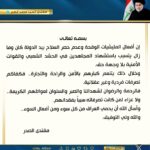
The most impactful posts of the day came from Shia cleric Muqtada al-Sadr (Post Impact: 100%), who shared two images without accompanying text. One image depicted him alongside Grand Ayatollah Ali al-Sistani, and the other was a portrait of himself. While al-Sadr provided no context, his followers and other accounts interpreted the posts as significant gestures. For instance, Dr. Hussein Al-Safi (Post Impact: 25%) shared the image of the two clerics with the caption, “Oh God, protect Ali and Ali,” underscoring a theme of unity and prayer for the two most prominent Shiite religious figures in Iraq. The high engagement on al-Sadr’s second post (Post Impact: 85%) further indicates his powerful influence on social media conversations in the country.
2. Controversy Surrounding “Muawiya” TV Series
A historical television series about the Umayyad caliph Muawiya ibn Abi Sufyan sparked intense debate over historical narratives and sectarianism. Faig Alsheakh (Post Impact: 38%) expressed his disinterest in the historical facts of the series, stating he was more concerned with its poor linguistic quality, contrasting it unfavorably with the acclaimed “Omar” series. Others criticized the show for what they perceive as historical inaccuracies. For example, Nora (Post Impact: 14%) pointed out that the series depicts Muawiya’s mother as a martyr from the Battle of Yarmouk, a claim she says is not supported by historians, calling it “continuous lies.” In a related discussion, Mahdi Majeed (Post Impact: 40%) observed that Sunni Muslims in Iraq tend not to name their children Muawiya or Yazid, suggesting this is evidence of their long-standing efforts to quell sectarian strife. Dr. Laith Shubbar (Post Impact: 5%) argued that confusing Ali ibn Abi Talib with Muawiya is equivalent to confusing right with wrong, a matter he views as tied to universal human values rather than sectarianism.
3. Dismissal of PMF Commander Osama al-Kildani
The dismissal of Osama al-Kildani, deputy commander of the Popular Mobilization Forces (PMF) operations in Nineveh, generated significant commentary focused on corruption. The move reportedly came after a video showed al-Kildani displaying a convoy of luxury cars valued at millions of dollars. Shaho Al-Qaradaghi (Post Impact: 28%) questioned whether this behavior was more fitting for a “fashionista or a military and security leader” and reported that al-Kildani had been referred to the Integrity Commission. Multiple users, including Raad Hashim (Post Impact: 18%), insisted that dismissal was not enough, demanding he be tried for illicit gains under the principle of “‘From where did you get this?’” Emad Bajalan (Post Impact: 7%) and Othman Al-Mukhtar (Post Impact: 5%) reiterated that the wealth was accumulated through extortion, royalties, and looting, and noted that despite his dismissal, al-Kildani still commanded Brigade 50.
4. Intensifying Debate Over Dividing Iraq
A prominent narrative emerged around calls by some Shiite political figures to divide Iraq or establish a Shiite federal region. Rusly Al-Maliki (Post Impact: 17%) claimed that Iran, sensing it would soon “lose Iraq,” was instructing its followers to push for a Shiite region to maintain a foothold in the south. Similarly, Omar Al-Janabi (Post Impact: 7%) reported that Hussein Mounis of Kata’ib Hezbollah had called for a nine-province Shiite state. This sparked criticism from those who recalled that Shiite leaders had vehemently opposed similar calls for Sunni or Kurdish regions in the past. Dr. Ghalib Al-Da’ami (Post Impact: 5%) noted the hypocrisy, stating, “Today some of the Coordination Framework are calling for independence, not federalism.” In response to these calls, Mashan al-Jabouri (Post Impact: 15%) proposed a deal to Shiite leaders: release Sunni prisoners and withdraw armed groups from Sunni areas, and in return, Sunnis would not contest their authority over the state.
5. Adnan Alzurfi Criticizes “Pathetic Political System”
Politician Adnan Alzurfi issued a sharp critique of Iraq’s current political establishment, which resonated with many users. In his post, Adnan Alzurfi (Post Impact: 22%) described the system as “a pathetic political system that cannot tolerate discussion,” run by individuals who “thought they were symbols and took over the country.” He accused these leaders of being deaf to dialogue and warnings, viewing any dissent as a conspiracy. Alzurfi concluded with a stark warning: “We have Iraq and you have what you have earned, that satisfies us, for the day of reckoning is near.” His strong statements were amplified by other accounts, such as Dr. Zaid Abdulwahab Al-Adhami (Post Impact: 3%), who summarized Alzurfi’s message for their followers.
6. Asserting Iraqi National Pride and Strength
Amidst political criticism and security concerns, a counter-narrative of national pride and resilience was also present. Abu Azrael (Post Impact: 18%), a well-known PMF commander, pushed back against those who describe Iraq as weak. He declared, “We are the factory of men,” and issued a challenge to those he accused of falsely claiming Arabism and chivalry. This sentiment was echoed in a different context by ahmedmeckya (Post Impact: 4%), who posted a video showcasing beautification projects and new developments in Baghdad, stating, “Baghdad was not distorted… Baghdad has been adorned and beautified,” presenting a positive image of the capital’s progress.
7. Discourse on Iran’s Waning Regional Influence
Several accounts discussed the perception that Iran’s influence in Iraq and the wider region is diminishing, prompting new strategies from its allies. Rusly Al-Maliki (Post Impact: 17%) claimed that Iran anticipates losing its grip on Iraq and that its followers’ calls for a Shiite federal region are a preemptive move to retain control over at least the southern part of the country, a proposal he believes the U.S. will reject. Similarly, Mashan al-Jabouri (Post Impact: 5%) argued that following the “disintegration of the Shiite crescent,” Sunni areas in Iraq are no longer of strategic value to Iran and its allies, signaling a significant geopolitical shift.
8. Praise for Saudi Arabia vs. Iraqi Foreign Policy Questions
Prime Minister Mohammed Shia’ Al Sudani’s positive remarks about Saudi Arabia prompted discussions about Iraq’s regional alliances and economic dependencies. Aayad Al Twfan (Post Impact: 14%) shared a clip of Sudani praising Saudi Crown Prince Mohammed bin Salman’s “honorable and courageous stance” with Iraq. Al Twfan contrasted this with Iraq’s alleged refusal of Saudi offers of free gas and electricity, questioning why Iraq continues to purchase them from Iran instead. In a related vein, Yasser Eljuboori (Post Impact: 2%) questioned Iraq’s absence from a regional meeting that included Morocco, asking if such meetings without Iraq are “hostile” or if it’s a sign that Iraq is being isolated.
9. US Military Presence and Power in Iraq
The nature of the U.S. military presence and its perceived power in Iraq was another topic of discussion. Hayder (Post Impact: 7%) reported on a joint air exercise between Iraqi F-16 fighter jets and an American B-52 bomber in Iraqi airspace, highlighting ongoing military cooperation. On the other hand, Yasser Eljuboori (Post Impact: 4%) shared a clip in which politician Alaa al-Rikabi claimed that a US “Chinook [helicopter] can arrest any Iraqi government official,” a statement that underscores a perception among some of overwhelming American power and influence over Iraqi sovereignty.
10. Security Operations and Foreign Nationals
Iraqi security operations involving foreign nationals were reported by several accounts. Hayder (Post Impact: 35%) posted that security forces killed a Lebanese terrorist named “Ihab” from Tripoli in the Anbar desert. In a separate incident, Hayder (Post Impact: 8%) also reported that security forces in Muthanna province arrested four Syrian nationals in the Al-Khidr district on charges of begging. These posts highlight ongoing security challenges related to terrorism and illegal activities involving non-Iraqis within the country’s borders.