2025-03-06: Sectarian Religious Narratives Condemning Umayyad Figures

Based on an analysis of (546) X / Twitter posts trending on March 6, 2025, Miqrab AI found that the online conversation in Iraq was dominated by a mix of intense sectarian religious narratives, escalating conflict in Syria, and anxieties surrounding regional geopolitics. The most engaged-with content centered on historical Shia religious grievances directed at Umayyad figures, used to frame contemporary conflicts. A major focus was the reported uprising of Alawite communities in Syria against Hay’at Tahrir al-Sham forces, with users sharing videos of clashes and describing the events as a sectarian war. Concurrently, discussions revolved around Iran’s internal political turmoil and the threat of crippling U.S. sanctions on its oil sector. Other key topics included commentary on a potential second Trump presidency’s impact on the region, criticism of the Iraqi government’s performance, and domestic news such as a scuffle at the Bar Association and the public display of ancient artifacts.
Table Of Content
- 1. Sectarian Religious Narratives Condemning Umayyad Figures
- 2. Uprising and Clashes in Syria’s Coastal Region
- 3. Iran’s Internal Crises and Impending U.S. Sanctions
- 4. Trump’s Stance on Hamas and Middle East Policy
- 5. Criticism of Iraqi Political Leadership and Performance
- 6. Potential U.S. Terrorist Designation of the PMF
- 7. Praise for Actress Alaa Hussein’s Performance
- 8. Display of the Treasure of Nimrud in Baghdad
- 9. Scuffle at Iraqi Bar Association General Meeting
- 10. Commemoration of National Day of Tolerance and Coexistence
Today’s Top 10 X (Twitter) Trends in Iraq:
1. Sectarian Religious Narratives Condemning Umayyad Figures
A highly impactful post by Dr. Hussein Al-Safi (Post Impact: 100%) drove a major sectarian conversation by listing historical conflicts between Umayyad figures and key Shia Imams, framing it as a battle between a “wicked tree” (Abu Sufyan, Muawiyah, Yazid) and a “good tree.” The post concludes with a prayer to curse Muawiyah and his family. This sentiment was echoed by accounts like Abu Drandash Al-Askari (Post Impact: 31%), which shared a video explicitly condemning what it called “the filthy Sunni Salafi Wahhabi thought.” These posts tap into deep-seated historical and religious grievances to comment on and frame contemporary identities and conflicts from a Shia perspective.
2. Uprising and Clashes in Syria’s Coastal Region
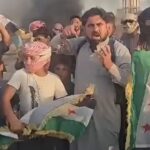
A significant number of accounts reported on an escalating conflict in Syria, describing an uprising against forces led by Abu Mohammad al-Jolani. Essam Hussein (Post Impact: 33%) and Haider (Post Impact: 21%) state that Jolani’s group, Hay’at Tahrir al-Sham, is launching sectarian attacks against Alawite communities in Homs, far from the initial disturbances in Latakia. Accounts shared videos of what they claim are popular resistance ambushes against Jolani’s forces. Wissam Aziz (Post Impact: 23%) shared footage of an ambush in Qardaha, while Ahmed Al-Thawaq (Post Impact: 24%) referred to the attackers as “Erdogan’s tails.” The narrative across these posts is one of a sectarian war instigated by Jolani, prompting a fierce armed response from local Alawite groups.
3. Iran’s Internal Crises and Impending U.S. Sanctions
Discussions about Iran’s stability featured prominently, with users pointing to signs of internal chaos and crippling external pressure. Sheikh Thaer Al-Bayati (Post Impact: 25%) described “unprecedented chaos” within the Iranian regime, citing the recent dismissal of the economy minister, the resignation of Javad Zarif, and public accusations of corruption against officials by President Pezeshkian. This internal turmoil is compounded by external threats, as reported by Rusly Al-Maliki (Post Impact: 15%) and Salim Al-Jumaili (Post Impact: 9%), who state that the U.S. is moving to completely shut down Iran’s oil sector and sanction regional entities that assist it, including potentially Iraq, Turkey, and the UAE.
4. Trump’s Stance on Hamas and Middle East Policy
Commentary on former U.S. President Donald Trump’s potential actions in the Middle East gained traction, particularly regarding the Israel-Hamas conflict. Sufian Al-Samarrai (Post Impact: 25%) reported that Trump, after hearing testimony from hostages freed from Hamas, issued a “final warning” for the immediate release of all remaining captives. This is presented as a precursor to a more aggressive U.S. policy in the region. Other accounts, such as Omar Abdul Sattar Mahmoud (Post Impact: 10%), interpreted these developments as Trump preparing the “battlefield with Iran,” suggesting a broader regional confrontation is anticipated under his potential leadership.
5. Criticism of Iraqi Political Leadership and Performance
Iraqi politicians and the current political system faced sharp criticism from various commentators. Faiq Al-Sheikh Ali (Post Impact: 25%) asserted his long-standing prediction that the current system will fall, criticizing others for wavering in their analysis. In a more immediate geopolitical context, Omar Al-Janabi (Post Impact: 19%) questioned how Prime Minister Al-Sudani will handle the involvement of Iraqi factions in the ongoing events in Syria, asking if Iraq has become a regional security threat. Meanwhile, Mahdi Majeed (Post Impact: 17%) accused the “militia government” of misspending funds, alleging it contributed millions to a shrine for Hassan Nasrallah in Lebanon while neglecting to build schools in Shia cities within Iraq.
6. Potential U.S. Terrorist Designation of the PMF
Reports of a potential U.S. designation of the Popular Mobilization Forces (PMF), or Hashd al-Shaabi, as a terrorist organization were circulated by several accounts. Citing the Kuwaiti newspaper *Al-Seyassah*, Rusly Al-Maliki (Post Impact: 11%) claimed that Coordination Framework leaders held an emergency meeting with Prime Minister Al-Sudani to discuss intelligence that the PMF is the next target for a Trump administration’s terrorist designation. The post suggests this would pave the way for U.S. and Israeli strikes on PMF camps and assassinations of its leaders. Hiba Al-Nnaib (Post Impact: 4%) also shared the report, referring to the news as “joyful.”
7. Praise for Actress Alaa Hussein’s Performance
Amidst political and security news, a cultural conversation emerged celebrating the work of Iraqi actress Alaa Hussein. Social media commentators like Muna Sami (Post Impact: 14%) hailed her as the “beast of the Iraqi screen,” praising her authentic performance and ability to convey complex emotions combining “fake joy and buried sadness.” Similarly, Emad Al-Musafir (Post Impact: 8%) commended her for masterfully portraying a southern Iraqi woman who lost her brother and husband as martyrs in the PMF, highlighting her role as a powerful representation of the “epic of southern grief and loss.”
8. Display of the Treasure of Nimrud in Baghdad
Positive news regarding Iraq’s cultural heritage gained attention as users discussed the first public display of the “Treasure of Nimrud” since 2003. Rusly Al-Maliki (Post Impact: 10%) described the “priceless” collection of around 600 gold and gemstone artifacts from the Assyrian Empire as one of the world’s greatest archaeological discoveries. According to Haider (Post Impact: 8%), the Prime Minister’s office has directed the creation of secure halls for the artifacts, which are being transferred from the Central Bank to the Ministry of Culture for a major exhibition before international media.
9. Scuffle at Iraqi Bar Association General Meeting
A domestic incident at the Iraqi Bar Association’s general assembly in Baghdad became a topic of discussion after videos of a physical altercation were shared online. Yasser Eljuboori (Post Impact: 8%) and Raad Hashim (Post Impact: 7%) posted footage of the fight. Samer Al-Saadi (Post Impact: 10%) claimed the confrontation occurred after a university professor and lawyer was silenced and had his microphone taken away for criticizing the Bar Association’s leadership, including Ahlam Al-Lami, and its voting mechanisms.
10. Commemoration of National Day of Tolerance and Coexistence
Prominent Iraqi political figures marked the “National Day of Tolerance and Coexistence,” commemorating the anniversary of the historic meeting between Grand Ayatollah Ali al-Sistani and Pope Francis. Ammar Al-Hakim (Post Impact: 8%) celebrated the day as an opportunity to entrench principles of respect and reject intolerance, while also wishing Pope Francis a speedy recovery from a recent health issue. Former Prime Minister Mustafa Al-Kadhimi (Post Impact: 7%) also recalled the moment, emphasizing that “dialogue and mutual respect are the true pillars for building nations” and that Iraq’s strength lies in its diversity.