2025-03-09: Muqtada al-Sadr Condemns Violence in Syria

Based on an analysis of 736 X / Twitter posts trended on March 9, 2025 by Miqrab AI, the primary narrative in Iraq centers on the tumultuous events in neighboring Syria following the rise of a new government. Discussions are dominated by reports of severe sectarian violence, particularly targeting the Alawite community, which has elicited strong and polarized reactions within Iraq. This has fueled a secondary, highly charged conversation about the presence of Syrian refugees in Iraq, with some prominent voices calling for their mass deportation and security forces reportedly arresting Syrians accused of supporting terrorism. Meanwhile, Iraqi political and religious figures, most notably Muqtada al-Sadr, have weighed in with statements condemning the violence, while others have expressed more complex or provocative views on the new Syrian leadership. A separate but significant topic concerns new U.S. sanctions pressure, specifically the revocation of a waiver that allowed Iraq to import energy from Iran, sparking concerns about summer electricity shortages and the country’s economic stability.
Table Of Content
- 1. Muqtada al-Sadr Condemns Violence in Syria
- 2. Reports of Massacres Against Minorities in Syria
- 3. Faig al-Sheikh Ali’s Provocative Stance on Al-Jolani
- 4. Backlash Against Crackdown on Syrians in Iraq
- 5. Reports of Arrests of Syrians Supporting Terrorism
- 6. Calls for the Mass Deportation of Syrian Refugees
- 7. US Ends Sanctions Waiver for Iraq-Iran Energy Trade
- 8. Houthi Leader Denounces “Takfiri” Groups in Syria
- 9. Pro-Militia Accounts Issue Threats of Retaliation
- 10. Warnings of Imminent US Sanctions on Iraq
Today’s Top 10 X (Twitter) Trends in Iraq:
1. Muqtada al-Sadr Condemns Violence in Syria
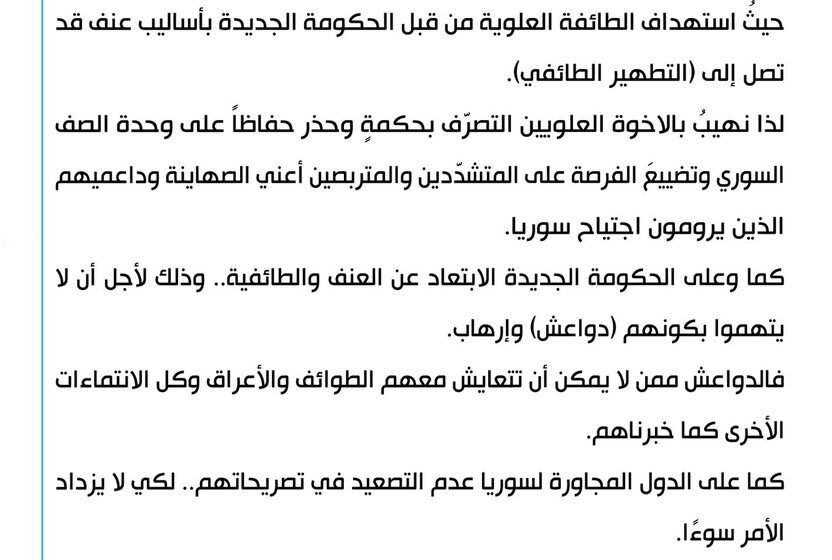
Prominent Iraqi cleric Muqtada al-Sadr issued a statement expressing grave concern over events in Syria. In the post by Muqtada al-Sayyid Muhammad al-Sadr (Post Impact: 100%), he shared an image of a formal statement highlighting that “distressing news is reaching us from Syria, where the Alawite sect is being targeted by the new government with methods of violence that could amount to sectarian cleansing.” Al-Sadr called on international and Islamic organizations to investigate these events and urged the new Syrian government to prevent sectarian strife. His statement was widely circulated by other accounts, including Steven Nabil (Post Impact: 4%) and Shaho Al-Qaradaghi (Post Impact: 3%), amplifying his message across the Iraqi digital sphere.
2. Reports of Massacres Against Minorities in Syria
A dominant theme across Iraqi social media is the circulation of reports and graphic images alleging widespread massacres and atrocities against the Alawite community and other minorities in the Syrian coastal region. Accounts describe these acts as being carried out by “Al-Jolani’s gangs.” For instance, Hiba Alnnayib (Post Impact: 32%) reported the killing of Syrian activist Jasmia Soleimani. Similarly, Wasan Al-Shaikhli (Post Impact: 28%) reported on the execution of Youhanna Yousef Boutros, the spiritual father of the Mar Elias Church in Tartus. Mashaan Al-Jabouri (Post Impact: 21%) condemned the killings as “heartbreaking crimes” but also pointed out what he called a “glaring moral contradiction,” noting that some Iraqis condemning the violence were themselves involved in or silent about crimes against Sunnis in Iraq.
3. Faig al-Sheikh Ali’s Provocative Stance on Al-Jolani
Politician Faig al-Sheikh Ali generated significant engagement with his controversial take on the new Syrian leader, Abu Mohammad al-Jolani. In a post, Faig al-Sheikh Ali/My Word for History (Post Impact: 32%) argued that since Syrian President Bashar al-Assad and Iran had sent al-Jolani to kill Iraqis in 2005, he could not now be hostile to the man who overthrew their common enemy. He rhetorically asked, “How do you want me to be his enemy?” In another widely shared post, Faig al-Sheikh Ali/My Word for History (Post Impact: 31%) sarcastically challenged pro-Iran Shia factions in Iraq, who chant slogans like “Zainab will not be taken captive twice,” to fire a single bullet against al-Jolani to defend the women being killed in the Syrian coast, accusing them of empty rhetoric.
4. Backlash Against Crackdown on Syrians in Iraq
Several influential accounts condemned what they describe as a growing security crackdown on Syrian nationals residing in Iraq. Mashaan Al-Jabouri (Post Impact: 30%) described the “incitement against Syrians in Iraq by some Shia activists” as “terrifying,” warning that arrests are being made without proper investigation, sometimes based on false accusations from business rivals. He called on Prime Minister Mohammed Shia’ Al Sudani to ensure security forces do not get drawn into this “populist and sectarian discourse.” Similarly, Omar Al-Janabi (Post Impact: 21%) called the campaign by the Ministry of Interior “shameful and a disgrace to Al-Sudani’s government,” labeling it a “despicable sectarian act that must stop.”
5. Reports of Arrests of Syrians Supporting Terrorism
In direct contrast to condemnations of the crackdown, several accounts celebrated and reported on the arrests of Syrian nationals by Iraqi security forces. These posts often included photos and personal details of the arrested individuals, accusing them of supporting terrorism. The account Haidar (Post Impact: 20%) reported that the National Security Service in Karbala arrested a Syrian who allegedly posted a threat online to “turn Iraq into ashes.” The same account reported nine Syrians were arrested in Anbar for “glorifying terrorist organizations” and another nine in Najaf for immigration violations, with two allegedly supporting Jabhat al-Nusra. Abu Darndash Al-Askari (Post Impact: 12%) shared a picture of a Syrian man, accusing him of being ungrateful and plotting against Iraq while “eating from our goodness.”
6. Calls for the Mass Deportation of Syrian Refugees
The heightened sectarian tensions and security concerns have led to explicit calls for the deportation of Syrian refugees from Iraq. Dr. Hussein Al-Safi (Post Impact: 16%) posted a poll asking followers if they support “deporting half a million Syrians in Iraq to Syria.” The options provided strongly suggested a “yes” vote, with one option stating, “They fled from Assad, and Assad is gone, they must return to their country.” Ahmad Al-Thawaq (Post Impact: 9%) declared that after most Syrians revealed their true nature as “supporters of Al-Jolani,” their presence in Iraq has become “undesirable.” These sentiments reflect a growing anti-refugee narrative tied to the recent events in Syria.
7. US Ends Sanctions Waiver for Iraq-Iran Energy Trade
A significant non-Syria-related development that trended was the news that the US administration under President Trump has revoked the sanctions waiver allowing Iraq to import and pay for Iranian electricity and gas. Muna Sami – Muna Sami (Post Impact: 6%) framed this as part of the “maximum pressure” campaign against Tehran and a “real challenge” for Iraq in the coming summer, despite government efforts to find alternatives. Yasser Eljuboori – Yasser Eljuboori (Post Impact: 4%) announced the news with the somber comment, “The conversation is over.” The move is seen as a major blow to Iraq’s fragile power grid and a sign of increasing US pressure on both Baghdad and Tehran.
8. Houthi Leader Denounces “Takfiri” Groups in Syria
A detailed statement from Houthi leader Abdul-Malik al-Houthi condemning the actions in Syria was shared by pro-resistance axis accounts. As posted by Haidar (Post Impact: 11%), Al-Houthi described the crimes committed by “takfiri groups” in Syria as a service to Israeli and American enemies, aimed at “tearing the Syrian social fabric apart.” He claimed these groups, which present themselves as jihadists, are brutally killing innocent people, distorting Islam, and have not fired a single bullet at Israel despite its incursions into southern Syria. This narrative frames the events in Syria as part of a broader conspiracy orchestrated by the US and Israel.
9. Pro-Militia Accounts Issue Threats of Retaliation
In response to the violence in Syria, accounts associated with Iraqi paramilitary factions posted messages of defiance and threats. The prominent account Abu Azrael – Abu Azrael (Post Impact: 14%) shared a video with a caption stating, “Our confrontation with you is inevitable, O Banu Umayya, O ISIS members, and we will invade you in your land.” The message claims they do not target women and children but will not accept “Afghans and Turkistanis” desecrating their homeland. Similarly, Wasan Al-Shaikhli (Post Impact: 12%) posted a video of armed men with a message challenging anyone to test their resolve, referring to them as “the men of Abbas and Hussein.”
10. Warnings of Imminent US Sanctions on Iraq
Alongside the news about the energy waiver, a broader narrative emerged about impending US sanctions targeting Iraq directly. Dr. Ihssan Al-Shammari (Post Impact: 6%) issued a stark warning: “The sanctions on Iraq have begun… they will include institutions, entities, and personalities in an escalating manner.” This sentiment was echoed by Entifadh Qanbar (Post Impact: 3%), who directly blamed Iraqi Minister of Finance Taif Sami for causing “more calamities and sanctions” by allegedly allowing illicit funds for militias to be deposited in state banks, predicting that power outages and financial crises are forthcoming.