2025-03-24: Criticism of Iranian Nowruz Celebrations

Based on an analysis of 481 X / Twitter posts trending on March 24, 2025, Miqrab AI identified several key themes and narratives dominating online conversations in Iraq. The most prominent discussions revolved around sectarian and regional tensions, particularly criticism of Iranian Nowruz celebrations coinciding with a Shia day of mourning. There was significant conversation about Iran’s purported advanced military capabilities, which some users claimed was the reason for American hesitance to engage it directly. Domestically, fierce debates surrounded political figure Faig al-Sheikh Ali following a recent media appearance, while serious allegations of corruption and misconduct were leveled against figures in Anbar province. Other key topics included ongoing anti-government protests in Turkey, praise for Saudi Arabia’s expansion of the Grand Mosque in Mecca, and outrage over the discovery of burned Qurans in Baghdad.
Table Of Content
- 1. Criticism of Iranian Nowruz Celebrations
- 2. Iran’s Advanced Military Capabilities
- 3. Debates and Controversy Around Politician Faig al-Sheikh Ali
- 4. Political Tensions and Accusations in Anbar Province
- 5. Ongoing Protests Against Erdogan’s Government in Turkey
- 6. Praise for Saudi Arabia’s Grand Mosque Expansion
- 7. Outrage Over Burned Qurans Found by the Tigris River
- 8. Former PM Adel Abdul Mahdi Mocked for Yemen Comments
- 9. US Urges Iraq to Control Militias and Limit Iranian Influence
- 10. Sectarian Commentary and Historical Disputes
Today’s Top 10 X (Twitter) Trends in Iraq:
1. Criticism of Iranian Nowruz Celebrations
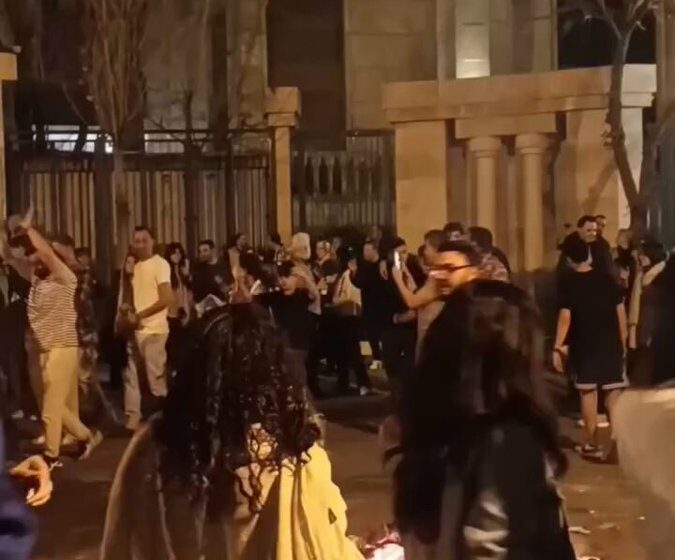
Several Iraqi X/Twitter accounts expressed disapproval of Iranians celebrating Nowruz, as the holiday coincided with the mourning period for the death of Imam Ali. Rusly Al-Maliki (Post Impact: 100%) and Tamara Alkhazraji (Post Impact: 26%) shared videos of the celebrations and questioned the silence of Iraqi religious figures like Ali al-Taleqani and Mohammed al-Safi, who they suggest would typically protest such events. Rusly Al-Maliki sarcastically wondered if al-Taleqani’s turban “does not provide coverage” in Iran. Shahou Al-Qaradaghi (Post Impact: 19%) also shared a video of the ongoing nightly celebrations in Iranian cities for Nowruz.
2. Iran’s Advanced Military Capabilities
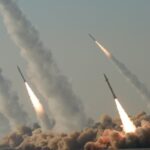
A significant narrative focused on Iran’s military strength as a deterrent against American aggression. Dr. Hussein Al-Safi (Post Impact: 71%) listed several advanced weapon systems he claims Iran possesses, including directed-energy lasers, plasma weapons, hypersonic weapons, and nuclear capabilities, as the reason “America is afraid to bomb Iran.” In another post, Dr. Hussein Al-Safi (Post Impact: 62%) shared an image of what he described as an Iranian military laser weapon that has “terrified America.” Similarly, Wissam Aziz (Post Impact: 51%) congratulated the Islamic Republic for acquiring plasma technology, stating, “If knowledge were in the Pleiades, the hands of Persia would reach it.”
3. Debates and Controversy Around Politician Faig al-Sheikh Ali
Politician Faig al-Sheikh Ali was a central figure of debate, with users expressing both strong support and harsh criticism following a recent media appearance. Faig Alsheakh Ali/My Word for History (Post Impact: 63%) himself stated that he was facing an unprecedented attack but dismissed his critics. Supporters like Abdulrazzaq Al-Hayali (Post Impact: 20%) praised him for being like a “thunderbolt” against Iran’s loyalists. Conversely, critics like Mazen Alzaidi (Post Impact: 15%) accused him of being a “clown, talkative, and a liar,” while Alshabandar (Post Impact: 15%) and Abu Drandesh Al-Askari (Post Impact: 11%) mocked his claim that Russian President Putin had contacted him.
4. Political Tensions and Accusations in Anbar Province
Several posts highlighted political tensions and serious accusations against prominent figures from Anbar province. Haider (Post Impact: 77%) posted a video of Jabbar Ajaj, a leader in Anbar, claiming that they had arrested Abu Muhammad al-Jolani in Haditha when he was an Al-Qaeda leader, asserting that Jolani did not fight the Americans but instead killed state employees. In a separate, highly inflammatory post, Wasan Al-Shaikhli (Post Impact: 69%) made a direct accusation against the wife of Ali Hatim Suleiman. Meanwhile, Haider Al Mulla (Post Impact: 41%) shared a video with the caption “#Al_Nujaifi exposes the corruption system in #Anbar,” indicating ongoing discussions about corruption in the governorate.
5. Ongoing Protests Against Erdogan’s Government in Turkey
The ongoing anti-government demonstrations in Turkey were widely covered by Iraqi accounts. Posts from Haider (Post Impact: 33%) shared images of protestors with the slogan “We left fear in Karbala,” and in another post, Haider (Post Impact: 21%) claimed the protests erupted after President Erdogan fabricated charges against the opposition, including his main rival Ekrem İmamoğlu. Sufian Al-Samarrai (Post Impact: 18%) accused Erdogan of deploying “jihadist terrorist gangs” to intimidate peaceful demonstrators. This coverage highlights a sustained interest in the political turmoil in neighboring Turkey.
6. Praise for Saudi Arabia’s Grand Mosque Expansion
A highly engaged post by Dr. Hussein Al-Moayed (Post Impact: 97%) celebrated the expansion of the Grand Mosque in Mecca, describing it as a “masterpiece of architecture” that deserves to be considered one of the wonders of the world. The account praised the Kingdom of Saudi Arabia for achieving the “most important and greatest architecture” of the holy site since the dawn of Islam. The post specifically credits the late King Abdullah bin Abdulaziz Al Saud for ordering the third expansion and praised King Salman bin Abdulaziz Al Saud and Crown Prince Mohammed bin Salman for their leadership.
7. Outrage Over Burned Qurans Found by the Tigris River
A series of posts from Othman Al-Mukhtar (Post Impact: 34%) drew attention to the discovery of hundreds of burned and discarded copies of the Quran on the banks of the Tigris River. The account described the scenes as “heartbreaking for every Muslim” and lamented the lack of official commentary from the government or any other entity on the incident. In a follow-up post, Othman Al-Mukhtar (Post Impact: 20%) linked the crime to recent appearances by “turbans of evil” who he claims have cast doubt on the Quran and alleged that its true version is hidden.
8. Former PM Adel Abdul Mahdi Mocked for Yemen Comments
Former Iraqi Prime Minister Adel Abdul Mahdi became a subject of ridicule after a statement he made about a visit to Yemen. Shahou Al-Qaradaghi (Post Impact: 17%) shared an image of Abdul Mahdi with the quote: “I went to Yemen to break the siege on it.” This prompted derisive responses from other users, including Yasser Eljuboori (Post Impact: 9%), who responded with a long series of laughing emojis. _. suhair Al_jumaili (Post Impact: 8%) also commented mockingly on the statement, referring to him as “the thief of Zawiya bank and killer of the Tishreen revolutionaries.”
9. US Urges Iraq to Control Militias and Limit Iranian Influence
A statement from the U.S. State Department regarding armed factions in Iraq was shared across multiple accounts. Omar Abdul Sattar Mahmoud (Post Impact: 15%) and Hisham Ali (Post Impact: 10%) both posted the statement, which called on the Iraqi government to “control all armed factions within its territories and that its decision should not be from Iran.” The repetition of this official American position indicates its significance in the day’s political discourse on Iraqi sovereignty and foreign influence.
10. Sectarian Commentary and Historical Disputes
Underlying many conversations were posts reflecting deep-seated sectarian and historical tensions between Arabs and Persians, as well as Sunnis and Shias. Aayad Al Twfan (Post Impact: 23%) posted a video about “Persian hatred and malice towards Arabs,” quoting a famous Iranian poet. In a counter-narrative, Wasan Al-Shaikhli (Post Impact: 21%) addressed Saudi users, reminding them that while they criticize Persians for being fire-worshippers, “the Arabs were worshippers of idols.” Meanwhile, Dr. Hussein Al-Safi (Post Impact: 10%) shared a religious story contrasting the wisdom of Imam Ali with the ignorance of Muawiyah, reinforcing a historical Shia perspective.