2025-03-27: Muqtada al-Sadr Announces Election Boycott

Based on an analysis of (513) X / Twitter posts by Miqrab AI on March 27, 2025, the primary narrative in Iraq revolves around Shiite cleric Muqtada al-Sadr’s sudden announcement that he and his movement will boycott the upcoming parliamentary elections. This decision has dominated political discourse, with reactions ranging from praise for rejecting a “corrupt” system to speculation about his next move, including potential street protests. A secondary major theme is a surge of nationalist anger directed at Jordan following perceived insults against Iraqis during a football match, leading to calls for cutting economic aid. Other significant conversations include controversy over a former minister’s hostile remarks towards Saudi Arabia, the deportation of Syrians accused of supporting terrorism, and ongoing debates about Iran’s regional influence, particularly in the context of the upcoming “Quds Day.”
Table Of Content
- 1. Muqtada al-Sadr Announces Election Boycott
- 2. Anger Towards Jordan Over Football Match Insults
- 3. Ex-Minister Solagh’s Remarks on Saudi Arabia Spark Controversy
- 4. Deportation of Syrians Accused of Supporting Terrorism
- 5. Debate Over Legacy of Sniper Abu Tahsin al-Salhi
- 6. Hadi al-Amiri’s “Axis of Resistance” Speech
- 7. Discussion and Criticism of Using Grok AI for Analysis
- 8. Criticism Surrounding Iran’s Upcoming “Quds Day”
- 9. Coverage of Anti-Government Protests in Turkey
- 10. PM al-Sudani’s Iftar with Journalists Sparks Debate
Today’s Top 10 X (Twitter) Trends in Iraq:
1. Muqtada al-Sadr Announces Election Boycott
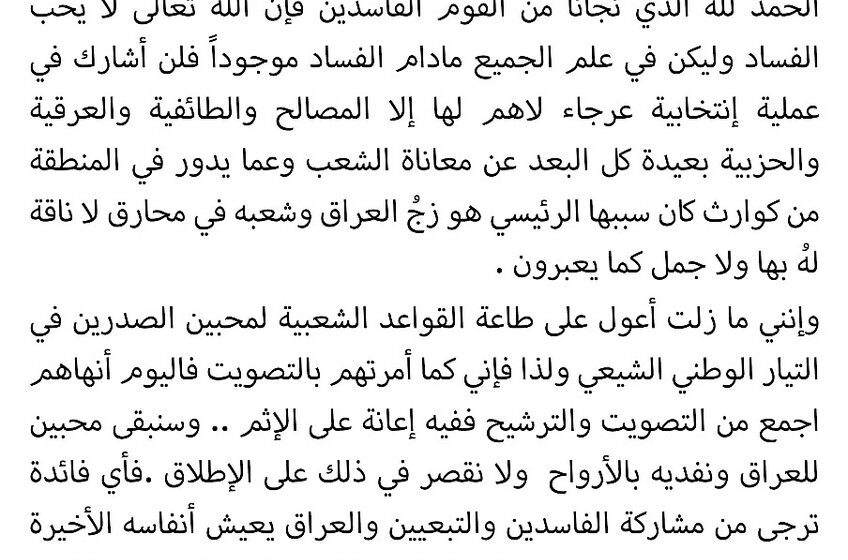
The most dominant story is the announcement by Shiite cleric Muqtada al-Sadr that his movement will not participate in the upcoming parliamentary elections. The official statement was shared by Wazir Al-Qaid – Salih Muhammad Al-Iraqi (Post Impact: 88%), stating the decision was made to avoid “assisting in corruption and wrongdoing.” Sadr’s message described Iraq as “living its last breath.” This triggered widespread reaction. Faiq Al-Sheikh Ali/Kalimati Lil Tarikh (Post Impact: 100%) issued a direct challenge to al-Sadr, urging him to lead his followers into the Green Zone to arrest the “deep state elements.” Commentators like Rusly Al-Maliki (Post Impact: 14%) interpreted the move as an attempt to “jump from the ship that he sees is sinking,” referring to the Iran-backed political system. Others, such as Ali Al-Dhabhawi (Post Impact: 9%), speculated that Sadr is preparing for massive protests that “will sweep away the Green Zone and its residents.” The decision was seen by Dr. Ihsan Al-Shammari (Post Impact: 8%) as a message that there is “no hope in the political process.”
2. Anger Towards Jordan Over Football Match Insults
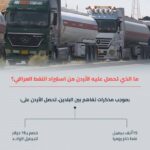
A wave of anger and nationalist sentiment has been directed at Jordan and Palestine following a football match in Amman where some spectators allegedly chanted offensive slogans and insults against Iraqis. Salem Mashkour (Post Impact: 20%) highlighted the irony, stating that “65 percent of Jordan’s national income is linked to the Iraqi economy, and Iraqis are insulted in Amman.” This sentiment was echoed by others, who called for an official response. MP Alia Nassif (Post Impact: 13%) blamed the Iraqi Football Federation for holding the match in Amman and called on the Prime Minister to “open an investigation… and restore the dignity of 45 million Iraqis.” Yousif Al-Kilaby (Post Impact: 11%) warned that without an official position from the Jordanian government, there would be consequences for mutual interests discussed in parliament. Mustafa Al-Dulaimi (Post Impact: 20%) expressed frustration with the Iraqi government’s silence on the matter.
3. Ex-Minister Solagh’s Remarks on Saudi Arabia Spark Controversy
Controversial statements by former Iraqi Interior Minister Baqir Jabr, known as “Solagh,” have drawn significant attention and criticism. A post by Omar Al-Janabi (Post Impact: 65%) features a video clip in which Solagh claims he addressed the Saudi Interior Minister as if he were an employee and accuses Riyadh of terrorism. Al-Janabi questions how Saudi Arabia and its diplomatic mission in Iraq will respond to these insults and accusations, stating, “We are waiting..” The high engagement on this post indicates that the remarks have struck a nerve, reigniting tensions and prompting discussions about the nature of Iraq’s diplomatic relationships with its neighbors, particularly Saudi Arabia. Omar Abdul Sattar Mahmoud (Post Impact: 17%) also shared the clip, amplifying the controversy.
4. Deportation of Syrians Accused of Supporting Terrorism
Several accounts reported on the arrest and deportation of Syrian nationals from Iraq. Wasan Al-Shaikhli (Post Impact: 38%) called for the “expulsion of Syrians who supported and called for terrorist groups from Iraq,” sharing a video of individuals being deported. Abu Darndash Al-Askari (Post Impact: 13%) reported that Basra police arrested two Syrians for glorifying terrorist groups in the city center and described the expulsion as the “correct procedure.” In a related post, Othman Al-Mukhtar (Post Impact: 4%) highlighted the humanitarian aspect, noting that dozens of deported Syrians have been stuck at the Iraqi-Syrian border for days, with their money stolen and in need of medical care, as they wait for the Syrian side to allow them entry.
5. Debate Over Legacy of Sniper Abu Tahsin al-Salhi
The legacy of Abu Tahsin al-Salhi, a famous elderly sniper with the Popular Mobilization Forces (PMF), became a subject of debate. Hiba Al-Nnayib (Post Impact: 14%) questioned the narrative around him, citing an AI analysis suggesting the story was exaggerated for media purposes, as he was an old man suffering from poor eyesight. She concluded, “Trust the devil, but do not trust the loyalist.” This perspective was amplified by Hayder (Post Impact: 8%), who quoted her post. In response, Al-Shabandar (Post Impact: 7%) condemned those mocking the heroism of “the martyr Abu Tahsin al-Salhi,” viewing it as a denigration of Iraqi heroes.
6. Hadi al-Amiri’s “Axis of Resistance” Speech
A recorded speech by Hadi al-Amiri, head of the Fatah Alliance, on the eve of “Quds Day” has led to speculation that he is officially joining the Iran-led “Axis of Resistance.” Steven Nabil (Post Impact: 17%) highlighted that al-Amiri appeared with the same backdrop used by other leaders of Iran-backed factions in the region. Nabil questioned if this was an “announcement of al-Amiri’s formal entry into the axis and entry into the regional war.” In subsequent posts, he continued to ask, “Did Amiri announce through this speech his entry into the group of axis leaders?” This suggests a potential shift in the public posture of a major Iraqi political and paramilitary leader, aligning him more explicitly with regional conflicts.
7. Discussion and Criticism of Using Grok AI for Analysis
The use of X’s AI tool, Grok, for political evaluation has become a topic of discussion and critique. Faiq Al-Sheikh Ali/Kalimati Lil Tarikh (Post Impact: 16%) noted the increased reliance on Grok for assessing personalities and events, criticizing it as “dependence and laziness that has no meaning.” He argued that ready-made judgments do not stick in memory as well as those reached through personal effort and investigation. In a follow-up post, he humorously remarked on Grok’s apparent agreement with his criticism. Separately, Sufian Al-Samarrai (Post Impact: 12%) directly addressed the AI, asking it historical questions about Palestinian presidents and prophets to test its knowledge and framing.
8. Criticism Surrounding Iran’s Upcoming “Quds Day”
As the Iran-initiated “Quds Day” approaches, several X accounts voiced criticism and skepticism. Ali Fadhil (Post Impact: 9%) remarked caustically that “Iran liberates Jerusalem with slogans and occupies Arab capitals in reality.” This sentiment reflects a view that the event is more about projecting Iranian influence than genuine support for the Palestinian cause. Shaho Al-Qaradaghi (Post Impact: 6%) reported that Khamenei’s representative in Iraq has called for mass marches on Friday, which he described as a “day of slogans and burning flags and walking on them.” In contrast, pro-Iran accounts like Sabereen News (Post Impact: 4%) shared quotes from the late Qasem Soleimani, framing the defense of Jerusalem as a defense of Islam itself.
9. Coverage of Anti-Government Protests in Turkey
Several users shared videos and commentary on large-scale anti-government protests in Turkey, framing them as a popular uprising against President Recep Tayyip Erdoğan. Sufian Al-Samarrai (Post Impact: 12%) posted that despite Erdoğan’s suppression of protesters with “batons, tear gas, and severe beatings,” the Turkish people came out in even greater numbers to challenge the “Ottoman Islamist tyrant.” He argued that the revolution continues despite the crackdown. Similarly, Abu Darndash Al-Askari (Post Impact: 3%) shared a video of the protests with the caption, “Freedom in Turkey in its most beautiful form.” The posts portray the events as a significant challenge to Erdoğan’s rule.
10. PM al-Sudani’s Iftar with Journalists Sparks Debate
Prime Minister Mohammed Shia’ Al-Sudani’s hosting of an Iftar dinner for journalists and media figures has sparked a debate about press independence. Hiba Al-Nnayib (Post Impact: 4%) described the initiative as “an attempt to polish his image before the elections and win their favor,” questioning whether the journalists who attended would be able to criticize the prime minister in the future. Likewise, Al-Muwaten Anwar Al-Hamdani (Post Impact: 4%) addressed the program hosts directly, warning them, “You ate from the government’s plate… remember that bread and salt have their dues,” implying they are now indebted to the government and should not pretend to be opposition voices later.