2025-03-31: Cleric Criticized for Quran Recitation Error

Based on an analysis of 433 X / Twitter posts on March 31, 2025, by Miqrab AI, the primary narrative dominating Iraqi social media is a fierce sectarian and political controversy over the date of Eid al-Fitr, with accusations of government interference in religious affairs aimed at the Sunni community. This debate is intertwined with criticism of Prime Minister Mohammed Shia’ Al Sudani’s remarks on “sedition.” Other significant conversations include widespread mockery of a prominent cleric’s error in reciting the Quran, escalating geopolitical tensions surrounding Iran’s nuclear program, and pointed political statements from militia leaders like Qais Khazali and Abu Alaa al-Walai targeting regional powers and domestic policies. Amidst the political friction, there were also posts covering Eid prayers and celebrations across the country, including the Prime Minister’s visit to his hometown.
Table Of Content
- 1. Cleric Criticized for Quran Recitation Error
- 2. Sectarian Controversy Over Eid Al-Fitr Date
- 3. Rising US-Iran Tensions Over Nuclear Program
- 4. Qais Khazali on Gaza and “Axis of Resistance”
- 5. Khazali Alleges Turkish-Trained Militias Joined PMF
- 6. PM Sudani Criticized for “Sedition” Remarks
- 7. Abu Alaa al-Walai’s Threats and Accusations
- 8. PM Sudani’s Eid Visit to His Hometown
- 9. Khazali Criticizes Withdrawal of PMF Law from Parliament
- 10. Eid Al-Fitr Prayers Held Across Iraq
Today’s Top 10 X (Twitter) Trends in Iraq:
1. Cleric Criticized for Quran Recitation Error
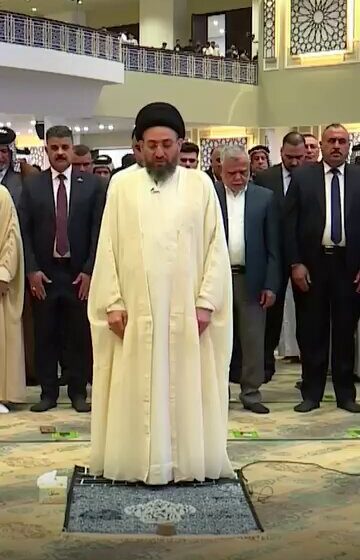
A video showing a prominent cleric making a significant error while reciting a short chapter of the Quran during prayers has been widely circulated and criticized. Othman al-Mukhtar (Post Impact: 100%) shared the clip, stating, “They don’t even memorize the short surahs… and yet they call themselves clergymen. He swallowed a whole verse and no one behind him corrected him.” Mahdi Majeed (Post Impact: 11%) identified the cleric as Ammar al-Hakim and questioned why Shiite followers continue to trust clerics who have “destroyed their religion and their world.” Similarly, Dr. Ali Al-Jabiri (Post Impact: 3%) mocked the incident, suggesting the cleric “swallowed a whole verse thinking it was one of the houses in Jadriyah.”
2. Sectarian Controversy Over Eid Al-Fitr Date
A major controversy erupted over the declaration of the Eid al-Fitr date for Sunnis, with many alleging political interference. Mash’an al-Jabouri (Post Impact: 8%) and Al-Muwaten Anwar Al-Hamdani (Post Impact: 4%) cited a sermon by Sheikh Ahmed Hassan al-Taha, a senior member of the Iraqi Fiqh Council, who claimed the head of the Sunni Endowment, Mesh’an al-Khazraji, bowed to pressure from Prime Minister Al Sudani to align the Sunni Eid date with the Shia date, regardless of the moon sighting. Othman al-Mukhtar (Post Impact: 3%) described the closing of Sunni mosques to enforce this decision as an unprecedented sectarian act. In contrast, Haidar (Post Impact: 11%) and Ghazwan Jassim (Post Impact: 7%) defended the decision as an act of unity with state institutions and accused critics of trying to create sedition influenced by external parties.
3. Rising US-Iran Tensions Over Nuclear Program
Discussions intensified around a potential military confrontation between the United States and Iran over the latter’s nuclear program. Sufian al-Samarrai (Post Impact: 25%) interpreted a speech by Iran’s Supreme Leader Khamenei as an official rejection of the nuclear deal offered by former President Trump, stating, “We have now entered the stage of major confrontation and real war after this foolish speech.” Wasan al-Shaikhli (Post Impact: 5%) highlighted Khamenei’s threat that if the US attacks, “they will receive a severe and painful blow.” Rusly Al-Maliki (Post Impact: 5%) noted that the US has given Iran a two-month deadline to dismantle its nuclear program, suggesting that Khamenei is defeated whether Iran capitulates or faces a military strike.
4. Qais Khazali on Gaza and “Axis of Resistance”
In his Eid al-Fitr sermon, Asa’ib Ahl al-Haq leader Qais al-Khazali focused heavily on the situation in Gaza and the role of the “Axis of Resistance.” Qais al-Khazali (Post Impact: 21%) stated that “Gaza is being slaughtered from vein to vein amid shameful global silence,” asserting that only the Axis of Resistance has acted to defend Muslims. He presented the deaths of commanders in Lebanon, Yemen, and Iraq as proof of their sincerity. In a similar vein, Abu Azrael (Post Impact: 9%) celebrated Eid by reaffirming his commitment and “steadfastness on the path of Imam Ali.”
5. Khazali Alleges Turkish-Trained Militias Joined PMF
Qais al-Khazali made a serious accusation that Turkey has recruited and trained Iraqi militias from Nineveh and Kirkuk who were later integrated into the Popular Mobilization Forces (PMF). In a post, Qais al-Khazali (Post Impact: 10%) claimed that members of these groups were sent to Turkey for training and then, “by some miracle,” were included in the PMF, specifically in Brigade 59 in Nineveh, where they receive salaries under the PMF banner. The account Haidar (Post Impact: 3%) amplified this claim, identifying the groups as “Nineveh Guards” and “Kirkuk Shield Forces.” Nazar Haidar (Post Impact: 2%) suggested such information, if true, would warrant severe legal action against top officials for treason.
6. PM Sudani Criticized for “Sedition” Remarks
Prime Minister Mohammed Shia’ Al Sudani faced backlash for his comments about “voices that incite sedition,” which were widely interpreted as being directed at those protesting the government’s handling of the Eid al-Fitr date for Sunnis. In a lengthy post, Mash’an al-Jabouri (Post Impact: 12%) directly challenged the Prime Minister, asking who is truly inciting sedition: those defending their religious rites or those who turn worship into a political decision. Al-Jabouri argued that true sedition is “imposing worship dates by political decision” and using state institutions to enforce a single sectarian narrative. Similarly, Emad Bajalan (Post Impact: 2%) responded to the Prime Minister’s statement by claiming the real inciters of sedition are figures close to his government.
7. Abu Alaa al-Walai’s Threats and Accusations
Abu Alaa al-Walai, leader of the Kata’ib Sayyid al-Shuhada militia, issued a series of hostile statements against domestic and regional actors. He posted a video threatening remaining Ba’athists and ISIS members, saying, “Try to stick your heads out of your holes again, our swords are waiting.” (Abu Alaa al-Walai, (Post Impact: 11%)). His rhetoric was amplified by Steven Nabil (Post Impact: 5%), who noted that al-Walai accused Saudi Arabia of being part of an “axis of evil” that finances missiles used against Yemen. In another post highlighted by Nabil, al-Walai accused Qatar of supporting the al-Nusra Front “to kill Shiites and Alawites in Syria in cold blood.”
8. PM Sudani’s Eid Visit to His Hometown
Several accounts shared photos and videos of Prime Minister Mohammed Shia’ Al Sudani’s visit to his hometown in Maysan province for Eid al-Fitr. Abu Darndesh al-Askari (Post Impact: 7%) highlighted that the Prime Minister appeared in “southern Sharqi attire.” The Prime Minister’s official account, IraqiPMO (Post Impact: 2%), posted photos of him exchanging Eid greetings with citizens at a local host’s residence and participating in Eid prayers at a local mosque. The visit was also covered by Haidar (Post Impact: 6%), showing the Prime Minister engaging with his local community during the holiday.
9. Khazali Criticizes Withdrawal of PMF Law from Parliament
Qais al-Khazali dedicated part of his Eid sermon to criticizing the withdrawal of the Popular Mobilization Forces (PMF) law from parliament. In one post, Qais al-Khazali (Post Impact: 7%) stated, “We regret the withdrawal of the Popular Mobilization Forces law by the Commander-in-Chief of the Armed Forces,” calling it a “crime” that prioritizes the head of the PMF Commission over the rights of the fighters. In a follow-up post, Qais al-Khazali (Post Impact: 7%) demanded the restoration of the first PMF law to end the debate and called for momentum to pass a second law that would guarantee the rights of the PMF and regulate its work definitively.
10. Eid Al-Fitr Prayers Held Across Iraq
Amid political tensions, several accounts shared images and videos of Iraqis performing Eid al-Fitr prayers across the country. Haidar (Post Impact: 17%) posted a photo of Iraqi army soldiers performing Eid prayers on the Iraqi-Syrian border. The same account also shared visuals of prayers in Najaf at the shrine of Imam Ali (Haidar, (Post Impact: 5%)) and in Karbala (Haidar, (Post Impact: 4%)), where heavy rains moved prayers indoors. Dr. Hussein Al-Safi (Post Impact: 6%) also shared a video of rain falling on worshippers during Eid prayers in Karbala.