2025-04-01: Attack on Christian Akitu Procession in Duhok

Based on an analysis of 484 X / Twitter posts trending in Iraq on April 1, 2025, Miqrab AI identified several dominant narratives circulating on the platform. The most prominent conversations revolved around a violent attack on a Christian Akitu festival in Duhok, which drew widespread condemnation, and the significant controversy sparked by Prime Minister Al-Sudani’s phone call with Syria’s new leader, Ahmed al-Sharaa. Geopolitical discussions were also highly prevalent, focusing on Turkey’s expanding military footprint in Syria and conflicting reports about the military capabilities of Yemen’s Houthi movement amidst ongoing US operations. Furthermore, users engaged in heated debates over escalating regional tensions and the potential for a major US-Israeli strike on Iran, alongside domestic criticism of Iraqi political figures and alleged misuse of state security forces.
Table Of Content
- 1. Attack on Christian Akitu Procession in Duhok
- 2. Turkey’s Growing Military Ambitions in Syria
- 3. Conflicting Views on Houthi Military Strength
- 4. Controversy over PM Sudani’s Call to Syria’s New Leader
- 5. Critic Faig Alsheakh Ali Slams Government and Clerics
- 6. Remembering a Federal Police Officer Killed in Mosul
- 7. Misuse of Security Forces Allegedly Linked to Al-Halbousi
- 8. Speculation Mounts Over Imminent US-Israel Strike on Iran
- 9. Historical Debate on Legacy of Saladin and Baibars
- 10. Leaders Extend Greetings for Akitu Amidst Violence
Today’s Top 10 X (Twitter) Trends in Iraq:
1. Attack on Christian Akitu Procession in Duhok
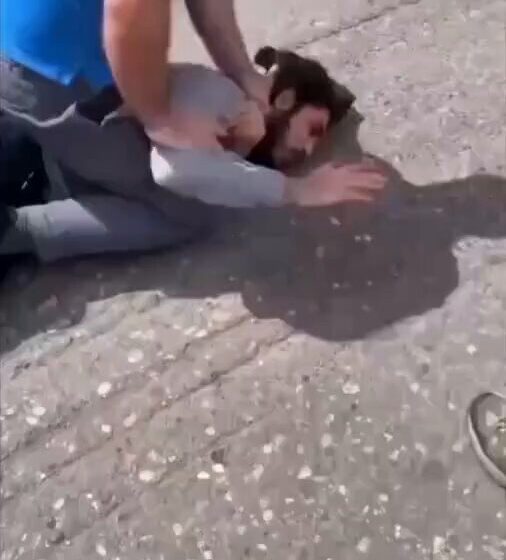
A violent attack during the Akitu (Babylonian-Assyrian New Year) procession in Duhok was a major topic of discussion, with users sharing videos and condemning the incident. According to Haider (Post Impact: 95%), security forces arrested the perpetrator, a Syrian national, who attacked Christian marchers with an axe, injuring three people. Multiple accounts, including Steven Nabil (Post Impact: 11%), reported that the attacker was heard shouting slogans such as “the Islamic State is remaining” upon his capture. Other commentators like Issam Hussein (Post Impact: 12%) and Sufian Al-Samarrai (Post Impact: 6%) framed the attack as an act of extremist ideology, contrasting the violence with the tolerance shown towards Muslims in Christian-majority countries. The victims were identified as a young man, an elderly woman, and a Peshmerga soldier.
2. Turkey’s Growing Military Ambitions in Syria
A highly engaged post by Liqaa Maki (Post Impact: 100%) outlines what is described as a significant geopolitical shift involving Turkey’s military in Syria. The account claims Turkey has begun preparations to place its forces at the Palmyra airbase, starting with the installation of air defense batteries. This development is viewed as a move that will limit Israel’s ability to operate in the region’s airspace, as Israel “will certainly not dare to target Turkish defenses” and risk a conflict with a NATO member. The post concludes that this step, especially if followed by a predicted US withdrawal from Syria, would grant Turkey a “unique position in this region for the first time in more than 100 years.” This information is partially corroborated by ZaidBenjamin Zaid Benjamin (Post Impact: 6%), who cites the Jerusalem Post on Turkey’s efforts to supply Syria with air defense systems, including through a presence at the T-4 airbase.
3. Conflicting Views on Houthi Military Strength
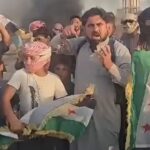
Opposing narratives circulated regarding the military capacity of the Houthi movement in Yemen following extensive US strikes. On one side, Sufian Al-Samarrai (Post Impact: 94%) asserted that the Houthis have no portable missiles left, claiming that US aircraft have been flying at low altitudes for three consecutive days without drawing a single shot. He dismissed the statements of Houthi military spokesman Yahya Saree as mere propaganda for domestic consumption to prevent a major collapse. In stark contrast, Dr. Hussein Al-Safi (Post Impact: 37%) expressed strong confidence in the group, stating, “I swear by God that the Houthis will drag America’s nose through the dirt as they dragged Saudi Arabia’s nose through the dirt.” This sentiment of resilience was also shared by Ahmed Al-Thawaq (Post Impact: 13%), who marveled at the steadfastness of the Yemeni people despite the heavy bombardment.
4. Controversy over PM Sudani’s Call to Syria’s New Leader
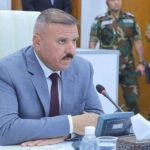
Iraqi Prime Minister Mohammed Shia Al-Sudani’s phone call with the new Syrian President, Ahmed al-Sharaa, generated intense and divided reactions. The official Prime Minister’s Media Office (Post Impact: 34%) announced the call was to exchange Eid al-Fitr greetings and congratulate the new government, affirming Iraq’s support for the Syrian people’s choices and cooperation against ISIS. However, the call was met with harsh criticism from accounts like Mahdi Majeed (Post Impact: 18%) and Haider (Post Impact: 13%), who referred to al-Sharaa by his former name, Al-Jolani, and condemned him as a former Al-Qaeda leader responsible for the deaths of Iraqis. Conversely, figures like Mashan al-Jabouri (Post Impact: 12%) and Ezzat Alshabandar (Post Impact: 11%) praised Al-Sudani’s initiative as a “responsible and courageous vision” that puts relations back on their natural course and counters sectarianism.
5. Critic Faig Alsheakh Ali Slams Government and Clerics
Political commentator Faig Alsheakh Ali launched sharp criticisms against both the Iraqi government and religious figures in two highly engaged posts. In the first, Faig Alsheakh Ali/My Word for History (Post Impact: 36%) reacted to news of pistols being distributed to officers by questioning why they were not issued through official ministry channels, labeling the practice a “savage, brutal, and backward culture.” In a subsequent post, the same account (Post Impact: 33%) targeted the belief that certain clerics possess special blessings or “miracles.” He sarcastically asked why, if this were true, Iraq still suffers from a lack of electricity and water, widespread hunger, and some of the most corrupt politicians in the world, concluding with the question, “So where are the miracles?”
6. Remembering a Federal Police Officer Killed in Mosul
Dr. Qusay Shafiq (Post Impact: 60%) shared the story of Martyr Hani Salman Aliwi Al-Hassani, a Federal Police officer from Samawah who was killed in Mosul in 2013. The post recounts how an ISIS terrorist climbed a building and dropped a large improvised explosive device on the officer while he was seated on duty, killing him instantly. The account noted that the martyr left behind three young children and added a comment that, according to Falcon Cell intelligence reports, such operations were planned by Al-Jolani (now Ahmed al-Sharaa).
7. Misuse of Security Forces Allegedly Linked to Al-Halbousi
A political controversy emerged surrounding the alleged misuse of official security forces by the protection detail of former Parliament Speaker Mohammed al-Halbousi. Posts by Haider Al Mulla (Post Impact: 28%) and Hussam Alhaj (Post Impact: 20%) discussed confessions and video evidence allegedly showing vehicles and officers from the Ministries of Defense and Interior being used for “acts of sabotage” and intimidation in a political dispute related to an incident in Baghdad’s Al-Amiriyah neighborhood. Both commentators argued that this represents a grave constitutional and legal violation that “demolishes the bridges of trust between the security services and the citizen,” and called for legal action against all involved, from the perpetrators to those who gave the orders.
8. Speculation Mounts Over Imminent US-Israel Strike on Iran
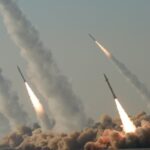
Multiple accounts shared reports and analysis suggesting a major US-Israeli military strike against Iran is imminent. Omar Abdul Sattar Mahmoud (Post Impact: 19%) and Raad Hashim (Post Impact: 9%) both cited reports from Al-Hadath channel, which quoted Israel’s Channel 14 as saying “a large-scale attack will begin on Iran soon” that would be “a strike unprecedented since World War II.” Adding to this narrative, Rusly Al-Maliki (Post Impact: 20%) noted the arrival of US transport planes in the Gulf region loaded with munitions and air defense systems, declaring that the “military buildup is at its peak.” However, Mahdi Majeed (Post Impact: 11%) dismissed the Channel 14 story as “fake news,” claiming the report simply quoted Trump on a possible military response and that “Arab media adds its own spices.”
9. Historical Debate on Legacy of Saladin and Baibars
A post from Issam Hussein (Post Impact: 29%) initiated a historical debate comparing the legacies of Saladin Al-Ayyubi and Al-Zahir Baibars. The user questioned why Saladin is more celebrated by Sunni historians when Baibars’ military achievements were arguably greater, citing Baibars’ three victories against the Mongols, his liberation of the Levant, and his defeat of the Crusaders. The post theorizes that Baibars’ legacy was intentionally diminished because he reopened the Shiite-built Al-Azhar Mosque, which had been closed by the Ayyubids, and allowed religious freedom for Shiites and Sufis, who were persecuted during Saladin’s era.
10. Leaders Extend Greetings for Akitu Amidst Violence
Contrasting with the violent attack in Duhok, several Iraqi and Kurdish political leaders shared messages of celebration for the Babylonian-Assyrian New Year, Akitu. The Prime Minister of the Kurdistan Region, Masrour Barzani (Post Impact: 26%), posted a simple “Happy Akitu holiday.” Iraqi Prime Minister Mohammed Shia Al Sudani (Post Impact: 14%) offered his warmest congratulations to Assyrians, Chaldeans, and Syriacs, highlighting how the holiday’s coincidence with Eid al-Fitr reinforces the values of “diversity and brotherhood that are a source of strength for our dear country.” Similarly, Kurdistan Region President Nechirvan Barzani (Post Impact: 8%) and political leader Ammar Al-Hakim (Post Impact: 8%) also shared messages reaffirming their commitment to peaceful coexistence and the rights of all Iraqi components.