2025-04-03: Israeli Strikes in Syria and Criticism of al-Jolani

Based on an analysis of 461 X / Twitter posts by Miqrab AI on April 3, 2025, the primary focus of online conversation in Iraq is the escalating regional conflict, particularly Israeli airstrikes in Syria and the perceived inaction of Syrian leader Ahmed al-Sharaa (Abu Mohammad al-Jolani). This has sparked intense criticism and mockery from Iraqi accounts, especially those aligned with Shiite paramilitary groups. A second major narrative revolves around a proposed U.S. bill titled the “Iraq Liberation from Iran Act,” which has generated significant debate about American foreign policy, Iranian influence in Iraq, and the future of pro-Iran militias. Other prominent themes include concerns over the economic impact of potential U.S. tariffs on Iraqi oil, ongoing commentary on internal sectarian divisions, and criticism of the conduct and hypocrisy of Iraqi political figures and armed groups.
Table Of Content
- 1. Israeli Strikes in Syria and Criticism of al-Jolani
- 2. US Proposes “Iraq Liberation from Iran Act”
- 3. Commentary on Enduring Sectarian Divides
- 4. Economic Worries Over Potential US Tariffs
- 5. Criticism of Hypocrisy Among Iraqi Figures
- 6. Iraq’s Invasion of Kuwait Called a “Strategic Mistake”
- 7. Analysis of Escalating Middle East Tensions
- 8. Pro-Iran Militia Activities and Allegiances
- 9. Reports on Iran’s Shifting Military Strategy
- 10. Lawlessness and Privilege Among Political Elite
Today’s Top 10 X (Twitter) Trends in Iraq:
1. Israeli Strikes in Syria and Criticism of al-Jolani
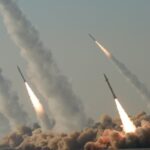
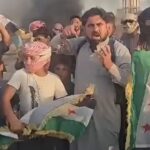
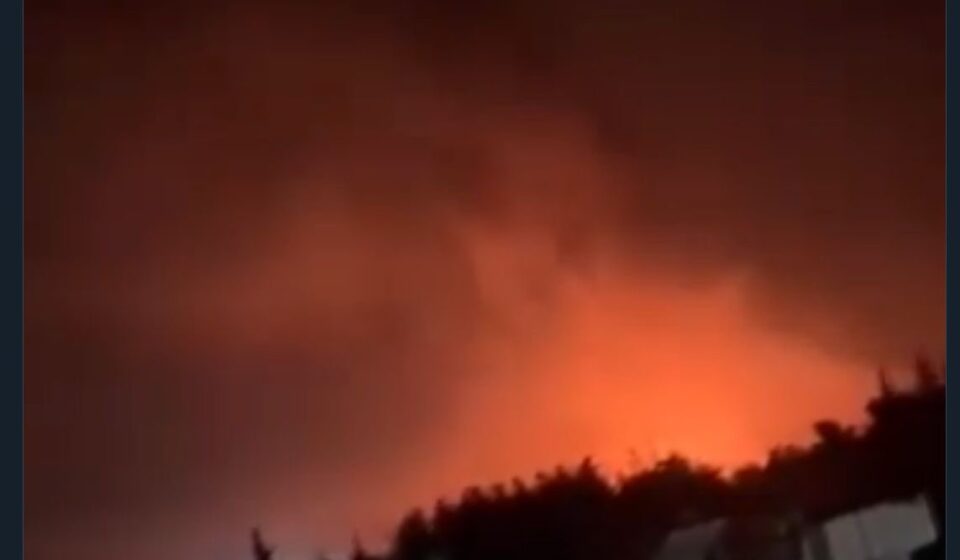
Intense discussion surrounds Israeli airstrikes that reportedly destroyed Hama airport and targeted sites in Daraa, Syria. Multiple accounts, led by the popular paramilitary figure Abu Azrael – Abu Azrael (Post Impact: 100%), directed scorn at Syrian leader Abu Mohammad al-Jolani and his supporters for their lack of response. Abu Azrael taunted them, writing, “Israeli tanks are 20 km in front of you, where are you, you garbage… Leave the arena for the sons of Ali.” Dr. Hussein Al-Safi (Post Impact: 39%) described al-Jolani as a “brave Sunni leader against Alawite children and a mouse in front of Israel,” calling him a “sheep.” Other accounts like Hassan Al-Kaabi | Hassan Alkaabi (Post Impact: 41%) and Haidar (Post Impact: 12%) shared images of the destruction and highlighted the contrast between the resistance rhetoric of al-Jolani’s government and its silence in the face of Israeli attacks. Muna Sami – Muna Sami (Post Impact: 10%) noted that the residents of Daraa are resisting the Israeli incursion “alone” while al-Jolani’s government suffices with a “brief statement.”
2. US Proposes “Iraq Liberation from Iran Act”
A proposed U.S. bill, the “Iraq Liberation from Iran Act,” introduced by congressmen Joe Wilson and Jimmy Panetta, is a major topic of conversation. Rusly Al-Maliki 🇮🇶 رسلي المالكي (Post Impact: 11%) provided a detailed breakdown of the bill, quoting Wilson’s warning to Iranian proxies in Iraq: “Be afraid, this law will pass.” The summary outlines key provisions, including dismantling pro-Iran militias like the PMF, sanctioning Iraqi political figures such as Nouri al-Maliki and Hadi al-Amiri, and banning the import of Iranian gas. Entifadh Qanbar 🇮🇶🇺🇸 انتفاض قنبر (Post Impact: 10%) drew a parallel between this bill and the 1998 Iraq Liberation Act that targeted Saddam Hussein, declaring, “For the second time, we will liberate Iraq… Yes, yes to the liberation of Iraq from Iran.” Rafid Jaboori رافد جبّوري (Post Impact: 5%) also reported on the bill’s introduction, noting its bipartisan support and key aims to resolve the PMF, support civil society, and set time limits for implementation.
3. Commentary on Enduring Sectarian Divides
The issue of sectarianism was highlighted in a widely engaged post by journalist Muna Sami – Muna Sami (Post Impact: 22%). She lamented the cycle of violence and hatred between Sunni and Shia communities, stating, “A Sunni rejoices at the killing of a Shiite, a Shiite rejoices at the killing of a Sunni. The killer is one, and the stupidity is one.” Her post points to a shared sense of loss and frustration over internal divisions being exploited while a common enemy exists. In a related vein, Hassan Al-Kaabi | Hassan Alkaabi (Post Impact: 4%) expressed frustration from a Shiite perspective, claiming that when calling for Sunni unity against Israel, the response is often about historical grievances over the Sahaba (Companions of the Prophet). He questioned the logic of prioritizing the dead over the living, asking, “Are the dead more important than the living?”
4. Economic Worries Over Potential US Tariffs
Discussions have emerged regarding the potential economic consequences for Iraq if the U.S. imposes tariffs on imported goods. Muna Sami – Muna Sami (Post Impact: 9%) analyzed the impact, stating that since Iraq’s main export to the U.S. is oil, the tariffs would increase its price, reduce demand, and be “catastrophic for Iraq’s budget.” She noted that while the U.S. could easily replace Iraqi oil, Iraq would be forced to negotiate or sell to Asian markets at lower prices. Mahdi Jasem (Post Impact: 5%) interpreted a separate action by the Trump administration to reduce customs fees as a reprieve, suggesting it was a message to the Iraqi government ahead of potential escalation with Iran. Conversely, Ziad Al-Hashimi (Post Impact: 3%) explained that any new tariffs would be part of a broader strategy to correct the U.S. trade deficit with countries like Iraq, viewing it as a negotiating point rather than an outright attack on the Iraqi economy.
5. Criticism of Hypocrisy Among Iraqi Figures
A prominent theme involves criticism of the hypocrisy and lack of substance among certain public figures in Iraq. Rusly Al-Maliki 🇮🇶 رسلي المالكي (Post Impact: 19%) posted a video of a woman discussing economics and mockingly questioned her understanding, asking, “What did you understand? Can you explain it to us?” His post reflects a broader sentiment of skepticism towards self-proclaimed experts in the public sphere. Similarly, Dr. Haidar Al-Barzanji (Post Impact: 14%) shared a video to expose what he described as a hypocritical and sycophantic personality type. He stated, “The problem with the flattering hypocrite is that he does not build his relationships on honesty, but on interests, and when circumstances change, he easily turns on those he praised yesterday,” sparking a debate on how to deal with such individuals.
6. Iraq’s Invasion of Kuwait Called a “Strategic Mistake”
In a segment from an interview on MBC, writer and analyst Aayad Al Twfan – Aayad Al Twfan (Post Impact: 12%) reflected on Iraq’s 1990 invasion of Kuwait. She unequivocally described the event as a major geopolitical blunder, stating that the “entry of the Iraqi army into Kuwait was falling into a big trap and a strategic mistake.” Her post, which also touched upon the meaning of her name, “Aayad,” resonated with followers who engaged with this historical reassessment of a pivotal moment in modern Iraqi history. The discussion suggests an ongoing process of grappling with the decisions of the former regime and their long-term consequences for Iraq’s standing in the region.
7. Analysis of Escalating Middle East Tensions
Political analysts are weighing in on the precarious state of the Middle East, viewing current events as a critical turning point. Liqaa Maki (Post Impact: 12%) argued that “everything is now on the line in the Middle East,” affecting not just Iran but also Turkey’s role in the region following its “harsh debate” with Israel on Syrian soil. He warned that the conflict between major powers “will be on our heads however it ends,” calling for prudence and caution to preserve the status quo. In a similar vein, David Yassin (Post Impact: 12%) posted a cryptic analysis suggesting that Israeli operations in Syria are part of a broader, well-studied plan with U.S. intelligence coordination. He claimed al-Jolani is at a “point of no return” and must accept the “new security reality” or pay a heavy price, concluding that “the upcoming moves will change the region’s equation.”
8. Pro-Iran Militia Activities and Allegiances
The actions and allegiances of pro-Iran militias in Iraq are under scrutiny. _. suhair Al_jumaili (Post Impact: 8%) shared a video of what she identified as US allies patrolling near Hashd al-Sha’abi headquarters in Al-Qaim and challenged militia figures who claim they want to fight Israel. She taunted them, saying, “Here are their allies wandering near your headquarters… Are you up for it? Or is it just empty boasting?” Meanwhile, the account {Manasat Al-Iraq} (Post Impact: 8%) alleged that elements of the Mahdi Army, under the orders of Muqtada al-Sadr and Nouri al-Maliki, were meeting to prepare to defend Iran and Ayatollah Khamenei from any potential U.S. attack. The post referred to them as “Khamenei’s tails,” highlighting a perception that these Iraqi groups’ primary loyalty lies with Iran rather than Iraq.
9. Reports on Iran’s Shifting Military Strategy
Conflicting reports and analyses about Iran’s military posture are circulating on Iraqi social media. Wasan Al-Shaikhli (Post Impact: 11%) shared unconfirmed information that Iran is preparing “4,000 missiles of various ranges for more than one target in the Middle East and the Indian Ocean.” This suggests Iran is readying for a major escalation. In contrast, Rusly Al-Maliki 🇮🇶 رسلي المالكي (Post Impact: 10%) cited a report from The Telegraph, quoting an Iranian official who claimed that “Tehran has stopped supporting the Houthis to avoid war with America.” Together, these posts paint a picture of uncertainty, with some viewing Iran as preparing for a wider conflict while others see it taking de-escalatory steps to avert a direct confrontation with the United States.
10. Lawlessness and Privilege Among Political Elite
A sense of frustration over lawlessness and special privileges for the politically connected is evident. Journalist Steven Nabil (Post Impact: 6%) shared a video showing the son of a protection official for the governor of Babil, who is affiliated with Asa’ib Ahl al-Haq, celebrating his wedding with armed friends by firing weapons in a residential area. Nabil condemned the act as a “violation of the law.” In a separate post, Yasser Eljuboori – ياسر الجبوري (Post Impact: 6%) criticized the special treatment given to the family of the late footballer Ahmed Radhi. He contrasted the privileges they receive, such as land plots and “ghost” jobs, with the struggles faced by the families of fallen soldiers, noting that the children of hero Harith al-Sudani did not receive their salaries for years after his martyrdom. Both posts highlight a disparity where rules and hardships apply to ordinary citizens but not to the elite and their affiliates.