2025-04-09: Polarized Views on the Anniversary of Baghdad’s Fall

Based on an analysis of (595) X / Twitter posts trending on April 9, 2025, Miqrab AI found that online discourse in Iraq was overwhelmingly dominated by the 22nd anniversary of the fall of Saddam Hussein’s regime. This central theme fractured into deeply polarized narratives, with some accounts celebrating the end of a dictatorship while others mourned the day as the start of a destructive foreign occupation and subsequent political turmoil. These discussions often spiraled into intense sectarian debates about historical blame and political loyalty. Other significant conversations included analyses of former U.S. President Donald Trump’s statements on international trade, current domestic political tours by figures like Ammar Al-Hakim, and reports on new economic agreements between Iraq and the United States.
Table Of Content
- 1. Polarized Views on the Anniversary of Baghdad’s Fall
- 2. Sectarian Debates Over Historical Betrayal and Loyalty
- 3. Trump’s Statements on International Trade Tariffs
- 4. Ammar Al-Hakim’s Political Tour in Salah al-Din
- 5. Historical Parallels Drawn Between Baghdad and Jerusalem
- 6. MP Hussein Arab Announces His Resignation from Parliament
- 7. Praising Ahmed Chalabi’s Role in Overthrowing Saddam
- 8. Reports of Growing Regional Tensions Involving Iran
- 9. New Agreements Signed Between Iraq and U.S. Companies
- 10. Announcing the Date for the 2025 Legislative Elections
Today’s Top 10 X (Twitter) Trends in Iraq:
1. Polarized Views on the Anniversary of Baghdad’s Fall
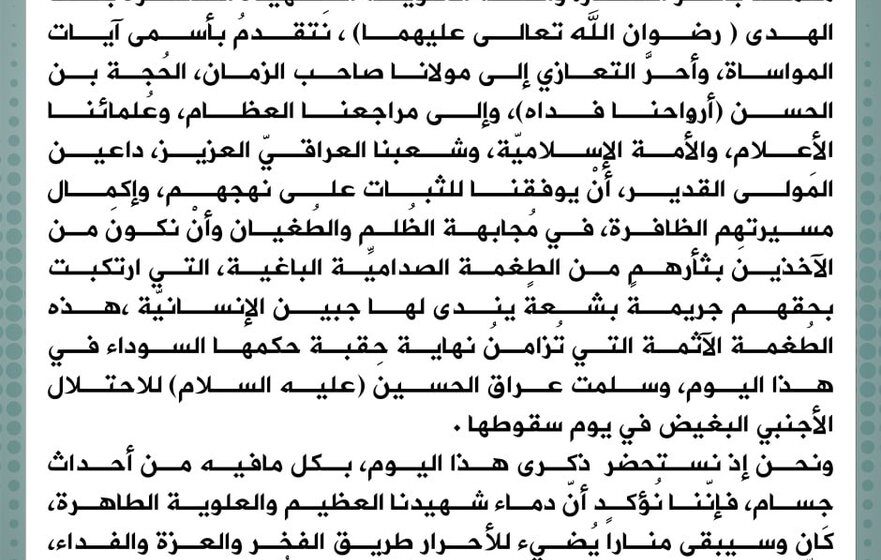
The 22nd anniversary of the fall of Saddam Hussein’s regime on April 9, 2003, dominated Iraqi social media, eliciting sharply divided reactions. On one side, figures like Prime Minister Mohammed Shia Al-Sudani (Post Impact: 37%) celebrated the end of a “dictatorial system” and highlighted the establishment of a new democratic system. This sentiment was echoed by others who shared images of Saddam’s statue being toppled, with accounts like Dr. Hussein Al-Safi (Post Impact: 16%) stating, “This is how the Iraqi people bid farewell to the rule of Saddam.” Conversely, many viewed the day as a national tragedy. Raghad Saddam Hussein (Post Impact: 45%), the late president’s daughter, delivered a speech marking the anniversary of the “American invasion,” condemning the subsequent destruction, rise of sectarianism, and influence of pro-Iran militias. Similarly, Aayad Al Twfan (Post Impact: 16%) described it as a “black day” when “the story of a country called Iraq ended.” The leader of Asa’ib Ahl al-Haq, Qais Al-Khazali (Post Impact: 100%), blamed the former regime itself, stating that “The sinful Saddam regime handed over the Iraq of Hussein…to the odious foreign occupation on the day of its fall,” a quote also shared by Shaho Al-Qaradaghi (Post Impact: 21%).
2. Sectarian Debates Over Historical Betrayal and Loyalty
The anniversary of the 2003 invasion fueled a secondary narrative of intense sectarian debate, with users blaming different groups for historical and modern failures. Issam Hussein (Post Impact: 27%) posted a lengthy historical analysis attempting to refute the narrative that a Shiite, Ibn al-Alqami, was responsible for the Mongol invasion of Baghdad. He argued that “Sunni betrayal,” specifically by the Khwarazmian dynasty, was the real cause. In another post, he listed numerous instances of what he described as Sunni-on-Sunni betrayal throughout modern Iraqi history, from the 1958 revolution to the fall of Saddam. Conversely, Othman Al-Mukhtar (Post Impact: 22%) blamed Shiite leaders for the 2003 invasion, sharing a photo of a cleric meeting with former U.S. Secretary of Defense Donald Rumsfeld and stating, “You brought the American to occupy Iraq and slaughter its people, and they gave you the rule of Baghdad on the bodies of its people.” Mashaan Al-Jabouri (Post Impact: 11%) sought to clarify his own criticism, stating that when he mentions “Shiites,” he means the pro-Iran factions in power, not the general population.
3. Trump’s Statements on International Trade Tariffs
Former U.S. President Donald Trump’s recent announcements on trade policy generated significant discussion. ZaidBenjamin (Post Impact: 89%) reported on a statement from Trump claiming, “Countries are kissing my ass in order to reach a settlement to end the customs tariff.” In subsequent posts, ZaidBenjamin detailed Trump’s decision to sharply increase tariffs on China to 125% while offering a temporary 90-day reduction for over 75 other nations to just 10%. This move was reported to have caused a rise in U.S. stock markets. Rafid Jaboori (Post Impact: 6%) also covered the announcement, highlighting the dual policy of punishing China while temporarily easing pressure on most other countries.
4. Ammar Al-Hakim’s Political Tour in Salah al-Din
Ammar Al-Hakim, leader of the National Wisdom Movement, conducted a high-profile tour of Salah al-Din province, which was heavily documented by his official account and drew criticism from others. Ammar Al-Hakim (Post Impact: 8%) posted about his meetings with the governor, local officials, and tribal leaders, emphasizing themes of national unity, reconstruction, and the importance of diversity. His account shared details of visits to Tikrit University, the site of the Speicher Massacre, and meetings with security forces. However, the visit was viewed negatively by some. Najih Abbas Al-Mizan (Post Impact: 16%) strongly condemned Al-Hakim’s presence in Samarra, describing him as a “filthy loyalist” spreading “sectarian poison” and calling on the youth of the city to teach him a lesson. Another user, Alaa Alabadi (Post Impact: 5%), sarcastically noted a meeting between Al-Hakim and politician Ahmed Abdullah al-Jubouri (Abu Mazen), commenting, “Sayyid Ammar visits the corrupt Abu Mazen and discusses with him ways to combat corruption. Seriously, this isn’t a joke.”
5. Historical Parallels Drawn Between Baghdad and Jerusalem
On the anniversary of Baghdad’s fall, writer Rusly Al-Maliki (Post Impact: 31%) shared a popular post drawing striking parallels between the Babylonian conquest of Jerusalem and the American invasion of Baghdad. He noted that both cities fell on the same date (April 9), that both conquering powers appointed a new governor on the same subsequent date, and that both besieged cities saw their rulers (Zedekiah and Saddam Hussein) flee north before being captured, imprisoned, and executed after their two sons were killed. He questioned if these were all coincidences, citing the Book of Kings as a source. In a separate, satirical post, Rusly Al-Maliki (Post Impact: 12%) imagined how current Iraqi politicians would have written a self-glorifying account of toppling Saddam’s statue, comically portraying each leader as having played a heroic role, to mock their claims of having liberated the country.
6. MP Hussein Arab Announces His Resignation from Parliament
Member of Parliament Hussein Arab (Post Impact: 51%) made a brief but high-impact announcement on his X account, stating his intention to step down from his position. He wrote, “I will submit my resignation from the Iraqi Council of Representatives tomorrow, God willing…” The post did not provide a reason for the resignation, but its significant engagement indicates it is a notable political development. Earlier, in a separate post, he urged his followers not to be drawn into sectarianism regarding a murder case, suggesting that some pages were trying to divert attention from the crime itself.
7. Praising Ahmed Chalabi’s Role in Overthrowing Saddam
Amid the anniversary discussions, some accounts highlighted the role of the late politician Ahmed Chalabi in the overthrow of the Ba’athist regime. Sheikh Mohammed Al-Basri (Post Impact: 13%) praised Chalabi as “the Shiite Iraqi leader who humiliated the Ba’ath and its leader,” crediting him with bringing the regime’s officials to justice and exposing them. In a similar vein, Wasan Al-Shaikhli (Post Impact: 12%) posted a photo of Chalabi, stating, “The late Dr. Ahmed Chalabi, may God have mercy on him, was of great credit in helping Iraqis obtain freedom and salvation from the defunct regime.” These posts presented a counter-narrative to those who condemn all figures associated with the 2003 invasion, framing Chalabi as a key figure in Iraq’s liberation from dictatorship.
8. Reports of Growing Regional Tensions Involving Iran
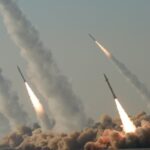
Several posts discussed the volatile geopolitical situation in the region, focusing on Iran’s military capabilities and diplomatic maneuvering. Steven Nabil (Post Impact: 13%), citing a report from The Times, made the alarming claim that Iran had for the first time armed its proxy factions in Iraq with ballistic missiles, some of which could potentially reach Europe. Meanwhile, David Yassin (Post Impact: 17%) suggested that any negotiations between Iran, Israel, and a potential Trump administration are merely a tactic for Israel to buy time before taking decisive action, asserting that “The Iranian regime in its current form… will not be left to continue.” The potential for renewed negotiations was also mentioned by Adnan Al-Taie (Post Impact: 7%), who stated that the “rifles of the factions” would be on the table in any talks between Trump and Iran.
9. New Agreements Signed Between Iraq and U.S. Companies
Coinciding with the anniversary of the U.S. invasion, several accounts reported on a major new economic agreement between Iraq and the United States focused on the electricity sector. Haider (Post Impact: 11%) announced that Iraq signed “the largest agreement in the history of the Iraqi electricity sector” with the American company General Electric (GE) to build new power stations with a capacity of 24,000 megawatts. Hoshyar Zebari (Post Impact: 7%) described the visit of a U.S. Chamber of Commerce delegation on this specific day as having “strong symbolic significance.” He noted that over 60 U.S. companies came to sign memoranda of understanding for investment in electricity, energy, and gas, emphasizing the strategic partnership and calling on the Iraqi government to ensure implementation.
10. Announcing the Date for the 2025 Legislative Elections
A key governmental announcement was shared by the Prime Minister’s media office, setting a date for the country’s next national elections. The official account Iraqi PMO (Post Impact: 6%) posted that the Council of Ministers voted to set November 11, 2025, as the date for holding legislative elections. The announcement signals the official start of the timeline for the next electoral cycle, a development that will shape the political landscape over the coming year. This news was circulated among various political observers and commentators, representing a concrete step in the country’s political process.