2025-04-12: Sadrist Movement Issues Directives via Salih al-Iraqi

Based on a Miqrab AI analysis of 538 X / Twitter posts trending in Iraq on April 12, 2025, the online discourse was dominated by directives from the Sadrist movement and intense, multifaceted debate surrounding the U.S.-Iran nuclear negotiations held in Oman. Key narratives revolved around the implications of these talks for regional stability, with viewpoints ranging from celebration of Iranian strength to condemnation of perceived hypocrisy. Another significant topic was the controversy over the Iraqi government’s decisions to provide financial and material aid to entities in Syria and Lebanon, sparking criticism about domestic priorities. Discussions also covered internal political events such as the re-election of Nouri al-Maliki as head of the Dawa Party, security developments in Samarra, and concerns over Turkish influence in northern Iraq.
Table Of Content
- 1. Sadrist Movement Issues Directives via Salih al-Iraqi
- 2. U.S.-Iran Nuclear Negotiations in Oman Spark Intense Debate
- 3. Iraqi Aid to Syria and Lebanon Under Scrutiny
- 4. Concerns Over Al-Jolani’s Authority and Alleged Terrorist Ties
- 5. Faig al-Sheikh Ali’s Commentary on Iraq’s Political History
- 6. Saraya al-Salam Announces Arrests in Brutal Samarra Murder
- 7. Allegations of Turkish Intelligence Operations in Nineveh
- 8. Nouri al-Maliki Re-elected as Dawa Party Secretary-General
- 9. Kurdistan Region Leaders Conduct High-Level Diplomatic Meetings
- 10. Use of Religious Figures to Justify Iran Talks Draws Mockery
Today’s Top 10 X (Twitter) Trends in Iraq:
1. Sadrist Movement Issues Directives via Salih al-Iraqi
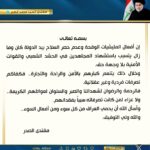
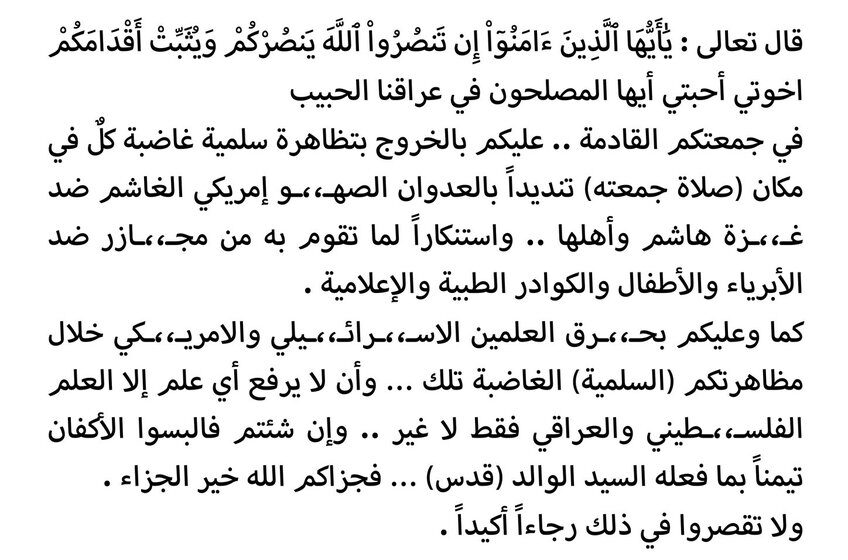
The most impactful posts of the day came from Salih Mohammed al-Iraqi (Post Impact: 100%), a high-profile account associated with Muqtada al-Sadr. The account published two posts containing only images of what appear to be official, handwritten statements or directives. The first post and a second, similar one (Post Impact: 77%) were shared without any accompanying text, leaving followers to interpret the documents’ contents directly. The extremely high engagement indicates that these announcements represent a major development or call to action for the Sadrist movement and its supporters, immediately capturing the attention of the Iraqi social media landscape.
2. U.S.-Iran Nuclear Negotiations in Oman Spark Intense Debate
The nuclear negotiations between the United States and Iran in Muscat, Oman, were the most widely discussed topic, generating a broad spectrum of reactions. Some users, like Sufian al-Samarrai (Post Impact: 30%), mocked the proceedings, noting the meeting lasted only an hour and suggesting the Iranian negotiator left “in a hurry.” Others expressed deep cynicism; Rusly Al-Maliki (Post Impact: 18%) accused Iran of hypocrisy. In contrast, pro-Iranian accounts viewed the talks as a sign of strength, with Abu Muziel (Post Impact: 12%) stating, “America only negotiates with the big guys… and that’s what only Iran has done.” Analysts like David Yassin (Post Impact: 14%) provided detailed commentary, suggesting the talks were not built on trust but on “monitoring the enemy up close” and that there would be “no truce without complete dismantling of the Iranian nuclear program.” Reports from journalists like Zaid Benjamin (Post Impact: 8%) shared official photos of the meetings released by the Omani News Agency.
3. Iraqi Aid to Syria and Lebanon Under Scrutiny
The Iraqi government’s decisions to send aid abroad triggered significant controversy. Issam Hussein (Post Impact: 23%) strongly criticized Prime Minister Al-Sudani for granting “200 billion Iraqi dinars to the terrorist authority of al-Jolani” in Syria. He argued the move bypasses parliament and serves Turkish interests through intermediary Khamis al-Khanjar to secure support for Sudani’s second term. Concurrently, a post by Haidar (Post Impact: 19%) detailed a separate aid package to Lebanon, which includes 100 tons of heating materials, 150,000 tons of wheat, millions of dollars for hospitals and schools, and 36 tons of medical aid. Together, these posts highlighted a narrative questioning the government’s allocation of national resources while facing domestic challenges.
4. Concerns Over Al-Jolani’s Authority and Alleged Terrorist Ties
Linked to the controversy over Iraqi aid to Syria, several accounts raised alarms about the nature of Hay’at Tahrir al-Sham’s rule in Idlib, led by Abu Mohammad al-Jolani. Sufian al-Samarrai (Post Impact: 15%) claimed that al-Jolani’s chief of staff is a major ISIS terrorist named Omar Jeftchi, also known as Mukhtar al-Turki, warning, “We are on the verge of a catastrophe in the Middle East that has been legitimized by Turkey, Qatar, and Iran.” In his critique of Iraqi aid, Issam Hussein (Post Impact: 23%) repeatedly referred to al-Jolani’s administration as a “terrorist gang” and an “authority not recognized internationally,” arguing that the funds could be used to arm terrorists and continue the “genocide of minorities.”
5. Faig al-Sheikh Ali’s Commentary on Iraq’s Political History
Politician and prominent commentator Faig al-Sheikh Ali (Post Impact: 41%) published a highly engaged post reflecting on Iraq’s history with foreign intervention. Using the repeated phrase “the teams” (الفِرق), he alluded to the cycle of international inspection teams in Iraq before 2003, listing their actions: “The teams prepared… the teams went… the teams entered… the teams left… the teams searched.” He expressed frustration with this history, ending with the line, “In the end, the tables turned completely!” and the hashtag #TheTishreenRevolutionWillBeVictorious, linking past foreign dealings with the aspirations of the Tishreen protest movement.
6. Saraya al-Salam Announces Arrests in Brutal Samarra Murder
A security development in Samarra drew attention after Saraya al-Salam, a Sadrist-affiliated group, addressed a recent crime. Issam Hussein (Post Impact: 11%) reported on a press conference where the group’s command announced the arrest of suspects in an incident in the Banat al-Hassan area that resulted in a citizen’s death. The statement explicitly denied rumors circulating online that implicated Saraya al-Salam in the crime. The case was also mentioned by Mustafa al-Dulaimi (Post Impact: 6%), who condemned the brutality of the crime, which involved kidnapping, torture, and burning. Yasser Eljuboori (Post Impact: 5%) shared a video of the victim’s family thanking the Prime Minister and Minister of Interior for their follow-up on the investigation.
7. Allegations of Turkish Intelligence Operations in Nineveh
Concerns about Turkish influence in northern Iraq were fueled by a post detailing an alleged intelligence report. Haidar (Post Impact: 10%) summarized what he described as a report from the Iraqi National Security Service. The report claims the “Nineveh Guard” faction is split, with one part linked to the PMF and another directly paid and controlled by Turkey. It further alleges that these elements guard Turkish army bases and that Turkish intelligence is recruiting individuals with security flags in Iraq, particularly from the Turkmen community. The report also mentions the activities of the Turkish “Grey Wolves” organization in Iraq, which it claims is working to promote Turkmen separatism.
8. Nouri al-Maliki Re-elected as Dawa Party Secretary-General
The re-election of former Prime Minister Nouri al-Maliki as the Secretary-General of the Islamic Dawa Party was a notable political development. Several political leaders offered their congratulations, including Ammar Al-Hakim (Post Impact: 8%), who expressed hope that the party’s new political era would “enhance communication and relations with other national political forces.” National Security Advisor Qassim al-Araji (Post Impact: 7%) also extended his congratulations to what he called the “venerable, struggling party.” In a more critical tone, Tamara Alkhazraji (Post Impact: 4%) sarcastically described the news as a “surprising story and an unexpected win… election of Nouri al-Maliki as secretary-general of the Dawa Party for the 19th time.”
9. Kurdistan Region Leaders Conduct High-Level Diplomatic Meetings
Leaders of the Kurdistan Region of Iraq (KRI) were active on the diplomatic front. KRI President Nechirvan Barzani (Post Impact: 9%) reported meeting with Russian Foreign Minister Sergey Lavrov in Antalya, Turkey, where they discussed regional developments and cooperation. Meanwhile, KRI Prime Minister Masrour Barzani (Post Impact: 8%) posted about welcoming Iraqi Prime Minister Mohammed Shia’ Al Sudani to the Kurdistan Region. In his post, Barzani emphasized that despite challenges, working together and abiding by the constitution could achieve “lasting prosperity for our peoples.” These posts highlight ongoing engagement by the KRG with both international powers and the federal government in Baghdad.
10. Use of Religious Figures to Justify Iran Talks Draws Mockery
A specific claim about the U.S.-Iran negotiations drew both attention and ridicule. Inas Saad (Post Impact: 38%) shared a statement from former diplomat Amir al-Mousawi, who allegedly claimed that “Tehran’s acceptance of nuclear talks with the United States came after the approval of Imam #Mahdi (PBUH) and his permission for Mr. Khamenei to conduct those negotiations.” This assertion was met with derision from other users. Sheikh Thaer al-Bayati (Post Impact: 9%) mocked the idea, stating that whenever the “axis of resistance” is cornered, they invoke the Mahdi for political purposes. He commented sarcastically, “The Mahdi is innocent of this farce… The one negotiating today is not doing so on a divine mandate, but under direct guidance from a suffocating reality.”