2025-04-14: Scrutiny of Saudi Arabia’s Regional Policies and Impact on Iraq

Based on an analysis of 600 X / Twitter posts on April 14, 2025, Miqrab AI identified several key narratives trending in Iraq. The most prominent discussions revolved around sharp criticism of Saudi Arabia’s regional policies, particularly its financial aid to Syria and its perceived environmental failures impacting Iraq. Another major theme was the intense online branding rivalry among major Shiite political-military factions, who used the platform to display their slogans and imagery. There was also widespread debate over the ongoing US-Iran negotiations, with commentators expressing divided opinions on Iran’s motives and the implications for its allies in Iraq. Significant domestic news, including the official designation of Halabja as Iraq’s 19th province and a new prime ministerial directive to video-record all security investigations, also garnered considerable attention and were largely seen as positive developments.
Table Of Content
- 1. Scrutiny of Saudi Arabia’s Regional Policies and Impact on Iraq
- 2. Factional Branding and Rivalry Intensifies Online
- 3. US-Iran Negotiations Spark Fierce Debate Among Iraqis
- 4. Halabja Officially Becomes Iraq’s 19th Province
- 5. Political Leaders Commemorate Anfal Genocide Anniversary
- 6. PM Mandates Filming of All Security Investigations
- 7. Pro-Iran Factions Accused of Hypocrisy Over US Negotiations
- 8. Kurdistan President Barzani Meets French President Macron in Paris
- 9. Analysts Speculate on Iraq’s Political Future and Foreign Plans
- 10. Video Clip Mocking Saudi ‘Resistance’ in Syria Goes Viral
Today’s Top 10 X (Twitter) Trends in Iraq:
1. Scrutiny of Saudi Arabia’s Regional Policies and Impact on Iraq
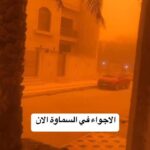
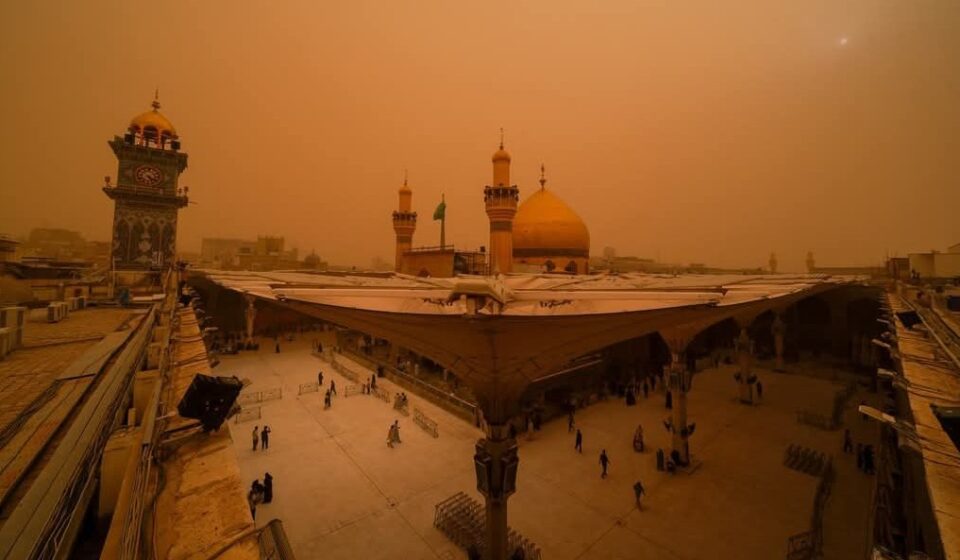
Iraqi social media users heavily criticized Saudi Arabia’s regional actions, with multiple high-engagement posts questioning its motives and impact. Asaad Al Basri (Post Impact: 100%) questioned why Saudi Arabia would pay off Syria’s World Bank debt while not offering similar help to Iraq, asking, “Could the sectarian dimension be the reason?” Another account, Haydar (Post Impact: 60%), mocked a video circulating in Saudi Arabia that allegedly showed Saudi resistance against US and Israeli occupation in Syria, calling it a product of Photoshop. The same account also blamed a severe dust storm that caused thousands of injuries in Iraq on Saudi Arabia’s failure to implement its promised “60 billion tree” green initiative, a point echoed by Wesam Aziz (Post Impact: 5%) who called Saudi Arabia a “bad neighbor.”
2. Factional Branding and Rivalry Intensifies Online
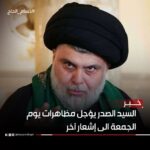
Leaders of major Iraqi political-military factions engaged in a display of online branding, posting images and slogans for their respective groups. The trend was led by a post from Salih Muhammad al-Iraqi (Post Impact: 69%), a key figure in the Sadrist Movement, who shared “The central image and slogan for this year’s anniversary.” In what appeared to be a direct response from rival groups, Qais Khazali (Post Impact: 89%), the leader of Asa’ib Ahl al-Haq, and Abu Alaa Al-Walaei (Post Impact: 22%), the head of Kata’ib Sayyid al-Shuhada, also published their own factions’ branding materials. These high-impact posts, though containing no text, highlight a significant trend of digital posturing and the battle for influence among powerful Shiite groups.
3. US-Iran Negotiations Spark Fierce Debate Among Iraqis
The prospect of negotiations between the United States and Iran has generated a heated debate on Iraqi social media, with starkly different interpretations of the event. Critics like Dr. Zaid Abdulwahab Al-Azami (Post Impact: 23%) argued that Iran is prioritizing its own nuclear and economic interests by engaging with the U.S. without preconditions related to Gaza or Yemen, suggesting its “Death to America” slogans are now “expired.” Steven Nabil (Post Impact: 6%) also noted the irony of Iran’s allies celebrating the talks as a victory. On the other hand, supporters of Iran, such as Amir al-Mousawi (Post Impact: 5%), framed the negotiations as a triumph for the “resistance,” claiming that Trump was forced to concede due to the “blessing of the martyrs’ blood.”
4. Halabja Officially Becomes Iraq’s 19th Province
The Iraqi Parliament officially voted to designate Halabja as the nation’s 19th province, a move that was widely celebrated across the political spectrum. Haydar (Post Impact: 10%) reported on the parliamentary vote and noted that Nukhsheh Saleh was appointed as the acting governor, making her the first woman to hold such a position in Iraq’s history. The new governor, Nuxsha Nasih (Post Impact: 9%), posted a message of thanks. The decision was praised by leaders including Ammar Al-Hakim (Post Impact: 6%), who called it the “best tribute” to the city, and Masrour Barzani (Post Impact: 5%), who described it as the “least reward for the pain and suffering” of Halabja’s people.
5. Political Leaders Commemorate Anfal Genocide Anniversary
Top Iraqi and Kurdish leaders issued statements to commemorate the 37th anniversary of the Anfal campaign, a genocidal operation conducted by the former Ba’athist regime against Iraq’s Kurdish population. Prime Minister Mohammed Shia’ Al Sudani (Post Impact: 13%) recalled the “brutal massacres” and stated that today, “brotherhood and peaceful coexistence triumph over all motives of hatred.” Kurdistan Region President Nechirvan Barzani (Post Impact: 8%) and Prime Minister Masrour Barzani (Post Impact: 8%) also paid tribute to the victims, emphasizing the federal government’s legal and moral responsibility to provide compensation to the families of the victims.
6. PM Mandates Filming of All Security Investigations
A decision by the Commander-in-Chief of the Armed Forces to require that all security investigations be recorded by camera was met with widespread approval. Mashaan al-Jabouri (Post Impact: 13%) hailed it as a “bold and courageous step… that ends torture and violations, and protects human dignity.” He also expressed hope that this would lead to reinvestigations for those convicted based on confessions obtained without video evidence. This positive sentiment was shared by Prof. Dr. Ghalib Al-Da’mi (Post Impact: 7%), who called it a potential “victory over savagery,” and Hussein Arab (Post Impact: 4%), who thanked the Prime Minister for the initiative.
7. Pro-Iran Factions Accused of Hypocrisy Over US Negotiations
Commentators heavily criticized what they described as the hypocritical stance of pro-Iran factions regarding negotiations with the United States. Rusly Al-Maliki (Post Impact: 28%) pointed out the double standard where Saudi investments in the US are called “jizya” (a tribute), while potential US investments in Iran are framed as a “victory.” Salam Al-Husseini (Post Impact: 10%) directly challenged Abu Alaa Al-Walaei’s celebration of Iran’s diplomatic moves, arguing that his group has made its own concessions to the US and should abandon its “resistance” slogans. Shaho Al-Qaradaghi (Post Impact: 2%) also highlighted the contradiction, noting that Iran’s Supreme Leader had previously deemed negotiations with the US “dishonorable.”
8. Kurdistan President Barzani Meets French President Macron in Paris
Nechirvan Barzani (Post Impact: 16%), President of the Kurdistan Region of Iraq, met with French President Emmanuel Macron at the Élysée Palace in Paris. In posts published in both Kurdish and French, Barzani referred to Macron as his “dear friend” and described the relationship between the Kurdistan Region and France as “very special and constantly strengthening.” The discussions reportedly focused on enhancing ties between France, Iraq, and the Kurdistan Region, as well as addressing broader regional security and stability issues.
9. Analysts Speculate on Iraq’s Political Future and Foreign Plans
Political analysts discussed the perceived fragility of Iraq’s political system and alleged international plans to reshape the country. David Yassin (Post Impact: 11%) claimed that a closed conference is being prepared in Berlin to address the “Iraq file,” with the goal of “redefining Iraq” by isolating Iranian influence and drawing a new regional security map orchestrated by American, Israeli, and European security services. In a more direct assessment, Ahmad Mulla Talal (Post Impact: 10%) stated that “any observer of the current regime in Iraq will easily discover that it is taking its last breath,” regardless of the outcome of US-Iran talks or other regional schemes.
10. Video Clip Mocking Saudi ‘Resistance’ in Syria Goes Viral
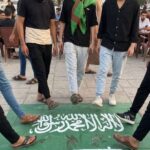
A video clip, described by an Iraqi commentator as being popular in Saudi Arabia, was widely shared and mocked. The post from Haydar (Post Impact: 60%) sarcastically commented on the video, which supposedly depicts Saudi forces engaging in resistance, by noting that the US occupies eastern Syria and Israel occupies southern Syria amidst “fierce Saudi resistance via Photoshop applications.” This post was part of a broader trend criticizing Saudi Arabia’s regional role, contrasting its perceived inaction with its online propaganda. This narrative was reinforced by Dr. Hussein Al-Safi (Post Impact: 52%), who posted a threatening message directed at a figure he labeled the “killer of Alawite children,” further highlighting the Syrian conflict as a point of contention.