2025-04-18: Muqtada al-Sadr Refuses to Participate in Elections

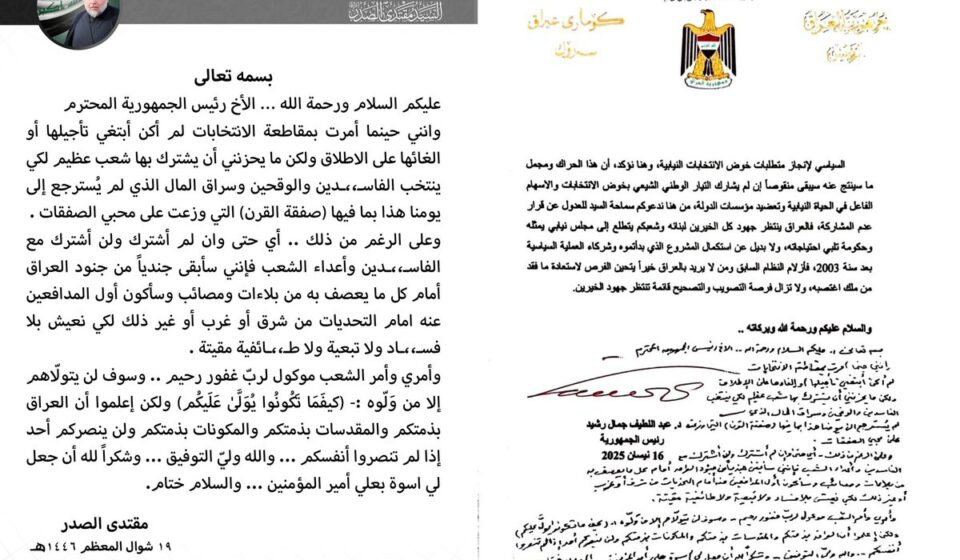
Based on an analysis of 476 X / Twitter posts by Miqrab AI on April 18, 2025, the primary narratives in Iraq revolve around significant political and regional shifts. The most dominant conversation centers on the fallout from Prime Minister Mohammed Shia’ Al Sudani’s meeting with Syrian leader Ahmed al-Sharaa (formerly al-Jolani), which has sparked intense debate, criticism from pro-Iran factions, and led to the dismissal of the military’s top spokesman. This event intersects with broader discussions on regional diplomacy, including a notable rapprochement between Saudi Arabia and Iran, and the complex dynamics of US-Iran relations. Domestically, the political scene is defined by Muqtada al-Sadr’s definitive refusal to participate in upcoming elections, deepening the country’s political polarization and prompting commentary on sectarianism and historical grievances.
Table Of Content
- 1. Muqtada al-Sadr Refuses to Participate in Elections
- 2. Dismissal of Military Spokesman Yahya Rasool
- 3. Controversy Over PM Sudani’s Meeting with Ahmed al-Sharaa
- 4. Sectarian Tensions and Memories of Past Violence
- 5. Saudi-Iranian Rapprochement Signals Regional Shift
- 6. Anti-Syrian Sentiment and Incidents Involving Refugees
- 7. Mixed Signals in US-Iran Relations
- 8. Deepening Internal Political Polarization
- 9. Criticism of Turkish, Qatari, and Iranian Influence
- 10. Factions Condemn Potential Normalization with al-Sharaa
Today’s Top 10 X (Twitter) Trends in Iraq:
1. Muqtada al-Sadr Refuses to Participate in Elections
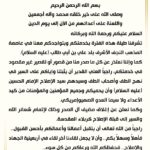
The most impactful story of the day is the definitive announcement from the Sadrist movement regarding the upcoming elections. The account Minister of the Leader – Salih Muhammad al-Iraqi (Post Impact: 100%), a key Sadrist mouthpiece, shared a document believed to be a formal statement on the matter. This was widely interpreted as the final word on their boycott. Corroborating this, Hisham Ali (Post Impact: 11%) stated, “The dream of the Sadrist movement’s participation in the upcoming elections has ended, and with it, the dreams of those who doubted that #AlSadr would reverse his decision.” In another post, he quoted Sadr’s response to the Iraqi President’s invitation to join the elections: “I will not participate with the corrupt.” Similarly, Alaa Alabadi (Post Impact: 7%) emphasized Muqtada al-Sadr’s steadfastness despite appeals from various political figures, stating, “The neighbor begs, the president begs, the framework begs… Al-Sadr is firm, and the others are lost and confused !!”
2. Dismissal of Military Spokesman Yahya Rasool
A major development circulating on X is the removal of Major General Yahya Rasool from his position as the spokesman for the Commander-in-Chief of the Armed Forces. This action is directly linked to his recent statements about Syrian leader Ahmed al-Sharaa (al-Jolani). Hiba Alnnayib (Post Impact: 27%) reported, “After describing al-Jolani as a terrorist, Mohammed Shia’ Al Sudani refers Major General Yahya Rasool to retirement,” sarcastically adding, “Al-Jolani is a red line.” This was echoed by Hassan Al-Kaabi (Post Impact: 22%), who confirmed the news of Rasool’s dismissal and referral to retirement. The controversy began with posts like one from Dr. Hussein Al-Safi (Post Impact: 26%), which quoted Rasool stating unequivocally, “Al-Jolani is a terrorist.” The dismissal is being framed by commentators like Mullah Aboud Al-Karkhi (Post Impact: 6%) as a consequence of this statement and a sign of appeasement, calling it “the fate of every hypocrite who fawns over those loyal to Iran.”
3. Controversy Over PM Sudani’s Meeting with Ahmed al-Sharaa
The recent meeting in Qatar between Iraqi Prime Minister Mohammed Shia’ Al Sudani and Syrian leader Ahmed al-Sharaa (formerly al-Jolani) has triggered a firestorm of political debate. MP Alia Nassif (Post Impact: 41%) views the meeting positively, linking it to broader regional stabilization efforts stemming from US-Iranian negotiations and a Qatari-sponsored rapprochement between the Iraqi government and the interim Syrian government. However, this view is strongly contested. Faiq Al-Sheikh Ali (Post Impact: 29%) disagrees, suggesting the meeting was prompted by “the arrival of 10 American planes in Israel’s Negev desert loaded with destructive missiles, in preparation for an attack on Iran!” Mashaan Al-Jabouri (Post Impact: 40%) adds a historical and sectarian dimension, contrasting al-Sharaa’s past actions against the involvement of Iran-backed factions in Syria, asking who should apologize to whom and whether it is time to “turn a new page” between the two countries. The meeting has also drawn condemnation, with figures like Lieutenant General Abdul Karim Khalaf, quoted by Sumerian Letters (Post Impact: 17%), stating that al-Jolani is wanted in Iraq and sentenced to death for past bombings.
4. Sectarian Tensions and Memories of Past Violence
Underlying the political debates is a strong current of sectarian tension and painful memories of past violence. A highly impactful post from Haider (Post Impact: 52%) shared a map of Baghdad showing red dots representing explosions between 2003 and 2015, a stark visual reminder of the country’s violent history. The debate around Ahmed al-Sharaa has resurfaced these divisions. Mashaan Al-Jabouri (Post Impact: 40%) frames the issue by comparing al-Sharaa’s alleged crimes before 2006 to the actions of Iran-backed Shia factions in Syria, whom he accuses of killing thousands of Syrian Sunnis. In response to such arguments, Issam Hussein (Post Impact: 12%) defended Shia groups and accused Sunni factions of historically supporting terrorism in Iraq, stating “you were incubators for international terrorism from all nationalities… you prepared car bombs for them.”
5. Saudi-Iranian Rapprochement Signals Regional Shift
Significant diplomatic movements between regional rivals Saudi Arabia and Iran are a key topic of discussion, signaling a potential new era of cooperation. Omar Abdul Sattar Mahmoud (Post Impact: 27%) highlighted this with a video of a meeting between Saudi Defense Minister Khalid bin Salman and Iranian Supreme Leader Ali Khamenei. Abbas Al-Ardawi (Post Impact: 9%) reports that Khamenei approved the Saudi minister’s request to expand relations, stating, “We believe that strengthening relations with Saudi Arabia is in our interest.” Commentators see this as part of a wider effort to de-escalate regional tensions. Ezzat Alshabandar (Post Impact: 7%) interprets the meeting, along with US-Iran talks, as a sign that “the countries of the region are agreed and are about to miss the opportunity for Israel to ignite a war that, if it starts, may not end.”
6. Anti-Syrian Sentiment and Incidents Involving Refugees
A narrative of growing tension between Iraqis and Syrians, particularly in diaspora communities, is emerging. Rusly Al-Maliki (Post Impact: 23%) reports on what he describes as pro-Iran Iraqis demonstrating in Germany and demanding the deportation of Syrians. Another post from Dr. Ali Al-Jabiri (Post Impact: 11%) shares a video from the funeral of a 15-year-old Iraqi boy in Hamburg, who was allegedly killed by four Syrian youths who were subsequently arrested by German police. In a related context, Haider (Post Impact: 21%) criticizes the Al-Sudani government for its policy of repatriating thousands of Iraqis from the Al-Hawl camp in Syria, showing new footage from the camp and expressing concern about their reintegration into society.
7. Mixed Signals in US-Iran Relations
The complex relationship between the United States and Iran is being discussed through the lens of both covert engagement and public tension. Mujahid Al-Taee (Post Impact: 16%) shared a video from the Sulaimani Forum showing Iran’s Deputy Foreign Minister exchanging phone numbers with a former U.S. Assistant Secretary of State for Near Eastern Affairs, Barbara Leaf, an act he labeled “Political Flirting!” Conversely, other accounts highlight escalating tensions. Sufian Al-Samarrai (Post Impact: 11%) issued a stark warning for people to “leave Iran now and not travel to it for any reason,” implying an impending conflict. Adding to this, Abdulrazzaq Al-Hiyali (Post Impact: 4%) posted a video showing the renovation of the Iranian embassy in Washington, D.C., and taunted Iranian loyalists about the diplomatic engagement.
8. Deepening Internal Political Polarization
The discourse on X reflects a deep and growing polarization within Iraqi politics, often framed as a struggle between “nationalists” and “pro-Iran” factions (Wilaiyun). Faiq Al-Sheikh Ali (Post Impact: 20%) posted a metaphorical anecdote about how he uses the pages of his political opponents to find and block all their “pro-Iran” followers, illustrating the clear battle lines being drawn online. Rusly Al-Maliki (Post Impact: 10%) offered a sharp critique of this group, describing the “Wilai” as “pathetic” and easily provoked, in contrast to the “Iraqi nationalist” who remains calm because “the one who is right is always strong.” This internal division is also seen in criticism of the government’s foreign policy, with MP Yasser Al-Husseini, quoted by Haider (Post Impact: 10%), accusing the government of weakness and making concessions to Kuwait and Jordan in its pursuit of a second term.
9. Criticism of Turkish, Qatari, and Iranian Influence
A recurring theme, primarily driven by one commentator, alleges a coordinated effort by Turkey, Qatar, and Iran to expand their influence and destabilize other nations in the region. Sufian Al-Samarrai (Post Impact: 15%) claims that “the claws of Qatar, Turkey, and Iran and their leftist and Islamist tails want to close the ports of Morocco under the pretext of Palestine and normalization to destroy Morocco’s economy.” He argues this is hypocritical, as he alleges Turkish and Qatari ports work “day and night to supply Israel with fuel, weapons, and goods.” In a separate but related critique of Turkish policy, Issam Hussein (Post Impact: 3%) questions Turkish President Erdoğan’s sincerity in defending Palestine, accusing him of using the cause to expand influence in Syria and Libya while his proxies grant concessions to Israel.
10. Factions Condemn Potential Normalization with al-Sharaa
Pro-Iran armed factions and their supporters have voiced strong opposition to the meeting between PM Sudani and Ahmed al-Sharaa, viewing it as a dangerous step towards normalization with a terrorist figure. Haider (Post Impact: 16%) quoted a statement from Kata’ib Hezbollah, which declared that Arab summits were held without the presence of Bashar al-Assad, Iraq, or Libya, and they “will certainly not stop due to the absence of the convicted (Abu Mohammad al-Jolani), the leader of the terrorist Al-Nusra Front.” This sentiment was echoed by Abu Muzeal (Post Impact: 5%), referencing the statement from Abu Ali al-Askari (a Kata’ib Hezbollah leader) and directly addressing PM Sudani, urging him to abandon this path and not tarnish his reputation with such a meeting. This highlights a clear red line for these groups regarding any engagement with the new Syrian leadership.