2025-04-20: Muqtada al-Sadr Shares New Photograph

Based on an analysis of 452 X / Twitter posts trending on April 20, 2025, by Miqrab AI, the primary narratives in Iraq revolve around significant political figures and deeply divisive domestic issues. Highly influential clerical and militia leaders like Muqtada al-Sadr and Qais al-Khazali dominated the conversation simply by posting new photographs, generating immense engagement. Alongside this, two major controversies captured public attention: the potential visit of Syrian leader Ahmed al-Sharaa (also known as Abu Mohammad al-Jolani), which sparked fierce debate about Iraq’s foreign policy and sovereignty, and the release of former MP Ahmed al-Alwani after a decade in prison, which elicited polarized reactions celebrating his freedom or condemning him as a terrorist. Other key topics included an internal split within the Dawa Party, allegations of a sophisticated gold smuggling ring, and discussions on U.S.-Iran relations.
Table Of Content
- 1. Muqtada al-Sadr Shares New Photograph
- 2. Qais al-Khazali Posts New Image, Sparking Engagement
- 3. Controversy Over Potential Visit of Ahmed al-Sharaa (al-Jolani)
- 4. Polarized Reactions to the Release of Ahmed al-Alwani
- 5. UTV Presenter’s Qualifications Questioned
- 6. Reports of an Internal Split Within the Dawa Party
- 7. MP Exposes Alleged Gold Smuggling Ring in Baghdad
- 8. Discussions on Iranian Influence in Iraq
- 9. Analysis of U.S.-Iran Negotiations and Regional Tensions
- 10. Faleh al-Fayyad Accused of Reinstating Sectarian Figures
Today’s Top 10 X (Twitter) Trends in Iraq:
1. Muqtada al-Sadr Shares New Photograph
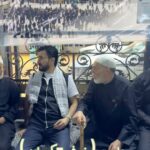
The most impactful post of the day came from influential cleric Muqtada al-Sayyid Muhammad al-Sadr (Post Impact: 100%), who shared a new photograph of himself without any accompanying text. The post generated the highest engagement across the platform in Iraq, underscoring his significant social media presence and the intense attention his online activities receive from followers and political observers alike. Another account, Alaa Alabadi (Post Impact: 2%), commented on this phenomenon, stating that all segments of Iraqi society, regardless of their background, turn to al-Sadr when they have grievances, which “clearly indicates that His Eminence has become the savior of Iraqis and the refuge for every oppressed person.”
2. Qais al-Khazali Posts New Image, Sparking Engagement
In a similar vein to other political leaders, the Secretary-General of Asa’ib Ahl al-Haq, Qais al-Khazali (Post Impact: 52%), posted a new photograph of himself. The post, which also lacked any text, garnered significant engagement, making it one of the day’s top trends. This highlights a pattern of influential Iraqi figures using simple visual posts to maintain a strong presence and connection with their base on social media platforms. The high impact rate demonstrates the substantial online following and influence wielded by al-Khazali in the Iraqi digital sphere.
3. Controversy Over Potential Visit of Ahmed al-Sharaa (al-Jolani)
A fierce debate erupted over the potential visit of Syrian leader Ahmed al-Sharaa, also known as Abu Mohammad al-Jolani, to Baghdad for an Arab summit. Faiq al-Sheikh Ali/Kalimati lil-Tarikh (Post Impact: 41%) mocked pro-Iranian Shia leaders for labeling al-Sharaa a terrorist, claiming these same leaders are the true “killers, thieves, scoundrels, and sectarians.” Conversely, accounts like Haydar (Post Impact: 7%) and Ahmed Akhu Mza’al Basra-Iraq (Post Impact: 2%) reported that the Iraqi judiciary confirmed an active arrest warrant against al-Jolani for terrorism. Shaho al-Qaradaghi (Post Impact: 3%) pointed out that the Dawa Party rejected the visit, comparing al-Sharaa to Netanyahu, while Mashan al-Jabouri (Post Impact: 3%) supported the meeting between Prime Minister al-Sudani and al-Sharaa, framing it as beneficial for both nations and a step towards reconciliation.
4. Polarized Reactions to the Release of Ahmed al-Alwani
The release of former MP Ahmed al-Alwani after more than a decade in prison triggered sharply divided reactions. Supporters celebrated his freedom, with Mustafa al-Dulaimi (Post Impact: 13%) welcoming him back and stating his return would challenge “politicians of chance.” Ghaith al-Tamimi GHAITH ALTAMIMI (Post Impact: 4%) congratulated his tribe and called his return a sign of Iraq’s recovery. On the other hand, critics vehemently condemned his release. Haydar (Post Impact: 11%) described al-Alwani as a “symbol of terrorism and sectarianism who contributed to the rise of ISIS” and accused him of killing soldiers. Similarly, Salam al-Husseini (Post Impact: 2%) contrasted the release of the man “convicted of killing three Iraqi soldiers” with the violent suppression of protesting farmers. Salem al-Jumaili (Post Impact: 4%) clarified that the release was due to the general amnesty law, not political or tribal influence.
5. UTV Presenter’s Qualifications Questioned
A post from Wasan al-Shaikhli (Post Impact: 17%) gained significant traction by questioning the hiring of Sara al-Bayati as a program presenter at UTV channel. The post claims that al-Bayati was appointed to the position despite not having completed middle school, adding that the “reasons are unknown.” The high engagement on this single post indicates a strong public interest in issues of meritocracy and hiring practices within prominent Iraqi media institutions.
6. Reports of an Internal Split Within the Dawa Party
Several accounts reported on a major internal division within the Islamic Dawa Party. ahmedmeckya (Post Impact: 7%) announced that senior party “hawks,” including Abdul Halim al-Zuhairi, Tariq Najm, and Ali al-Adib, have formed a “Special Dawa Council” to restore the party’s identity and correct its path. The post suggests this move has left former Prime Minister Nouri al-Maliki isolated. This was echoed by Shaho al-Qaradaghi (Post Impact: 2%), who described the development as a “soft coup” aimed at reclaiming the party from what critics call Maliki’s “individual leadership” and “authoritarian alliances” that have deviated from the party’s original principles.
7. MP Exposes Alleged Gold Smuggling Ring in Baghdad
MP Alyaa Nusayif (Post Impact: 8%) published a detailed warning about a gold smuggling network operating in Baghdad, particularly in the Kadhimiya district. She alleged that a “corrupt person” runs the operation, which exploits poor, divorced young women by having them smuggle gold bars in their shoes through Baghdad’s airport for a small fee of 190,000 Iraqi dinars. The MP named one of the women and a goldsmith who have been arrested and mentioned that an “important person” is attempting to secure the release of other detainees. She concluded with an urgent appeal to the Prime Minister and security agencies to dismantle the network and pursue its leaders.
8. Discussions on Iranian Influence in Iraq
Iranian influence remained a topic of discussion, highlighted from different perspectives. Yasser Eljuboori – ياسر الجبوري (Post Impact: 8%) shared a clip of a Kuwaiti analyst who stated, “Iran drags Iraq by its ear and you don’t say anything!” reflecting a critical view of Iraq’s perceived subservience. In contrast, Haydar (Post Impact: 5%) summarized a speech by the Iranian Consul in Najaf, who praised the city as the “capital of the Shia” and detailed its historical and political influence on Iran. The consul declared that as a result of the efforts in Najaf and Qom, “the Shia have become a superpower in West Asia,” and announced that Iran seeks to increase investment in Najaf.
9. Analysis of U.S.-Iran Negotiations and Regional Tensions
The ongoing negotiations between the United States and Iran were a subject of detailed analysis and concern. Rafid Jaboori رافد جبّوري (Post Impact: 6%) suggested that President Trump wants a deal, but warned that Iran might misinterpret this as weakness, potentially provoking a conflict. Liqaa Maki (Post Impact: 5%) expressed skepticism about the rapid progress in talks, suggesting it could only be explained by extensive prior secret negotiations. Meanwhile, Rusly Al-Maliki 🇮🇶 رسلي المالكي (Post Impact: 4%) highlighted a contradictory action, noting that while negotiations were underway, the U.S. sent six aircraft carrying tons of bombs, including bunker busters, to Israel, marking the largest such delivery in decades.
10. Faleh al-Fayyad Accused of Reinstating Sectarian Figures
A post by Haydar (Post Impact: 5%) reported a significant accusation against the Chairman of the Popular Mobilization Forces (PMF), Faleh al-Fayyad. The account quotes Ahmed al-Moussawi, an MP from the Al-Sadiqoun bloc, who claimed that al-Fayyad was responsible for the return of controversial figures like Khamis al-Khanjar and Ali Hatem al-Suleiman to Iraq. According to the MP, al-Fayyad also “settled their security files,” a move implying the resolution of legal or security-related issues that had previously kept these individuals out of the country. This statement suggests internal political friction over the reconciliation process with figures accused of sectarianism.