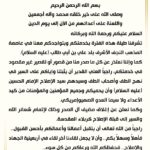
2025-04-21: Widespread Condolences Following Death of Pope Francis

Based on a Miqrab AI analysis of 484 X / Twitter posts trending in Iraq on April 21, 2025, the key narratives focused on the death of Pope Francis, which prompted widespread condolences from Iraqi political and religious figures and sparked comparisons to local religious authorities. A significant portion of the conversation revolved around the controversy of Syrian leader Abu Muhammad al-Jolani and his alleged meetings with Iraqi officials, drawing strong condemnation from accounts affiliated with Shia factions. Concurrently, discussions about Grand Ayatollah Ali al-Sistani’s public absence were reignited, contrasting his seclusion with the Pope’s public role. Other prominent topics included criticism of religious and political leaders, the contentious release of former MP Ahmed al-Alwani, and calls for greater Iraqi sovereignty free from foreign influence.
Table Of Content
- 1. Widespread Condolences Following Death of Pope Francis
- 2. Controversy Surrounds Abu Muhammad al-Jolani’s Activities
- 3. Debates on Grand Ayatollah Sistani’s Seclusion
- 4. Commemorating the “Martyrdom” of Qasem Soleimani
- 5. Faiq Al-Sheikh Ali’s Scathing Critique of Leaders
- 6. Debate Over Release of Former MP Ahmed al-Alwani
- 7. Calls for Iraqi Sovereignty and an End to Iranian Influence
- 8. Support for Cardinal Louis Sako as Next Pope
- 9. Criticism of Sunni Political Leadership’s Failures
- 10. Mixed Reactions to Prime Minister Sudani’s Dhi Qar Visit
Today’s Top 10 X (Twitter) Trends in Iraq:
1. Widespread Condolences Following Death of Pope Francis
The passing of Pope Francis dominated Iraqi social media, with numerous political and civil figures issuing statements of condolence and recalling his historic 2021 visit to Iraq. Prime Minister Mohammed Shia Al Sudani (Post Impact: 7%) highlighted the Pope’s role in promoting peace and recalled his meeting with Grand Ayatollah Ali al-Sistani as a key moment for interfaith relations. Similarly, former Prime Minister Mustafa Al-Kadhimi (Post Impact: 7%) remembered the Pope as a “conscience speaking in the name of humanity.” Condolences also came from Kurdistan Region leaders, including President Nechirvan Barzani (Post Impact: 13%) and Prime Minister Masrour Barzani (Post Impact: 8%), who praised his message of peace and solidarity. The office of Grand Ayatollah Sistani also issued a statement, shared by Haider (Post Impact: 18%), expressing deep sorrow and noting the Pope held a “lofty spiritual position.” Nobel laureate Nadia Murad (Post Impact: 20%) remembered his deep compassion for survivors of violence. Journalist ZaidBenjamin (Post Impact: 9%) was among the first to report the news from the Vatican.
2. Controversy Surrounds Abu Muhammad al-Jolani’s Activities
A major topic of discussion was the alleged meeting between Iraqi Prime Minister Al-Sudani and Syrian leader Abu Muhammad al-Jolani, leader of Hay’at Tahrir al-Sham. Posts expressed outrage and skepticism over the meeting and the potential rehabilitation of a figure considered a terrorist by many. Wasan al-Shaikhli (Post Impact: 36%) called on anyone with documents exposing Jolani to publish them. Other accounts highlighted perceived hypocrisy, with Mahdi Majeed (Post Impact: 7%) accusing Iraqi militia leaders of meeting Jolani publicly while privately ordering their followers to attack him as a terrorist. A post by Haider (Post Impact: 8%), citing a special source, claimed the Coordination Framework was “very upset” with Al-Sudani for not informing them about his trip to Qatar to meet Jolani. In contrast, Alaa Alabadi (Post Impact: 10%) shared a video of Coordination Framework member Adel Al-Manea claiming, “Al-Jolani is not wanted by the judiciary, and I challenge the judiciary or anyone to prove that Al-Jolani is wanted!”
3. Debates on Grand Ayatollah Sistani’s Seclusion
The death of Pope Francis triggered comparisons and debates surrounding the status of Grand Ayatollah Ali al-Sistani. Several accounts used the Pope’s public role and the Vatican’s swift announcement of his death to question the prolonged absence of Sistani from public view. Mahdi Majeed (Post Impact: 44%) questioned how Sistani could still be alive at 90 years old when many other world religious leaders have passed away, noting he has been “hidden for more than 30 years.” Similarly, Mula Abood Al-Karkhi (Post Impact: 9%) stated that the Vatican immediately announced the Pope’s death without hiding the news for years, contrasting this with those who believe announcing Sistani’s death would lead to the collapse of the sect. On the other hand, Haider (Post Impact: 22%) countered this narrative by sharing a quote attributed to Pope Francis praising Sistani as a “great wise man, a man of God” and highlighting the pride he felt in meeting him.
4. Commemorating the “Martyrdom” of Qasem Soleimani
A highly engaged post commemorated former Iranian Quds Force commander Qasem Soleimani, referring to him as the “greatest Shia leader in the modern era.” The post by Dr. Hussein Al-Safi (Post Impact: 56%) listed Soleimani’s birth year (1957) and date of death (January 3, 2020), and highlighted one of his most famous quotes: “I will not allow Baghdad to fall.” The post frames Soleimani as a heroic figure and martyr who played a crucial role in defending Iraq’s capital, reflecting a viewpoint common among supporters of the Iran-aligned factions within Iraq. The high impact of this single post indicates significant resonance for this narrative among its target audience.
5. Faiq Al-Sheikh Ali’s Scathing Critique of Leaders
Prominent politician Faiq Al-Sheikh Ali (Post Impact: 39%) published a sharp critique contrasting the global mourning for Pope Francis with the reaction to the deaths of local clerics. He argued that the Pope, a “man of peace,” was mourned by all, including Muslims, whereas when an Iraqi cleric dies, he is met with “curses, insults, spit on his funeral, and urine on his grave from Muslims before Christians, because he is a killer, a thief, and a scoundrel!” In another post, Faiq Al-Sheikh Ali (Post Impact: 25%) derisively referred to certain clerics as “mules” leading followers who are “more numerous than donkeys in the Abbasid era,” questioning whether these leaders ever provided their followers with foresight or solutions regarding regional events.
6. Debate Over Release of Former MP Ahmed al-Alwani
The release of former parliamentarian Ahmed al-Alwani sparked a contentious debate. Al-Alwani had been convicted for the killing of soldiers during his arrest in 2014. Essam Hussein (Post Impact: 15%) insisted that Al-Alwani was not released under an amnesty law but only after the families of the three slain soldiers dropped their charges and accepted blood money (Diyya). He condemned what he called the false narrative of “victimhood” promoted by Al-Alwani’s supporters. Similarly, Dr. Hussein Al-Safi (Post Impact: 12%) posted a video demanding the return of “our youth who were martyred because of Al-Alwani’s incitement” now that he has been released. Sheikh Falah Al-Quraishi (Post Impact: 5%) questioned the legal basis for the release, asking, “A terrorist is not included in the Diyya amnesty law. How did this one get out?”
7. Calls for Iraqi Sovereignty and an End to Iranian Influence
Multiple accounts voiced strong opinions on the need for Iraq to assert its sovereignty and end foreign influence, particularly from Iran. Rusly Al-Maliki (Post Impact: 7%) posed a question: “What is wrong when we call for an end to Iran’s influence over Iraq? And for Iraqis to possess their sovereignty and their sovereign decision-making with complete independence?” He argued that anyone who stands against Iraqi sovereignty is not Iraqi and is implementing foreign agendas. In a similar vein, Mishan al-Jabouri (Post Impact: 7%), commenting on US-Iran negotiations, expressed a desire to be free from “Iranian hegemony and its armed tools,” hoping that Iran would be forced to “retreat within its borders” and free the region’s people from its destabilizing interventions.
8. Support for Cardinal Louis Sako as Next Pope
Following the death of Pope Francis, a number of Iraqi users expressed their support for Chaldean Patriarch Cardinal Louis Raphaël Sako to be elected as the next Pope. Bahaa khaleel (Post Impact: 5%), despite stating he is not Christian, wrote, “From the bottom of my heart, I hope that Patriarch Louis Sako is chosen to be the Supreme Pontiff.” This sentiment was echoed by Sheikh Thaer Al-Bayati (Post Impact: 4%), who stated that “we authentic Iraqis” support Sako’s candidacy due to his “esteemed theological status, balanced leadership spirit, and notable achievements.” Both posts framed Sako’s potential election as a point of national pride, representing a tolerant and peaceful image of Iraq to the world.
9. Criticism of Sunni Political Leadership’s Failures
Commentator Asaad Al-Basri (Post Impact: 6%) published a lengthy analysis holding Sunni leaders responsible for the community’s current state, arguing they led their constituents into “unequal battles” with America, Iran, and the Iraqi state. He asserts that if Sunni leaders had “understood that the Gulf wanted them as a buffer,” they wouldn’t have reached their current “empty place.” In another post, Asaad Al-Basri (Post Impact: 7%) criticized the “exaggeration” surrounding former Speaker Mohammed al-Halbousi’s political standing, claiming he was disciplined by Shia leaders like Qais al-Khazali and given a new, limited role to prove his loyalty. He suggests Halbousi’s political influence is now heavily constrained by these Shia factions.
10. Mixed Reactions to Prime Minister Sudani’s Dhi Qar Visit
Prime Minister Mohammed Shia Al-Sudani’s visit to Dhi Qar province to launch new projects received mixed reactions. The Prime Minister’s Media Office (Post Impact: 5%) released a summary video showcasing the launch of several important projects during the visit, portraying it as a positive development for the province. In stark contrast, activist Hassan Basketball (Post Impact: 4%) expressed his disapproval, stating that if he were in Nasiriyah, his reaction to Al-Sudani’s convoy would be the same as his past hostile reactions to Nouri al-Maliki and Salim al-Jabouri. He declared, “You are not welcome in the city of heroes and the brave, not you nor any other corrupt officials.” This highlights the deep divide in public perception of the government’s efforts.