2025-04-23: Sadrist Movement Announces Election Boycott

Based on an analysis of (483) X / Twitter posts trending on April 23, 2025, Miqrab AI identified several key narratives dominating online conversations in Iraq. The most prominent theme was the Sadrist movement’s official announcement of an election boycott, which drove the highest engagement. Other significant conversations included fierce and divided reactions to the removal of a religious banner from the Sayyidah Zaynab shrine in Syria and the release of former MP Ahmed al-Alwani in Anbar. Discussions also revolved around regional politics, with a focus on the influence of Syrian leader Ahmed al-Sharaa (al-Jolani), historical debates about Saddam Hussein’s legacy, and security concerns following multiple drone incidents. Overall, the digital landscape reflected deep political divisions, sectarian tensions, and ongoing debates about Iraq’s governance and regional role.
Table Of Content
- 1. Sadrist Movement Announces Election Boycott
- 2. Controversy Over Flag Removal at Sayyidah Zaynab Shrine in Syria
- 3. Release of Former MP Ahmed al-Alwani Sparks Widespread Debate
- 4. Discussions on Ahmed al-Sharaa (al-Jolani) and Regional Influence
- 5. Opposing Views on Saddam Hussein’s Legacy
- 6. Jordan Bans the Muslim Brotherhood
- 7. KRG Leaders Highlight Diplomacy and Coexistence
- 8. Multiple Drone Incidents Reported Across Iraq
- 9. Fake PM Quotes on Iranian Visitors Cause Controversy
- 10. Growing Calls to Boycott Upcoming Elections
Today’s Top 10 X (Twitter) Trends in Iraq:
1. Sadrist Movement Announces Election Boycott
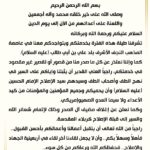
The Sadrist movement, led by Muqtada al-Sadr, has officially declared its intention to boycott the upcoming elections, a move that dominated online discussions. The most impactful post came directly from Muqtada al-Sadr (Post Impact: 100%) in the form of a signed statement announcing the boycott. The decision was echoed by his influential aide, Salih Mohammed al-Iraqi (Post Impact: 39%), who shared a similar graphic. The announcement has sparked broader political commentary from figures like Salam al-Hussaini (Post Impact: 2%), who analyzed the reasons for the boycott and its potential consequences for Iraq’s political landscape. The sentiment is not limited to the Sadrists, as political figure Dr. Salah Al-Arbawi (Post Impact: 2%) also announced his personal decision to boycott the vote and freeze his party’s activities.
2. Controversy Over Flag Removal at Sayyidah Zaynab Shrine in Syria
Reports of a religious banner being removed from the dome of the Sayyidah Zaynab shrine in Damascus, Syria, triggered strong and conflicting reactions across Iraqi social media. Pro-resistance outlet Sabereen news (Post Impact: 20%) reported that “#Jolani_terrorist_gangs” were responsible for removing the “red Ya Zaynab banner.” This perspective was shared by Hassan Alkaaei (Post Impact: 3%), who linked the incident to a recent meeting between Iraqi PM Al-Sudani and Syrian leader Ahmed al-Sharaa (al-Jolani). Conversely, Tamara Alkhazraji (Post Impact: 14%) framed the event positively, stating, “The ‘Ya Zaynab’ banner and all sectarian banners and slogans were removed,” and adding, “There is no place for [sectarian rituals] and their flags and banners in the new Syria ♥️.” Issam Hussein (Post Impact: 6%) provided a lengthy analysis condemning the act as a product of “takfiri” ideology and warning against supporting the new Syrian authorities.
3. Release of Former MP Ahmed al-Alwani Sparks Widespread Debate
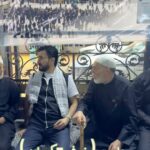
The release of former MP Ahmed al-Alwani after over a decade in prison has ignited a firestorm of debate, with reactions sharply divided between celebration and outrage. Supporters hailed him as a hero, with Najeh Abbas Al-Mizan (Post Impact: 6%) proclaiming, “It is the era of the two Ahmads,” comparing Alwani to Syrian leader Ahmed al-Sharaa. Videos of his grand reception in Anbar were widely shared by accounts like Omar Abd Al Sattar Mahmoud (Post Impact: 14%) and Omar Al-Janabi (Post Impact: 3%). On the other side, critics vehemently condemned his freedom. The account Haider (Post Impact: 6%) stated that “ISIS accounts are celebrating the release of the criminal Ahmed Alwani,” while Ahmed Al Thawaq (Post Impact: 7%) expressed disgust at those celebrating a man he described as a “terrorist, who killed three soldiers from the Iraqi security forces.”
4. Discussions on Ahmed al-Sharaa (al-Jolani) and Regional Influence
The growing influence and actions of Syrian leader Ahmed al-Sharaa (formerly al-Jolani) were a major topic of discussion among Iraqi commentators. Mujtahid Iraq (Post Impact: 14%) reported that al-Sharaa arrived in Ma’rib, Yemen, to lead forces against the Houthis, expressing a wish for Iraq to have a similar figure. His actions within Syria, such as the reported expulsion of Palestinian leaders, were covered by Haider (Post Impact: 6%). A reported meeting between Iraqi Prime Minister al-Sudani and al-Sharaa drew sharp criticism from figures like Mashaan al-Jabouri (Post Impact: 5%), who argued the meeting serves to “polish the image of a regime hijacked by pro-Iranian factions and beautifies the ugly face of this political system.” Meanwhile, others like Dr. Hussein Al-Safi (Post Impact: 10%) shared posts criticizing those who defend al-Sharaa.
5. Opposing Views on Saddam Hussein’s Legacy
The legacy of former President Saddam Hussein continues to be a polarizing topic, with users sharing sharply contrasting viewpoints. Rusly Al-Maliki (Post Impact: 11%) penned a critical reflection questioning the “madness” and “recklessness” of Saddam’s decision to confront a 33-nation coalition, arguing that his actions paved the way for the current political class, whom he derisively calls “Dothraki slobs.” In direct opposition, the account Kashf Al-Abatil (Post Impact: 4%) posted a video of former UAE Foreign Minister Rashid bin Abdullah Al Nuaimi. The post quoted Al Nuaimi defending Saddam’s decision to go to war with Iran, claiming Khomeini started the conflict and that “historically, it is not permissible to wrong the man and consider him the one who started the war.”
6. Jordan Bans the Muslim Brotherhood
News of Jordan officially banning the Muslim Brotherhood and classifying it as an illegal organization was widely shared and discussed by Iraqi social media commentators. Former MP Faig Alsheakh Ali (Post Impact: 11%) announced the news, stating, “This group has now been banned and criminalized after decades of its work and tampering in Jordan.” Political analyst Omar Abd Al Sattar Mahmoud (Post Impact: 1%) also reported on the decision, detailing that affiliation with the group is now prohibited and its assets will be confiscated. Commentator Sufian Al-Samarrai (Post Impact: 3%) reacted by calling on Qatar to “stop supporting the criminal, coup-plotting, terrorist Muslim Brotherhood gangs,” accusing them of causing destruction in the Middle East.
7. KRG Leaders Highlight Diplomacy and Coexistence
Leaders from the Kurdistan Region of Iraq (KRI) utilized social media to showcase diplomatic activities and promote a message of interfaith coexistence. KRI Prime Minister Masrour Barzani (Post Impact: 7%) posted about the first Kurdistan National Prayer Breakfast, declaring, “Our vision for Kurdistan is clear: a region where people of all faiths and nationalities can live freely.” He also reported on a meeting with the French Foreign Minister to strengthen their partnership. In a related vein, Aayad Al Twfan (Post Impact: 5%) posted a message of thanks to former KRI President Masoud Barzani on behalf of the people of Anbar, recalling how he opened Kurdistan’s borders to them during past crises when they were denied entry into Baghdad.
8. Multiple Drone Incidents Reported Across Iraq
Several security incidents involving unmanned aerial vehicles (UAVs) in Anbar and Salah al-Din provinces were reported online. The account Haider (Post Impact: 5%) shared an official statement from the Popular Mobilization Forces (PMF) media directorate, which claimed a drone intercepted in Anbar belonged to the ISIS organization. However, a separate post from the same account reported that PMF forces downed an “unknown aircraft” in Anbar that subsequently exploded, causing several injuries. This incident was also covered by Husham Ali (Post Impact: 1%), who specified that five people were injured. In another event, Haider (Post Impact: 2%) reported the crash of an Iraqi CH-4 model drone near al-Bakr airbase in Salah al-Din province for unknown reasons.
9. Fake PM Quotes on Iranian Visitors Cause Controversy
A significant controversy emerged online following the dissemination of fabricated quotes attributed to the Iraqi Prime Minister concerning Iranian religious visitors. The account Haider (Post Impact: 3%) reported that fake statements, which negatively depicted Iranian visitors as freeloaders, were published by major Iranian news agencies, sparking considerable debate within Iran. In response, journalist Mazen Al-Zaidi (Post Impact: 2%) clarified the situation, labeling the story as “fabricated news published by opposition Iranian platforms.” He added that the purpose of such disinformation is to undermine the improving relations between Iraq and Iran.
10. Growing Calls to Boycott Upcoming Elections
Alongside the Sadrist movement’s high-profile decision, other political voices are promoting a boycott of the upcoming elections, citing disillusionment with the political process. Political figure Dr. Salah Al-Arbawi (Post Impact: 2%) formally announced his personal choice to “boycott the upcoming elections and not support any party, current, or candidate.” He stated he would continue to oppose the current system through democratic means. Analyst Salam al-Hussaini (Post Impact: 2%) discussed the broader context of the boycotts, questioning the value of participating when outcomes are allegedly determined by party agreements rather than votes. He highlighted that the boycott extends beyond the Sadrist base, involving a wider segment of the population disillusioned with the system.