2025-05-08: Political Figure Mocked by Faig Alsheakh

Based on an analysis of 506 X / Twitter posts trending on May 8, 2025, Miqrab AI found that the primary narratives focused on internal political tensions, particularly a high-engagement exchange involving a prominent Sadrist figure, and significant outrage over the reported abduction and forced marriage of a young Syrian woman by extremist groups. Other key topics included renewed debate over the Khor Abdullah maritime agreement with Kuwait, discussions on the international reception of Syrian leader Ahmed al-Sharaa (al-Jolani), and geopolitical conversations surrounding India-Pakistan military clashes and the historical naming of the Arabian Gulf. Domestic Iraqi issues, such as critiques of Prime Minister al-Sudani’s policies and calls to update voter registration, also featured prominently.
Table Of Content
- 1. Political Figure Mocked by Faig Alsheakh
- 2. Syrian Girl “Mera” Reportedly Abducted and Forcibly Married
- 3. Renewed Controversy Over Khor Abdullah Agreement
- 4. Debates on Syrian Leader Ahmed al-Sharaa (al-Jolani)
- 5. India-Pakistan Military Tensions and Chinese Technology
- 6. “Arabian Gulf” vs. “Persian Gulf” Naming Debate
- 7. PM Sudani’s Foreign Policy and Spending Criticized
- 8. Iraqi and Kurdish Leaders Congratulate New Pope
- 9. Sharp Critiques of Iraq’s Political System Emerge
- 10. Prominent Figures Urge Iraqis to Update Voter Cards
Today’s Top 10 X (Twitter) Trends in Iraq:
1. Political Figure Mocked by Faig Alsheakh
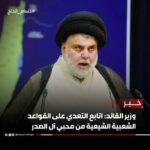
The most engaged-with topic was a post by politician Faig Alsheakh/My Word for History (Post Impact: 100%) featuring a picture of a prominent Sadrist figure and sarcastically asking, “Where did this one go? I really miss hearing his nonsense!” The post drew a response from the account Minister of the Leader – Salih Mohammed al-Iraqi (Post Impact: 62%), which is closely associated with Muqtada al-Sadr. This account posted an image containing a written statement from al-Sadr, indicating a direct reply to Alsheakh’s taunt. The exchange highlights the ongoing political sparring and tensions between different Iraqi political factions on social media.
2. Syrian Girl “Mera” Reportedly Abducted and Forcibly Married
A story circulating widely concerns a young Alawite Syrian woman named “Mera” who was allegedly abducted by Al-Qaeda affiliates. Accounts like Hayder (Post Impact: 29%) and Essam Hussein (Post Impact: 16%) report she was taken from an educational institute and has now returned to her family wearing an Afghan niqab, having been forcibly married to one of her captors. The posts express horror at the incident, with Hussein noting the “amount of terror in her facial features” and condemning those in Iraq who support such extremist groups. Murad Ismael (Post Impact: 4%) described it as “one of horrific realities of Syria.”
3. Renewed Controversy Over Khor Abdullah Agreement
The Khor Abdullah maritime agreement with Kuwait is a subject of intense debate. MP Hassan Salem (Post Impact: 21%) stated that giving up Khor Abdullah is “a betrayal of the blood of the martyrs who sacrificed for the homeland and a stab at Iraq’s history and sovereignty.” He called the waterway a “sovereign national artery” that cannot be compromised. In a counter-narrative, Salam Al-Husseini (Post Impact: 2%) shared a 2013 video showing current Prime Minister al-Sudani and other leaders from the Coordination Framework signing the agreement, arguing their present-day attempts to disown it are an effort to “mislead the street.”
4. Debates on Syrian Leader Ahmed al-Sharaa (al-Jolani)
The international engagement with Syrian leader Ahmed al-Sharaa, formerly known as al-Jolani, has sparked discussion among Iraqi users. The account Abu Drandesh Alaskari (Post Impact: 7%) shared a clip alleging that French President Macron publicly told al-Jolani, “We do not trust you.” Meanwhile, analyst Asaad Al-Basri (Post Impact: 3%) suggests the controversy stems from al-Sharaa being a Sunni whose international acceptance challenges the narrative that Sunnis are inherently tied to terrorism, thereby threatening extremists who lose their “reason for existence.” Essam Hussein (Post Impact: 2%) also commented, suggesting al-Jolani’s transformation is a ploy for power.
5. India-Pakistan Military Tensions and Chinese Technology
Recent military escalations between India and Pakistan were a key topic, with a focus on the role of Chinese military hardware. The account Aayad Al Twfan (Post Impact: 8%) claimed that in a recent clash, Pakistan successfully used Chinese-made fighter jets and air defense systems to down five advanced Indian aircraft, including French Rafales and Russian Sukhois. The post frames this as a major blow to the prestige of Western military technology and a significant victory for China’s defense industry. Adding to this, Zaid Benjamin (Post Impact: 2%) reported that Pakistan announced it had shot down 12 Indian drones.
6. “Arabian Gulf” vs. “Persian Gulf” Naming Debate
The historical and political naming of the gulf separating Iran from the Arabian Peninsula has re-emerged as a popular discussion. Liqaa Maki (Post Impact: 7%) argued that the international trend toward using “Arabian Gulf” is a direct consequence of Iran’s waning power. Providing a historical perspective, Othman Al-Mukhtar (Post Impact: 4%) detailed various historical names, including “Gulf of Iraq” and “Gulf of Basra,” asserting that “Persian Gulf” was a politically imposed term. Conversely, Najah Mohammed Ali (Post Impact: 4%) defended “Persian Gulf” as a non-negotiable part of Iran’s cultural and historical identity, criticizing what he calls political maneuvering by figures like Donald Trump.
7. PM Sudani’s Foreign Policy and Spending Criticized
Prime Minister Mohammed Shaya’ al-Sudani’s governance, particularly his foreign policy and spending, is under scrutiny. Rusly Al-Maliki (Post Impact: 5%) directed a message to the Prime Minister, stating, “Hold your hand a bit, the country has been plundered by your generous gifts that you scatter upon other countries,” referring to foreign aid. This sentiment was reflected in a post by Hayder (Post Impact: 3%) reporting on Iraq’s decision to send 350,000 tons of wheat to Lebanon. In a more positive light, MP Alia Nassif (Post Impact: 3%) praised al-Sudani’s visit to Turkey, viewing the “grand reception” as a sign of Iraq’s growing regional importance.
8. Iraqi and Kurdish Leaders Congratulate New Pope
High-profile Iraqi and Kurdish political figures congratulated the newly elected Pope Leo XIV. Ammar Al-Hakim (Post Impact: 4%) and Kurdistan Region President Nechirvan Barzani (Post Impact: 4%) both issued formal congratulations, wishing the new Pope success in his mission to promote global peace, love, and interfaith harmony. Similar messages of support and goodwill were shared by former Prime Minister Mustafa Al-Kadhimi (Post Impact: 2%) and KRG Prime Minister Masrour Barzani (Post Impact: 2%), who all highlighted the importance of his role in a world facing numerous conflicts.
9. Sharp Critiques of Iraq’s Political System Emerge
Commentators offered harsh assessments of Iraq’s political system. Ayad Al-Anbar (Post Impact: 6%) shared a quote describing the ruling establishment as a “state of mafias” that has confiscated state institutions and turned them into “fiefdoms” divided as spoils, with the Prime Minister acting as a mere administrator of this arrangement. Separately, Asaad Al-Basri (Post Impact: 4%) analyzed sectarian dynamics in politics and media, arguing that authority is a matter of “culture, imagination, and a project,” and contrasting what he perceives as different approaches to governance between Sunni and some Shia political circles.
10. Prominent Figures Urge Iraqis to Update Voter Cards
There is a notable push from political figures for citizens to update their electoral cards. Former Speaker of Parliament Mohammed Al-Halbousi (Post Impact: 6%) issued a call to action, describing updating voter cards as “the first step towards ensuring influence in decision-making and consolidating the rules of fair representation.” He stressed that real change comes through active participation at the ballot box. This message was reinforced by figures like Sheikh Falah Al-Qurayshi (Post Impact: 1%), who framed non-participation in more severe terms, stating that anyone calling for a boycott is attempting to weaken the Shia political position.