2025-05-17: Low Attendance and Perceived Failure of Baghdad Arab Summit

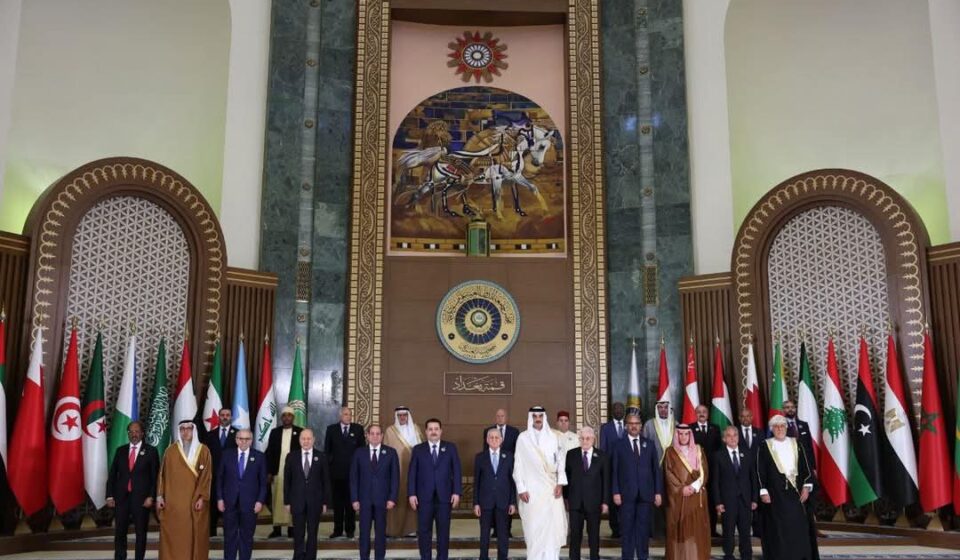
Based on Miqrab AI’s analysis of 695 trending X / Twitter posts in Iraq on May 17, 2025, the primary focus of online conversation was the Arab League Summit held in Baghdad. The dominant narrative was highly critical, framing the event as a failure due to the conspicuously low attendance of heads of state, which many users attributed to excessive Iranian influence over the Iraqi government. This critique was multifaceted, encompassing discussions about the abrupt departure of the Emir of Qatar, protocol mishaps, and the exorbitant cost of the summit contrasted with pressing domestic needs like housing and infrastructure. Counter-narratives from government officials thanked participants and stressed Iraq’s role in joint Arab action. Broader geopolitical themes also emerged, with users linking the summit’s outcome to former U.S. President Donald Trump’s recent visit to the Gulf, which was seen as shifting regional alliances.
Table Of Content
- 1. Low Attendance and Perceived Failure of Baghdad Arab Summit
- 2. Emir of Qatar’s Abrupt Departure from the Summit
- 3. High Summit Costs Contrasted with Domestic Neglect
- 4. Iranian Influence Blamed for Poor Summit Attendance
- 5. Government’s Positive Framing of the Summit
- 6. Trump’s Gulf Visit and Regional Power Shifts
- 7. Iraq’s Financial Aid Pledges to Gaza and Lebanon
- 8. Iraqi Cynicism and Historical Distrust of Arab Nations
- 9. Commentary on the Summit’s Venue Built During Saddam Era
- 10. Controversy Over Yemeni Delegation’s Anti-Houthi Stance
Today’s Top 10 X (Twitter) Trends in Iraq:
1. Low Attendance and Perceived Failure of Baghdad Arab Summit
The most prominent narrative surrounding the Arab League Summit in Baghdad was its characterization as a failure due to the poor attendance of Arab leaders. Accounts like Rusly Al-Maliki (Post Impact: 84%) pointed out that out of 22 member states, only two heads of state, the Emir of Qatar and the President of Egypt, attended, along with two “figurehead” presidents. This sentiment was echoed by Faiq Al-Sheikh Ali (Post Impact: 22%), who declared it “the most failed summit in the history of summits” and described it as “pathetic and ridiculous.” Dr. Qusay Shafiq (Post Impact: 19%) termed the low attendance an “Arab boycott of Iraq,” highlighting the absence of leaders from countries like Saudi Arabia, the UAE, Kuwait, and Jordan, despite Iraq’s financial support for some of them.
2. Emir of Qatar’s Abrupt Departure from the Summit
The sudden departure of Qatar’s Emir, Sheikh Tamim bin Hamad Al Thani, from the Baghdad summit before delivering his speech generated significant discussion. Several accounts offered different explanations for his exit. Sufian Al-Samarrai (Post Impact: 36%) claimed the Emir left “angrily” because of a delay in his scheduled speech. In contrast, Hiba Alnnayib (Post Impact: 7%), citing a special source, stated the departure was a protest against “poor organization” and the presence of photos of militia leaders classified as terrorists along his convoy’s route. Zainab Rabee (Post Impact: 6%) also reported on the departure, noting he was escorted to the airport by the Iraqi Minister of Defense.
3. High Summit Costs Contrasted with Domestic Neglect
Several users criticized the Iraqi government for the high cost of hosting the summit while citizens face difficult living conditions. Hydikm (Post Impact: 19%) estimated that the two-hour summit cost around $700 million, an amount that could have built 700 schools or 175 hospitals. This critique was sharpened by posts like one from Rusly Al-Maliki (Post Impact: 14%), which shared a video of homes being demolished in Basra, a city that provides 90% of the country’s revenue, highlighting the government’s perceived misplaced priorities. Dr. Qusay Shafiq (Post Impact: 12%) lamented the spending of “billions of dollars from the Iraqi people’s sustenance” for what he considered the worst Arab attendance in summit history.
4. Iranian Influence Blamed for Poor Summit Attendance
A recurring explanation for the low turnout of Arab leaders was the perceived influence of Iran over Iraq’s government and the presence of Iranian-backed militias. Rusly Al-Maliki (Post Impact: 11%) argued that Arab Gulf states would not attend at a high level while figures like Abu Alaa al-Walai threaten to strike Saudi Arabia, Kuwait, and the UAE. Steven Nabil (Post Impact: 4%) suggested that the visit of Iranian General Esmail Qaani to Baghdad just days before the summit was a key factor, stating, “Iran wanted to send a message to the West and the Arabs that it will not give up its influence in Iraq easily.” This view was shared by Mustafa Al-Dulaimi (Post Impact: 7%), who sarcastically noted that the government had to call on Qaani to “secure the summit and control the factions.”
5. Government’s Positive Framing of the Summit
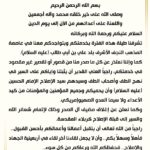
In contrast to the widespread criticism, official and pro-government accounts presented the summit in a positive light, emphasizing Iraq’s diplomatic role. Prime Minister Mohammed Shia’ Al Sudani (Post Impact: 22%) issued a statement thanking the Arab delegations on behalf of the Iraqi government and people. He affirmed that “Baghdad will always remain an arena for joint Arab action, a source of strength and power, and a pillar in Arab decision-making.” Similarly, Ammar Al-Hakim (Post Impact: 4%) praised the government’s “strenuous efforts” to host the event and expressed hope that its outcomes would reflect the aspirations of Arab peoples, particularly in supporting Gaza and Lebanon.
6. Trump’s Gulf Visit and Regional Power Shifts
The summit was frequently placed within the broader context of regional geopolitics, particularly former U.S. President Donald Trump’s recent visit to Saudi Arabia, Qatar, and the UAE. Faiq Al-Sheikh Ali (Post Impact: 15%) claimed the Baghdad summit was orchestrated by Iran as a response to Trump’s visit but ultimately “failed miserably.” David Yassin (Post Impact: 8%) argued that a decision was made in Riyadh during Trump’s visit to “dismantle the old axis” and that the Baghdad summit was intentionally “isolated from the map.” Conversely, Zaid Benjamin (Post Impact: 15%) highlighted Qatar’s active diplomacy, noting that its top officials visited Baghdad immediately after meeting with Trump, suggesting an effort to bridge divides.
7. Iraq’s Financial Aid Pledges to Gaza and Lebanon
Iraq’s announcement of financial aid to other regions during the summit drew commentary from users who questioned the decision amid domestic economic challenges. Hydikm (Post Impact: 10%) reported that Iraq allocated $20 million for the reconstruction of Gaza and another $20 million for Lebanon. This was criticized by commentators like Dr. Qusay Shafiq (Post Impact: 14%), who pointed out the irony of giving aid to Lebanon while its president declined to attend the summit in Baghdad. Najeh Abbas Al-Mizan (Post Impact: 7%) sarcastically questioned why similar aid wasn’t offered to Syria, implying the decisions were directed by Iran’s Esmail Qaani.
8. Iraqi Cynicism and Historical Distrust of Arab Nations
Some posts expressed deep-seated cynicism towards the Arab world and rejected the idea that Iraq needs an “Arab embrace.” Dr. Hussein Al-Safi (Post Impact: 7%) stated, “I am not honored by the rotten Arab embrace,” asking what Arab nations have ever offered Iraq. In a lengthy, sarcastic post, Hydikm (Post Impact: 13%) listed the names of suicide bombers from various Arab countries who had attacked Iraq, wryly presenting them as the “Arab delegations that participated” in Iraq’s affairs over the years. This sentiment reflected a view that Arab countries have historically been a source of conflict and terrorism for Iraq rather than support.
9. Commentary on the Summit’s Venue Built During Saddam Era
Amid the political discussions, some users commented on the summit’s venue, the Grand Hall in the Republican Palace, crediting its construction to the former regime of Saddam Hussein. Mula Aboud Al-Karkhi (Post Impact: 4%) sarcastically thanked Saddam Hussein for the “dazzling hall,” suggesting that otherwise the summit might have been held in a makeshift structure. Salim Al-Jumaili (Post Impact: 5%) shared a post from the engineer who headed the project, Mazen Al-Alousi, who explained that the hall was built by Iraqis after 1991 and that its 18 columns represent Iraq’s provinces, symbolizing national unity.
10. Controversy Over Yemeni Delegation’s Anti-Houthi Stance
The speech by the head of the Yemeni delegation, Rashad Mohammed Ali Al-Alimi, which described the Houthis as a terrorist militia, sparked a polarized reaction. Mula Aboud Al-Karkhi (Post Impact: 3%) described the statement as a “resounding speech” and a “strong slap” to the Iraqi government. Conversely, pro-resistance accounts condemned the remarks. Hassan Al-Kaabi (Post Impact: 4%) expressed his “strong denunciation and categorical rejection” of any insult toward Houthi leader Abdul-Malik Badr al-Din al-Houthi. Similarly, Wesam Aziz (Post Impact: 5%) apologized on behalf of “the resistant people of Iraq” for the perceived offense from the “Saudi agent called the President of Yemen.”