2025-06-04: Kuwait Revokes Citizenship from Tribal Leaders

Based on an analysis of (482) X / Twitter posts trending on June 4, 2025, Miqrab AI identified several key narratives circulating in Iraq. The most prominent story involves Kuwait’s decision to revoke the citizenship of leaders from the Shammar and Anza tribes, a move widely discussed by Iraqi social media users. Domestically, a fierce debate erupted over cultural identity following a politician’s controversial statements about the “Zainabiya abaya,” prompting widespread reactions. Key political figures also drove conversations, with a statement from Muqtada al-Sadr criticizing the state of the nation and a proposal from Mohammed al-Halbousi to resolve longstanding disputes between Baghdad and the Kurdistan Region. Other significant topics included the extradition of a high-profile official accused of corruption, allegations of politicization within the security forces, and growing concerns over freedom of expression.
Table Of Content
- 1. Kuwait Revokes Citizenship from Tribal Leaders
- 2. Muqtada al-Sadr Issues Statement on Political State
- 3. Fierce Debate Erupts Over “Zainabiya Abaya”
- 4. Al-Halbousi Proposes Solution for Baghdad-Erbil Disputes
- 5. Extradition of Ex-TBI Head Hamdiya al-Jaf
- 6. PMF Commander Alleges Corruption and Politicization
- 7. Concerns Over Freedom of Expression and Suppression
- 8. Iranian Nationals Arrested for Drug Smuggling
- 9. Discourse on Iran’s Nuclear Program and Regional Role
- 10. Calls to Boycott Upcoming Elections
Today’s Top 10 X (Twitter) Trends in Iraq:
1. Kuwait Revokes Citizenship from Tribal Leaders
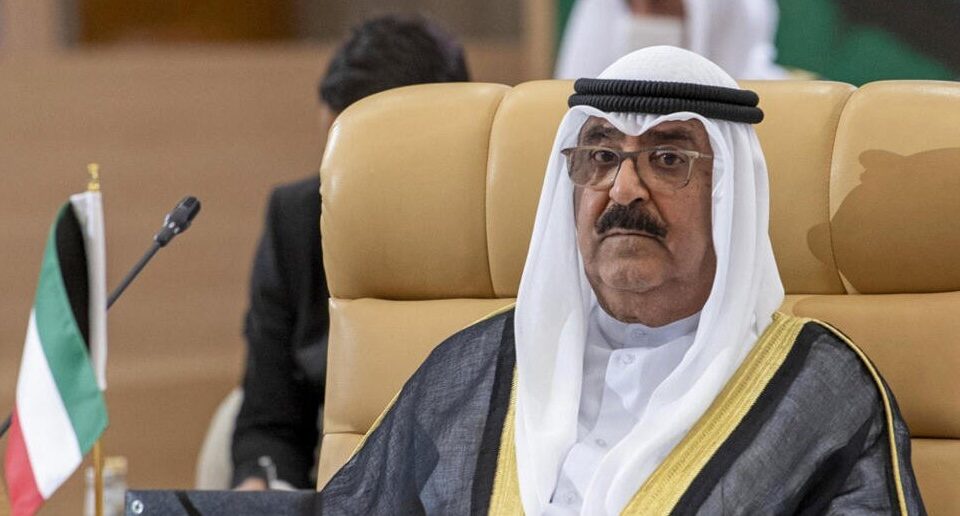
Multiple accounts reported that Kuwaiti authorities have revoked the citizenship of leaders from the Shammar tribe’s “Al Jarba” clan and the Anza tribe’s “Al Hadhal” clan, along with their followers. ZaidBenjamin (Post Impact: 100%), citing the official Kuwaiti gazette “Kuwait Al-Youm,” broke the story, which was echoed by Haider (Post Impact: 28%), who added a sarcastic comment about Kuwait trying to “preserve the pure Kuwaiti Aryan race from extinction.” In a detailed follow-up post, ZaidBenjamin (Post Impact: 8%) explained that this is part of a wider campaign led by the Emir of Kuwait, Sheikh Mishal Al-Ahmad Al-Sabah, to reshape national identity, which has resulted in over 42,000 people having their citizenship revoked since August 2024. The post notes that while official reasons often cite dual nationality, human rights organizations condemn the campaign as politically motivated repression that has rendered tens of thousands stateless.
2. Muqtada al-Sadr Issues Statement on Political State
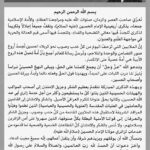
Shiite cleric Muqtada al-Sadr (Post Impact: 59%) published a handwritten statement addressing the political and social situation in Iraq. In the message, al-Sadr criticizes widespread corruption, moral decay, and what he perceives as the return of the Ba’ath party, stating, “Isn’t it a shame for the Ba’ath to return while I am present.” He asserts his continued presence and opposition to these negative trends, warning against those who would exploit his name or the Sadrist movement. The statement was discussed by other users, such as Aayad Al Twfan (Post Impact: 4%), who praised al-Sadr for diagnosing the country’s ailments but questioned what the solution is and why he ordered his 73 MPs to resign from parliament.
3. Fierce Debate Erupts Over “Zainabiya Abaya”
Politician Faiq Al-Sheikh Ali (Post Impact: 41%) sparked a major controversy with a post claiming that Iraqi women who wear the so-called “Zainabiya abaya” are seeking temporary “mut’a” marriage, suggesting men could proposition them for “two dinars.. no more!” In a subsequent post, he launched the hashtag #No_to_the_Iranian_Abaya to distinguish it from the traditional Iraqi abaya. The posts drew strong and polarized reactions. Haider (Post Impact: 7%) condemned the statement as an insult to Iraqi women, while Ghaith Altamimi (Post Impact: 6%) questioned the religious and historical origins of the “Zainabiya abaya,” stating he had never encountered the term in three decades of Islamic scholarship. Others like Alshabandr (Post Impact: 2%) directly rebuked Al-Sheikh Ali for “slandering the honor of Iraqi women.”
4. Al-Halbousi Proposes Solution for Baghdad-Erbil Disputes
Former Speaker of Parliament Mohammed al-Halbousi (Post Impact: 6%) proposed a three-point plan to resolve the “escalating and recurring” disputes between the Erbil government and federal authorities. His proposal grants the federal government exclusive authority over natural resources, borders, and customs, while making it responsible for fairly distributing financial allocations to all regions based on population. The initiative sparked immediate political debate. Hoshyar Zebari (Post Impact: 3%) criticized the proposal, suggesting al-Halbousi “did not read the constitution’s articles well” and that his interpretation was based on “desire and appeasement.” Haider (Post Impact: 3%) summarized the key points of the proposal, while Dr. Majid Shingali (Post Impact: 1%) accused al-Halbousi of having a “nostalgia for centralism” and trying to please his “new sponsors.”
5. Extradition of Ex-TBI Head Hamdiya al-Jaf
The Iraqi Commission of Integrity announced the extradition of Hamdiya al-Jaf, the former director of the Trade Bank of Iraq (TBI), who was a fugitive. The news was widely shared and commented on by several accounts. Dr. Hanan Al-Fatlawi (Post Impact: 3%) praised the Integrity Commission and the Iraqi judiciary for bringing al-Jaf “into the grip of justice” after she “stole and wasted more than a billion dollars.” Salem Mashkour (Post Impact: 2%) noted that al-Jaf was convicted of causing damage to public funds exceeding $1.25 billion and 142 billion Iraqi dinars, questioning if “big heads” who protected her would now intervene. The development was also reported by Hisham Ali (Post Impact: 2%) and Iyad Al-Anbar (Post Impact: 3%).
6. PMF Commander Alleges Corruption and Politicization
Sheikh Maytham al-Zaydi, commander of the Abbas Combat Division within the Popular Mobilization Forces (PMF), made serious allegations about politicization and abuse within the organization. As reported by YallaIraq_yalla (Post Impact: 1%), al-Zaydi described “serious and illegal violations,” citing cases where PMF members were detained and tortured for their political affiliations or for failing to support certain election candidates. One specific claim highlighted by Shaho Al-Qaradaghi (Post Impact: 1%) was that a PMF member was jailed “simply because he did not bring 10 voter cards for his commander.” Rusly Al-Maliki (Post Impact: 2%) also shared a video of al-Zaydi discussing “electoral corruption in the Hashd system.” Al-Zaydi warned that the PMF is being managed through “the largest corruption files” and called for comprehensive reform.
7. Concerns Over Freedom of Expression and Suppression
Several posts raised alarms about the suppression of free speech and dissent in Iraq. Adnan Al-Taie (Post Impact: 6%) warned that actions to “gag mouths and restrict freedom of expression” are leading toward a “repressive, totalitarian regime,” which will only increase hatred against political groups. This sentiment was echoed in reports about a specific legal case where a young man was sentenced to four months in prison. Dr. Qusay Shafiq (Post Impact: 2%) and Hassan Al Hammadi (Post Impact: 1%) shared a document showing that a citizen named Mohammed Ashour was imprisoned for allegedly insulting MP Suhaila al-Saadi by referring to her as “peace be upon her” in a Facebook post, a phrase typically reserved for holy figures.
8. Iranian Nationals Arrested for Drug Smuggling
The issue of drug smuggling from Iran into Iraq was a notable topic of discussion. Steven Nabil (Post Impact: 3%) reported that an Iranian female traveler was arrested at the Shalamcheh border crossing after authorities found crystal meth “professionally hidden” in her possession. In a more comprehensive post, Rusly Al-Maliki (Post Impact: 2%) listed ten separate incidents over the past six months where Iranian nationals were caught attempting to smuggle various narcotics—including crystal, heroin, and hashish—into Iraq through different border crossings. Al-Maliki concluded by labeling Iran the “Republic of Captagon, crystal, weapons, terrorism, and all the planet’s evils.”
9. Discourse on Iran’s Nuclear Program and Regional Role
Iran’s political positioning and nuclear ambitions were a subject of analysis. Dr. Hussein Al-Safi (Post Impact: 6%) shared a purported conversation with an Egyptian writer who contrasted Iran’s progress in developing nuclear and missile technology despite 45 years of sanctions with Egypt’s stagnation after normalizing relations. Separately, Ahmed Abdulsada (Post Impact: 1%) analyzed a speech by Iran’s Supreme Leader Khamenei, who reportedly rejected a US proposal to halt uranium enrichment, calling it “nonsense” and non-negotiable. The post suggests Iran is prepared to walk away from negotiations and could potentially change its nuclear doctrine to produce a weapon. The topic of negotiations was also mentioned by Rafid Jaboori (Post Impact: 2%).
10. Calls to Boycott Upcoming Elections
Some accounts actively promoted boycotting the upcoming parliamentary elections, framing participation as a legitimization of what they describe as an Iranian occupation. The account Manasat Al-Iraq (Post Impact: 2%) provided a detailed list of reasons for boycotting, arguing that the elections strengthen the “Iranian Safavid occupation,” that participation is complicity in the regime’s crimes, and that real change cannot be achieved through the ballot box. The post asserts that the political process is a failed experiment and that low voter turnout in past elections proves the Iraqi people’s awareness of this. In contrast, Jaafar Al-Aboudi (Post Impact: 1%) urged people to update their voter cards and participate, stating, “Your vote is what changes the equation!” and framing it as a duty to honor the sacrifices of the PMF.