2025-07-07: Hisham al-Hashimi Assassination Confession Video Surfaces

Based on an analysis of 584 X / Twitter posts trending on July 7, 2025, Miqrab AI identified several key narratives dominating the Iraqi digital space. The most prominent story involved the circulation of a video allegedly showing a confession in the assassination of security expert Hisham al-Hashimi, which sparked widespread debate and accusations against a sitting parliamentarian. Another major topic of discussion was the United States’ decision to delist Hay’at Tahrir al-Sham as a terrorist organization, leading to concerns about regional security and the legitimacy of armed groups. Conversations also centered on escalating sectarian and religious rhetoric surrounding the commemoration of Ashura, internal political developments concerning the Sadrist movement, and intense speculation about the regional implications of the meeting between Donald Trump and Benjamin Netanyahu.
Table Of Content
- 1. Hisham al-Hashimi Assassination Confession Video Surfaces
- 2. US Delists Hay’at Tahrir al-Sham as Terror Group
- 3. Sectarian and Religious Debates Intensify Around Ashura
- 4. Trump-Netanyahu Meeting Sparks Regional Speculation
- 5. Debate Over Pro-Iran Factions and Calls for Disarmament
- 6. Sadrist Movement Developments and Rumors of Disbandment
- 7. Eight Iraqi Universities Added to Academic “Red Flag” List
- 8. Officers Face Discipline for Desecrating US Flag
- 9. Analysis of Iran’s Diplomatic and Military Posture
- 10. Economic Hardship and Political Tensions in Kurdistan Region
Today’s Top 10 X (Twitter) Trends in Iraq:
1. Hisham al-Hashimi Assassination Confession Video Surfaces
A video allegedly showing the confession of the killer of security expert Hisham al-Hashimi gained significant traction, renewing focus on the case. Accounts like Rusly Al-Maliki (Post Impact: 25%), Emad Bajalan (Post Impact: 19%), and Dr. Qusay Shafiq (Post Impact: 10%) shared the clip, highlighting that the accused implicates Hussein Mu’nis, a current MP, as having ordered the assassination. Inas Saad (Post Impact: 11%) reported that al-Hashimi’s family has consequently filed a lawsuit against Mu’nis. The discussion was complicated by a counter-narrative from Ahmed Abdulsada (Post Impact: 11%), who questioned al-Hashimi’s allegiances. Later, accounts including Hayder (Post Impact: 6%) shared a statement from the Iraqi judiciary claiming the details mentioned in the leaked video were not part of the official investigation and that publishing it was an attempt to mislead public opinion.
2. US Delists Hay’at Tahrir al-Sham as Terror Group
The United States’ decision to revoke the designation of Hay’at Tahrir al-Sham (HTS), formerly Jabhat al-Nusra, as a foreign terrorist organization sparked strong reactions. Accounts such as Steven Nabil (Post Impact: 7%) and Rusly Al-Maliki (Post Impact: 7%) reported the news. Commentators like Ahmed Al_thawaq (Post Impact: 12%) and Essam Hussein (Post Impact: 10%) expressed alarm, viewing the move as a legitimization of terrorism that serves US interests. Ahmed Al_thawaq questioned the logic of disarming local factions while such groups are being officially recognized, asking, “the project has become clear, and a brother comes and tells you to hand over your weapon! Are you serious?” David Yassin (Post Impact: 9%) offered a strategic analysis, suggesting HTS was delisted because it “passed the ‘operational obedience’ test with success.”
3. Sectarian and Religious Debates Intensify Around Ashura
Religious and historical topics, particularly related to the commemoration of Ashura, fueled a significant sectarian debate. Hassan Alkaa’bi | Hassan Alkaa’bi (Post Impact: 46%) posted historical narratives from a Shia perspective, detailing instances such as the Umayyads’ shelling of the Kaaba. In a sharply contrasting view, Dr. Hussein Almoyd (Post Impact: 15%) condemned the annual Ashura rituals as socially destructive, claiming they fuel hatred and undermine national unity. Essam Hussein (Post Impact: 9%) defended the rituals and criticized the Sunni Endowment’s differing stances on religious occasions, accusing it of hypocrisy. Adding to the debate, Dr. Yahya Alkubisi (Post Impact: 8%) argued that the issue is not just individual preachers but the “sectarian state in Iraq” that protects and enables hate speech.
4. Trump-Netanyahu Meeting Sparks Regional Speculation
The meeting between former US President Donald Trump and Israeli Prime Minister Benjamin Netanyahu prompted widespread analysis and speculation about its regional consequences. Sufian Samarrai (Post Impact: 20%) argued that recent Hamas actions would strengthen Netanyahu’s position with Trump to continue the war in Gaza, and later reported on Israeli media speculation that Trump might authorize a second wave of strikes against Iran after the meeting. Liqaa Maki (Post Impact: 9%) analyzed recent conciliatory statements from the Iranian president as an attempt to appeal to Trump and preempt Netanyahu’s influence. David Yassin (Post Impact: 7%) framed the meeting as a closed-door operational session to review assessments of previous strikes on Iran and plan the next phase.
5. Debate Over Pro-Iran Factions and Calls for Disarmament
A sharp debate unfolded regarding the role of the Popular Mobilization Forces (PMF) and other armed factions. Ahmed Abdulsada (Post Impact: 19%) defended the PMF, arguing that those calling for its dissolution want to replicate the “Jolani experience in Iraq” and create an opening for an armed coup against the state. Conversely, Rusly Al-Maliki (Post Impact: 16%) criticized the hypocrisy of an official in military uniform stepping on an American flag while simultaneously relying on the US for military equipment, economic stability, and security. Safaa Alasadi (Post Impact: 6%) also criticized factions with “uncontrolled weapons,” questioning their silence during key events and arguing they only act against internal critics.
6. Sadrist Movement Developments and Rumors of Disbandment
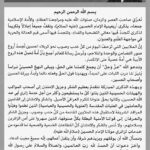
The Sadrist movement was a subject of discussion, centering on a widely circulated image suggesting a major change. Mustafa al-Dolaimi (Post Impact: 38%) posted a graphic that called for the dissolution of Saraya al-Salam (the Peace Companies) and their complete withdrawal from Samarra. This generated significant engagement, with supporters of Muqtada al-Sadr, like Emad Bajalan (Post Impact: 10%), praising his influence and stating, “He drove them crazy without moving, so what will happen if he decides to move and settle things?” However, the authenticity of the announcement was questioned, with Safaa Alasadi (Post Impact: 3%) explicitly calling the statement regarding Saraya al-Salam in Samarra a forgery.
7. Eight Iraqi Universities Added to Academic “Red Flag” List
Posts expressed outrage over the inclusion of eight prominent Iraqi universities on the “Red Flag (IR2)” list, which identifies institutions that violate standards of scientific integrity. Aayad Al Twfan (Post Impact: 8%) shared the list, which includes the University of Baghdad, University of Mosul, and Al-Mustansiriya University, calling the development a “catastrophe” that reflects a “systematic and deep” decline. Emad Bajalan (Post Impact: 9%) sarcastically commented on the news, pointing to the Minister of Higher Education and noting how difficult it must be to get eight universities on such a list at once. The commentators see this as a threat to the future of Iraqi students and the value of their degrees internationally.
8. Officers Face Discipline for Desecrating US Flag
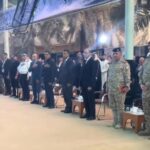
A video showing Iraqi police officers in Tuz Khurmatu stepping on an American flag during Ashura ceremonies led to reports of disciplinary action and sparked commentary on Iraq-US relations. Hayder (Post Impact: 6%) reported that news of potential dismissals for several senior officers, including the police chief and heads of narcotics and emergency response, had been picked up by The New York Times and was trending in the United States. In a post featuring an image from the incident, Rusly Al-Maliki (Post Impact: 16%) strongly criticized the action as hypocritical, pointing out that Iraq relies heavily on the US for F-16 maintenance, Abrams tanks, air defense, and economic protection via the oil-for-dollar system.
9. Analysis of Iran’s Diplomatic and Military Posture
Multiple accounts analyzed Iran’s current strategic positioning, highlighting a mix of diplomatic overtures and military posturing. Hayder (Post Impact: 4%) and Steven Nabil (Post Impact: 3%) reported on Iranian President Masoud Pezeshkian’s statements to Tucker Carlson, where he claimed Iran’s Supreme Leader saw no obstacles to American investment in the country. This was interpreted by commentators like Liqaa Maki (Post Impact: 9%) as a strategic attempt to appease Donald Trump. On the other hand, pro-Iran accounts like Najah Mohammed Ali (Post Impact: 5%) shared purported leaks claiming Iran had inflicted massive casualties on Israel’s military and scientific elite during the recent conflict, suggesting a position of strength.
10. Economic Hardship and Political Tensions in Kurdistan Region
Social media posts drew attention to severe economic problems and political agreements in the Kurdistan Region of Iraq. Hayder (Post Impact: 11%) shared a viral image contrasting a Peshmerga soldier who allegedly committed suicide over his poor financial situation with a YouTuber close to the ruling Barzani family living lavishly in New York. The same account also cited Kurdish outlet Rudaw, reporting that the Kurdistan Regional Government was close to a deal to hand over all its oil to Baghdad in return for federal funds. The issue of unpaid salaries was further highlighted by Wasan Al-Shaikhli (Post Impact: 3%), who reported that a journalist was hospitalized after inhaling tear gas at a protest demanding salaries.