2025-07-12: Genetic Study Challenges Hashemite Lineage Claims in Iraq

Based on an analysis of 499 X / Twitter posts trending on July 12, 2025, Miqrab AI identified several key narratives circulating in Iraq. The most prominent discussion, generating the highest engagement, centered on a genetic study that questioned the self-proclaimed Hashemite lineage of several Iraqi families. Other major topics included sharp criticism of Syrian opposition leader Abu Muhammad al-Jolani for his actions in Syria and Azerbaijan, alongside intense online feuds and mutual accusations among Iraqi political commentators and public figures. Additionally, there was significant concern and political mobilization against the potential parliamentary ratification of the Khor Abdullah maritime agreement with Kuwait, which many users framed as a threat to national sovereignty.
Table Of Content
- 1. Genetic Study Challenges Hashemite Lineage Claims in Iraq
- 2. Al-Jolani Criticized for Actions in Azerbaijan and Syria
- 3. Intense Online Feuds Among Political Commentators
- 4. Opposition Mounts Against Khor Abdullah Agreement Vote
- 5. US Envoy’s Statements on Lebanon and Syria Stir Controversy
- 6. Syrian Wildfires and Iraqi Aid Response
- 7. Controversy and Arrest Warrant for Amtar Al-Mayahi
- 8. Iraqi Fisherman Reportedly Killed by Kuwaiti Forces
- 9. Iran’s Past Missile Strike on Al Udeid Base Discussed
- 10. Parliament Approves Law for Iraqi Programmers Guild
Today’s Top 10 X (Twitter) Trends in Iraq:
1. Genetic Study Challenges Hashemite Lineage Claims in Iraq
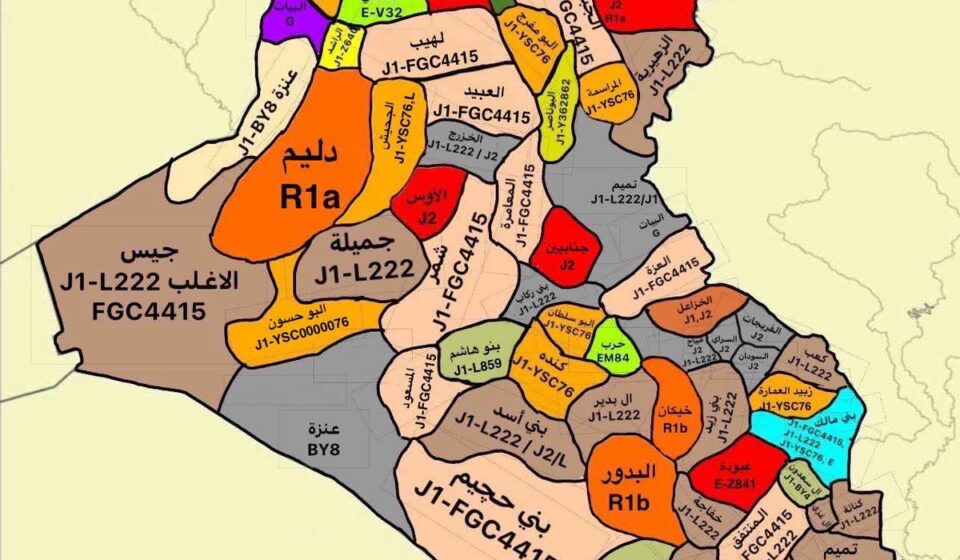
A genetic study on Iraqi families who claim lineage to the Prophet Muhammad’s household (Ahl al-Bayt) has become a top trending topic. According to Rusly Al-Maliki 🇮🇶 رسلي المالكي (Post Impact: 100%), the study analyzed 144 samples from central Iraq, including 72 from individuals with a purported Hashemite heritage. The results were described as “surprising,” as none of the 72 samples tested positive for the J1-L859 genetic marker, which is commonly associated with Hashemite ancestry. The post details that the study, covering areas like Hillah, Karbala, Najaf, and Baghdad, found that the most common haplogroup among the claimants was J-PF7263, not the expected Hashemite branch. This has sparked widespread discussion about genealogy, identity, and the basis of such historical claims in Iraq.
2. Al-Jolani Criticized for Actions in Azerbaijan and Syria
Syrian leader Abu Muhammad al-Jolani is facing harsh criticism from several Iraqi accounts for his recent actions. Essam Hussein (Post Impact: 73%) and Haidar (Post Impact: 45%) condemn al-Jolani for visiting and laying a wreath on the grave of Heydar Aliyev, whom they describe as a “pagan,” in Azerbaijan. They contrast this with his group’s alleged “mockery” and actions against the shrine of Sayyida Zainab, the Prophet’s granddaughter, in Syria. Ahmad Abdulsada (Post Impact: 28%) links al-Jolani’s visit to a rapid move towards normalization with Israel, citing reports from Israel’s Channel 14 about a potential meeting between Israeli and Syrian officials in Baku. The accounts portray al-Jolani’s actions as hypocritical and a betrayal of his professed principles.
3. Intense Online Feuds Among Political Commentators
Iraqi political commentators and public figures are engaged in highly visible and acrimonious disputes online. Ahmad Abdulsada (Post Impact: 50%) posted a defiant message against those sending him insults and threats, stating he will not be intimidated into silence and comparing himself to a rock that cannot be broken. In a direct response, Essam Hussein (Post Impact: 29%) broke from his usual style to directly insult Abdulsada, calling him a “morally degenerate dog.” Meanwhile, Faig Alsheakh Ali/Kalimati Lil Tarikh (Post Impact: 41%) mocked what he described as “100,000 fake militia accounts” paid to insult him and his deceased mother, highlighting the toxic nature of online political discourse.
4. Opposition Mounts Against Khor Abdullah Agreement Vote
There is growing alarm and political mobilization over attempts to pass the Khor Abdullah maritime agreement with Kuwait in the Iraqi parliament. Amer Abduljabbar Ismail (Post Impact: 22%) expressed “great fears” of an agenda to pass the “humiliating” agreement and called for peaceful demonstrations. Haidar (Post Impact: 18%) reported that 112 MPs have signed a petition to reject the agreement, a number that constitutes one-third of the parliament and would prevent the two-thirds majority needed for ratification. Other MPs, cited by Haidar (Post Impact: 8%), have warned against any surprise vote and vowed not to succumb to political deals that compromise Iraq’s sovereign rights.
5. US Envoy’s Statements on Lebanon and Syria Stir Controversy
Comments made by US envoy Tom Barak regarding Lebanon and Syria have triggered strong reactions. Ahmad Abdulsada (Post Impact: 21%) describes Barak’s suggestion that Lebanon could be merged with Syria if Hezbollah’s weapons are not addressed as “insolent.” He argues this reveals a “dirty role” for al-Jolani as an American-Israeli tool to enforce regional projects like normalization. Rafid Jaboori (Post Impact: 11%) also highlights Barak’s stark message that if Lebanon does not disarm Hezbollah, “the Levant” could return, implying it would become part of a greater Syria. The accounts view these statements as a direct threat and an unveiling of a US-Zionist plan to redraw the region’s map.
6. Syrian Wildfires and Iraqi Aid Response
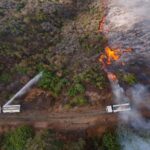
Massive wildfires in Syria’s coastal region are a major topic, with posts highlighting both the devastation and the Iraqi response. Haidar (Post Impact: 12%) reports that the fires have consumed over 150,000 dunams of green space in Syria’s “green lung.” Essam Hussein (Post Impact: 36%) claims the fires were deliberately set to displace the Alawite population. In a contrasting image of regional solidarity, another post from Haidar (Post Impact: 33%) shows a video of Syrians welcoming Iraqi civil defense teams with sweets as they head to the coast to help extinguish the blazes.
7. Controversy and Arrest Warrant for Amtar Al-Mayahi
Social media personality Amtar Al-Mayahi is at the center of a debate following reports of legal action against her. Yasser Eljuboori – Yasser Al-Jubouri (Post Impact: 26%) shared breaking news about an arrest warrant issued for Al-Mayahi on charges of “indecent content.” In response, Shaho Al-Qaradaghi (Post Impact: 24%) shared a video of Al-Mayahi claiming she is the target of a media attack from “behind the borders” by “sons of embassies and those subservient to the Zionist entity” because of her traditional abaya, presenting her situation as a prime example of “conspiracy theory.”
8. Iraqi Fisherman Reportedly Killed by Kuwaiti Forces
Reports of a fatal shooting at the Iraq-Kuwait border have emerged, sparking concern. Both Haidar (Post Impact: 23%) and _. suhair Al_jumaili (Post Impact: 11%) state that Kuwaiti border guards opened fire on a group of young Iraqi fishermen near the border strip. The incident allegedly resulted in the death of one fisherman and injuries to others. Haidar’s post specifically notes the “total absence of a government statement” regarding the event, while sharing an image of the deceased man whose family announced his death.
9. Iran’s Past Missile Strike on Al Udeid Base Discussed
Details surrounding Iran’s missile strike on the US Al Udeid base in Qatar on June 23, 2025, are being debated. Najah Mohammed Ali (Post Impact: 23%) provided a detailed analysis, claiming satellite images prove an Iranian missile directly hit a large geodesic dome housing sensitive military communications equipment. The post refutes President Trump’s narrative of “prior warning,” arguing it was a cover for a major military and intelligence failure. Similarly, Haidar (Post Impact: 7%) shared a Pentagon announcement confirming that the dome was indeed hit, adding weight to the claims of a precise and successful Iranian strike.
10. Parliament Approves Law for Iraqi Programmers Guild
The Iraqi government is taking steps to support its technology sector, a move praised by the Minister of Higher Education. Naeim Al-Aboudi (Post Impact: 58%) announced the approval of the Iraqi Programmers Guild law. He described it as “important legislative momentum” that strengthens specialized professions and supports Iraq’s digital transformation. He stated that the Ministry views this achievement as a form of “strategic integration” necessary for digital development and is working to create a sustainable link between university graduates and specialized job markets.