2025-07-14: Anniversary of 14 July 1958 Revolution Sparks Debate

Based on an analysis of 693 X / Twitter posts trending on July 14, 2025, Miqrab AI found that online conversations in Iraq were dominated by historical debates and contemporary political crises. The 67th anniversary of the 14 July 1958 revolution that overthrew the monarchy sharply divided users, with intense arguments for and against the legacy of both the royal family and Abd al-Karim Qasim. This historical polarization was mirrored in current events, with significant discussion focused on a political clash within the Iraqi parliament, the violent conflict in Syria’s As-Suwayda province involving Druze militias and Islamist factions, and broader critiques of Iran’s influence and the Iraqi political establishment. These themes reflect a social media landscape preoccupied with questions of national identity, governance, and regional instability.
Table Of Content
- 1. Anniversary of 14 July 1958 Revolution Sparks Debate
- 2. Conflict in Syria’s As-Suwayda and Israeli Involvement
- 3. Parliament Speaker’s Altercation Sparks Political Crisis
- 4. Commemoration of Aisha’s Death Anniversary
- 5. Debate on Iran’s Influence and Predictions of its Collapse
- 6. Campaign Targets Commentator Ali Wajeeh over Past Posts
- 7. Trump’s Remarks on Nile River Crisis Gain Traction
- 8. Sadrist Movement Signals Potential Political Return
- 9. Criticism of Iraq’s Political System and Lack of Services
- 10. Pro-PMF Accounts Reaffirm Commitment to the Force
Today’s Top 10 X (Twitter) Trends in Iraq:
1. Anniversary of 14 July 1958 Revolution Sparks Debate
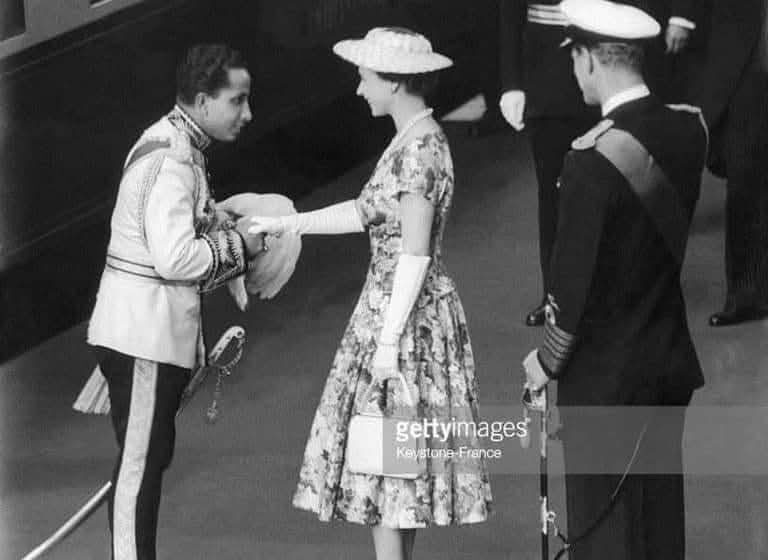
The 67th anniversary of the 14 July 1958 revolution that overthrew the Hashemite monarchy triggered a polarized debate on Iraqi social media. Pro-monarchy accounts framed the event as a bloody coup that marked the beginning of Iraq’s decline. Rusly Al-Maliki (Post Impact: 55%) posted a lengthy thread mourning King Faisal II and blaming Abd al-Karim Qasim for unleashing decades of violence, arguing that under the king, Iraq was on a path to a great future. Similarly, Othman Almukhtar (Post Impact: 14%) called it the end of a “respectable civil state” and the start of “ruin, backwardness, and loss.” In stark contrast, other users celebrated the date as a national revolution. Haidar (Post Impact: 17%) and Hassan Alkaabi (Post Impact: 13%) defended Qasim, describing the monarchy as an “imported” regime installed by the British that oppressed the Iraqi people, concentrated wealth, and made major territorial concessions.
2. Conflict in Syria’s As-Suwayda and Israeli Involvement
The escalating violence in Syria’s As-Suwayda province was a major topic of discussion, focusing on clashes between local Druze militias, the Syrian army, and extremist factions linked to Hay’at Tahrir al-Sham (HTS). Liqaa Maki (Post Impact: 51%) supported the Syrian government’s position, praising its “restraint” against what he termed “armed militias” and their “dangerous provocations.” Many accounts expressed strong opposition to HTS, with Murad Ismael (Post Impact: 21%) describing its fighters as “Al-Jolani thugs with ISIS patch… committing crimes against Druze people.” A significant element of the conversation, highlighted by users like Haidar (Post Impact: 21%), was the reported intervention of the Israeli military, which allegedly conducted airstrikes against HTS and Syrian army positions to protect the Druze population.
3. Parliament Speaker’s Altercation Sparks Political Crisis
A heated dispute between Iraqi Parliament Speaker Mahmoud al-Mashhadani and his first deputy, Mohsen al-Mandalawi, ignited a political firestorm online. The controversy stemmed from televised remarks by al-Mashhadani that were widely perceived as insulting to Iraq. According to a post by Hisham Ali (Post Impact: 21%), the dispute escalated into a verbal altercation where al-Mashhadani allegedly used profane language against his deputy. In response, Sunni political blocs threatened to withdraw entirely from the political process, a development reported by Mustafa Aldulaimi (Post Impact: 33%), who stated their view was to “leave the camel with its burden.” Supporters of the Speaker, such as MP Alia Nassif (Post Impact: 12%), defended him as a “patriotic” and direct person, rejecting any calls to question his fitness for office.
4. Commemoration of Aisha’s Death Anniversary
A high-impact post commemorated the death anniversary of Aisha, the wife of the Prophet Muhammad. The post from Aayad Al Twfan (Post Impact: 100%) praised her as “Mother of the Believers” and described her as a figure of purity whose status is “more precious than gold and higher than any rank.” The post referred to her as the “truthful daughter of the truthful” and emphasized her honored position among believers. In a contrasting sectarian view, Sheikh Falah Alquraishi (Post Impact: 9%) questioned why Sunnis “love Muawiyah, who killed Aisha,” reflecting the deep-seated historical disagreements that often surface in religious discussions online.
5. Debate on Iran’s Influence and Predictions of its Collapse
Iran’s role in Iraq and its internal stability were subjects of intense speculation and criticism. Politician Faiq Al-Sheikh Ali (Post Impact: 50%) posted a widely shared comparison, stating that when the U.S. left Iraq, Iran was left to rule, but when the U.S. left Afghanistan, Iran did not, because “in Afghanistan there are men who fight!” Concurrently, other users predicted the imminent fall of the Iranian regime. David Yassin (Post Impact: 21%) analyzed that the regime’s collapse is no longer a possibility but a “timed event” that will be managed by foreign intelligence agencies. This narrative was reinforced by reports from Rusly Al-Maliki (Post Impact: 13%) and Bahaa khaleel (Post Impact: 10%) detailing a series of recent mysterious explosions across Iran in cities like Tehran, Isfahan, and Tabriz.
6. Campaign Targets Commentator Ali Wajeeh over Past Posts
A coordinated social media campaign targeted commentator Ali Wajeeh Abbas, accusing him of hypocrisy and being a “mercenary.” The campaign was led by Ahmad Abdulsada (Post Impact: 32%), who shared screenshots of Wajeeh’s old posts from 2017. One post allegedly showed Wajeeh insulting Hezbollah, calling the group “the beloved of ISIS,” during a time when Abdulsada claims Wajeeh worked for a British institute. Abdulsada argued that Wajeeh’s current pro-resistance stance is opportunistic, stating he is now in a “new station of seeking sustenance.” The campaign also shared other past posts, including one by Wajeeh allegedly showing support for the Kurdish independence referendum, which Abdulsada framed as a form of “hidden Zionism,” as noted in another post with Ahmad Abdulsada (Post Impact: 14%). These accusations were echoed by other accounts like Sajad Aljubori (Post Impact: 12%).
7. Trump’s Remarks on Nile River Crisis Gain Traction
Comments made by former U.S. President Donald Trump regarding the Grand Ethiopian Renaissance Dam (GERD) and the Nile River crisis were widely circulated by journalist Zaid Benjamin (Post Impact: 16%). In a series of posts, Benjamin highlighted Trump’s promise to “work on solving the Nile River crisis between Egypt and Ethiopia.” Trump was quoted as saying the river “represents life for Egypt and taking it from them is an incredible thing.” Benjamin also posted Trump’s statement questioning the U.S. funding of the dam before the crisis was resolved, further amplified by Zaid Benjamin (Post Impact: 11%). The coverage suggests a keen interest among Iraqi social media users in regional geopolitics and the potential foreign policy shifts under a possible new U.S. administration.
8. Sadrist Movement Signals Potential Political Return
Speculation about the Sadrist Movement’s return to the political arena grew following a new statement from its leader, Muqtada al-Sadr. Accounts like Adnan Altiai (Post Impact: 10%) reported that “Al-Hanana,” the location of al-Sadr’s office, is writing a “recipe for reforming the system,” which includes integrating the Popular Mobilization Forces (PMF) and strengthening the army. Analyst Hussam Alhaj (Post Impact: 8%) questioned the meaning of the announcement, asking whether the call to disarm factions is a Sadrist-specific demand or a continuation of a broader clerical approach. Another post from Safaa Asadi (Post Impact: 8%) featured a graphic with a quote from al-Sadr about a time when truth is not acted upon and falsehood is not forbidden.
9. Criticism of Iraq’s Political System and Lack of Services
A recurring theme was the widespread frustration with Iraq’s political class, governance, and the lack of basic services. Amer Abduljabbar Ismael (Post Impact: 10%) pointed out the irony of Iraq having 11 separate security and military bodies with over 3 million personnel and a budget exceeding $10 billion, yet the country’s airspace remains breached and corruption grows. He argued that no solution is possible under a sectarian quota system. This sentiment was echoed by Yasser Eljuboori (Post Impact: 10%), who lamented that demanding electricity in Erbil gets you killed, while demanding clean water in Basra gets you imprisoned. Zeinab Alghanem (Post Impact: 14%) criticized what she described as a sectarian double standard, where a Sunni politician’s mistake is forgiven while a Shia politician’s is deemed an act of treason.
10. Pro-PMF Accounts Reaffirm Commitment to the Force
Amid political discussions about disarming factions and integrating security forces, accounts affiliated with the Popular Mobilization Forces (PMF), or Hashd al-Shaabi, launched a counter-narrative reaffirming their commitment to the organization. Pro-PMF channel Sabereen News (Post Impact: 9%) shared a video of the late deputy commander Abu Mahdi al-Muhandis stating, “Enough of weakening the Hashd al-Shaabi in this way.” In another post, the same account declared that the slogan “The Hashd remains” is not just a motto but “a covenant that will not be broken, blood that will not be forgotten, and a weapon that will not be surrendered.” This messaging was supported by users like Jafar Alaboudi (Post Impact: 11%), who shared a hashtag in support of a prominent pro-PMF cleric.

