2025-07-23: Widespread Criticism of Prime Minister Al-Sudani’s Government

Based on an analysis of 464 trending Facebook posts on July 23, 2025, Miqrab AI has identified several key narratives dominating online discourse in Iraq. The most engaged-with topics include sharp criticism of Prime Minister Al-Sudani’s government, focusing on alleged corruption and poorly executed development projects. A significant portion of the conversation is also dedicated to the contentious Khor Abdullah waterway agreement with Kuwait, with politicians and citizens alike voicing concerns over national sovereignty. Other major stories include the politically charged resignation of the Wasit governor following a tragic incident, and a U.S. Embassy statement expressing concerns over a proposed Popular Mobilization Forces bill, which has sparked debates about foreign influence and internal Iraqi politics.
Table Of Content
- 1. Widespread Criticism of Prime Minister Al-Sudani’s Government
- 2. The Khor Abdullah Sovereignty Debate Intensifies
- 3. Wasit Governor Resigns Amidst Political Fallout
- 4. US Expresses Concerns over PMF Bill in Call with Sudani
- 5. Rumor of Nouri al-Maliki’s Deteriorating Health Spreads
- 6. Allegations of Militias Smuggling Oil to Enrich Iran
- 7. Warnings of Solar Storms Disrupting Communications
- 8. Emotional Appeal for Son of a Martyred Soldier
- 9. Mysterious Light in Iraqi Sky Identified as NASA Rocket Fuel
- 10. Iraq Enters Peak Summer Heatwave Known as “Jamrat al-Qaydh”
Today’s Top 10 Facebook Trends in Iraq:
1. Widespread Criticism of Prime Minister Al-Sudani’s Government
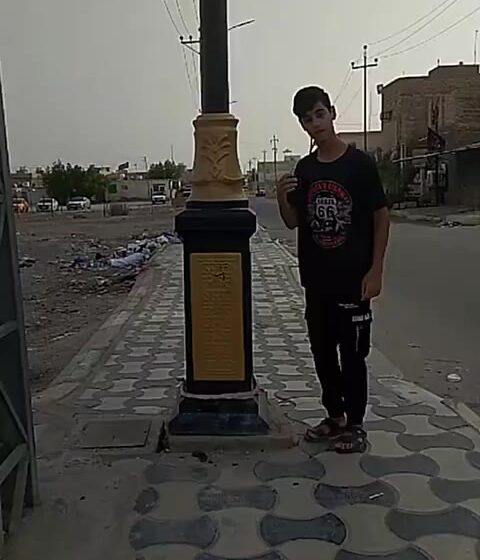
A dominant theme across highly engaged posts is the critique of Prime Minister Mohammed Shaya Al-Sudani’s government, particularly regarding development and corruption. Al-Mirsad Press (Post Impact: 100%) shared a video critical of development in Nasiriyah, sarcastically referring to it as the era of “#Al-Sudani’s patch-up job.” Similarly, Ammar Al-Halfi (Post Impact: 91%) posted a video with the caption “Results of messing around,” implying failed or chaotic projects. The page Yanie Tafdal (Post Impact: 66%) was even more direct, claiming in a video’s text that “the government that loots and steals Iraq’s money the most is Al-Sudani’s government.” These posts collectively portray a narrative of governmental failure and widespread discontent with the current administration’s performance.
2. The Khor Abdullah Sovereignty Debate Intensifies
The issue of the Khor Abdullah waterway agreement continues to be a major point of contention, framed as a matter of national sovereignty. MP Dr. Haider Al-Salami (Post Impact: 79%) issued a strong statement asserting, “There is no retreat from Iraq’s sovereign rights, and no matter how the forces of evil and agency conspire, #Khor_Abdullah_Al-Tamimi remains 100% Iraqi.” He argued that decisions of the Federal Supreme Court are final and binding, dismissing a contrary opinion from the Head of the Supreme Judicial Council as a personal view. MP Mohammed Nuri Aziz (Post Impact: 27%) described the agreement as “betrayal under the cover of agreements,” warning it would strangle the Faw Port. Muntazer Al-Zaidi (Post Impact: 15%) also weighed in, praising the efforts of figures like Amer Abdul Jabbar and Jamal Al-Halbousi for their work on the issue.
3. Wasit Governor Resigns Amidst Political Fallout
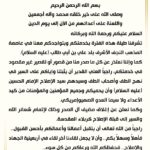
The resignation of Wasit Governor Mohammed Jamil Al-Mayahi became a major political story following a tragic incident in the province. Al-Khwa Al-Nadifa (Post Impact: 58%) announced that Al-Mayahi submitted his resignation “in honor of the martyrs’ blood and in loyalty to them and the people of the province.” In a subsequent post (Post Impact: 56%), the same page reported that the Wasit Provincial Council elected Hadi Majid Kazza as the new governor. The page Min Baghdad (Post Impact: 21%) added a dramatic layer, quoting the outgoing governor as saying, “They gave me the choice to either burn myself or they would burn the province!”
4. US Expresses Concerns over PMF Bill in Call with Sudani
A phone call between U.S. Secretary of State Marco Rubio and Iraqi Prime Minister Mohammed Shiaa al-Sudani drew significant attention, particularly regarding U.S. concerns over the Popular Mobilization Commission (PMC) bill. According to an official readout shared by the U.S. Embassy Baghdad (Post Impact: 32%), Secretary Rubio emphasized that such legislation would “institutionalize Iranian influence and armed terrorist groups undermining Iraq’s sovereignty.” The call also touched on attacks on energy infrastructure and the need to pay salaries in the Kurdistan Region. Commentator Salem Mashkour (Post Impact: 12%) criticized Rubio’s request regarding KRG salaries as a violation of Iraqi sovereignty and federal norms. Ahmed Althawaq (Post Impact: 19%) reacted sarcastically, pointing out the perceived hypocrisy of the U.S. opposing the PMF while demanding salaries for the Peshmerga, which he referred to as militias.
5. Rumor of Nouri al-Maliki’s Deteriorating Health Spreads
A high-impact, unconfirmed report regarding the health of former Prime Minister Nouri al-Maliki circulated widely on Facebook. The page Mushu Ani Al-Ahibahum (Post Impact: 82%) posted what it labeled as “News,” stating that al-Maliki suffered a “sudden, severe heart attack with deterioration of his health condition, after which he was transferred to the hospital.” Despite being presented as unconfirmed news (“أنباء”), the post’s significant engagement rate indicates it reached a large audience, fueling speculation about the prominent politician’s condition.
6. Allegations of Militias Smuggling Oil to Enrich Iran
A coordinated narrative accusing militias of smuggling Iraqi oil to Iran was pushed by two affiliated pages. Both Tele Iraq – Tili Iraq (Post Impact: 66%) and Tele Iraq – Tili Iraq Media (Post Impact: 64%) published identical posts claiming this is how militias “protect” the country: “by depleting our oil and filling Iran’s barrels.” The posts assert that these groups are not defenders of the homeland but rather “thieves plundering our country to enrich Tehran,” concluding with the slogan, “Our oil is our right.”
7. Warnings of Solar Storms Disrupting Communications
A widely shared post warned Iraqis of potential disruptions due to solar activity. The page Abu Al-Arif (Post Impact: 68%), citing the Russian Space Research Institute, announced that Earth would face magnetic storms resulting from powerful solar flares. The post explained that these storms could cause issues with communications, GPS devices, and even power grids, and might lead to physical symptoms like headaches and fatigue for some people. It humorously suggested that if your phone acts up, “the sun might be behind it!”
8. Emotional Appeal for Son of a Martyred Soldier
A heart-wrenching story shared by Akher Al-Ahdath Al-Iraqiya (Post Impact: 85%) garnered significant engagement. The post recounts the tragedy of a young man named Sadiq Salih, who was martyred the previous day. He left behind a son who is critically ill and “battling death,” needing an operation that costs 80 million Iraqi dinars. The post emphasized the father’s unfulfilled promise to return to his sick son and appealed to readers for either financial help or prayers, stating that the “prayers of forty strangers are answered.”
9. Mysterious Light in Iraqi Sky Identified as NASA Rocket Fuel
A mysterious white spot seen in the skies over Nineveh and Anbar generated buzz, with Telescope Iraq (Post Impact: 34%) initially reporting the sighting and its unknown origin. The page later provided a scientific explanation in a follow-up post (Post Impact: 20%). It clarified that the light was fuel discharged in space from a NASA SpaceX Falcon 9 rocket launched to study solar storms. The fuel appeared illuminated because, despite it being night on the ground, the fuel’s high altitude allowed it to reflect sunlight, creating the strange glowing effect seen from Iraq and neighboring countries.
10. Iraq Enters Peak Summer Heatwave Known as “Jamrat al-Qaydh”
Pages warned Iraqis about the beginning of the most intense period of summer heat. Telescope Iraq (Post Impact: 29%) announced the official start of “Jamrat al-Qaydh” (the ember of the heat) on July 23, explaining that this first phase, called “Al-Mirzam,” marks the peak of summer and will last until August 2. The effects of this extreme heat were illustrated by the page Baghdad (Post Impact: 28%), which shared a video from Basra where a citizen complained that there is no morning, only afternoon, due to the intense sun.