2025-07-24: Qais Khazali Warns Against US Pressure on Iraq

Based on an analysis of 480 X / Twitter posts by Miqrab AI on July 24, 2025, the primary narratives circulating in Iraq focus on regional geopolitical shifts and their domestic implications. The most prominent theme involves strong reactions to new Saudi economic investments in Syria, with opinions divided between praise for regional cooperation and deep suspicion of a foreign-backed agenda. This is closely linked to concerns about the conflict in Syria, with many users expressing fear that sectarian violence against Druze and Alawite communities is a precursor to a wider, internationally-backed campaign targeting Shia populations in Iraq and Lebanon. These fears are amplified by contested reports of weapons smuggling and militant activity in Iraq’s Anbar province. Other significant topics include internal political disputes over the Khor Abdullah agreement with Kuwait, US warnings of sanctions should a new law formalizing the Popular Mobilization Forces (PMF) be passed, and local incidents like an alleged arson attempt in Baghdad that have fueled sectarian tensions.
Table Of Content
- 1. Qais Khazali Warns Against US Pressure on Iraq
- 2. Saudi Investment in Syria Sparks Widespread Debate
- 3. Syria Conflict Fuels Fears of Sectarian Spillover into Iraq
- 4. Reports of Weapons in Anbar Provoke Accusations
- 5. Disputed Reports on Zayouna Mall Arson Attempt
- 6. Claim of Saudi Plan to Annex Kuwait Spreads
- 7. Basra Governor Criticized for Exposing Citizen’s Data
- 8. Opposition to Khor Abdullah Agreement Intensifies
- 9. US Warns of Sanctions if PMF Law is Passed
- 10. Frustration with State Failures Expressed Online
Today’s Top 10 X (Twitter) Trends in Iraq:
1. Qais Khazali Warns Against US Pressure on Iraq
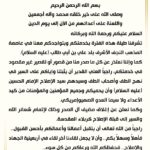
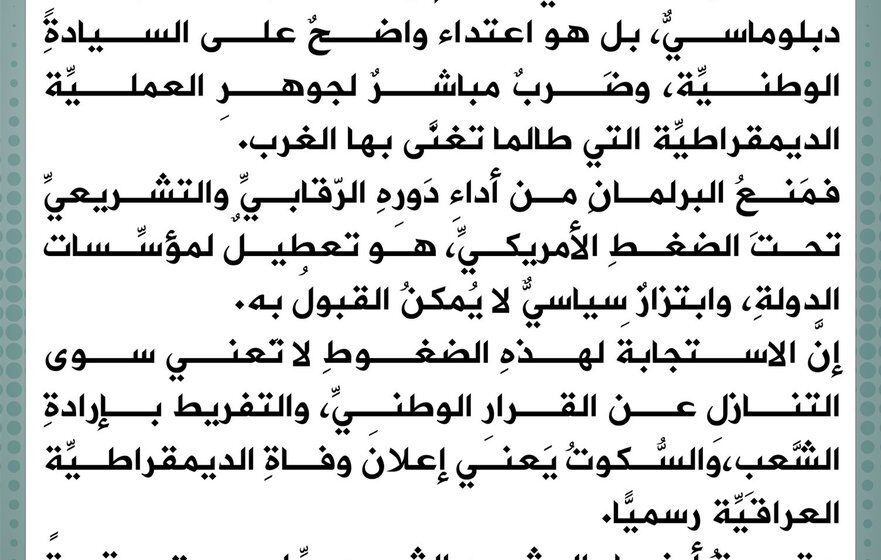
Qais al-Khazali, a prominent Iraqi political and militia leader, shared a video statement that garnered the highest engagement of the day. As summarized by other users like Hayder (Post Impact: 6%), Qais al-Khazali (Post Impact: 100%) warns that succumbing to American pressure constitutes a forfeiture of national sovereignty and the will of the Iraqi people. He is quoted as saying that remaining silent on this issue would mean the “official death of Iraqi democracy.” This narrative frames US influence as a direct threat to Iraq’s political autonomy, a sentiment echoed by other accounts discussing potential US sanctions related to the PMF.
2. Saudi Investment in Syria Sparks Widespread Debate
A significant conversation revolves around Saudi Arabia’s recent economic engagement with the new government in Syria. The discourse is highly polarized. On one side, users like Dr. Hussein Al-Moyd (Post Impact: 46%) and Mahdi Majeed (Post Impact: 14%) express gratitude and optimism, praising Saudi Arabia for its “historic stance” and efforts to bring economic prosperity to Syria and the region. In stark contrast, other influential accounts view the development with suspicion and criticism. Mustafa al-Dulaimi (Post Impact: 53%) points to the $6 billion investment as a success for the new Syrian leadership, which he claims came to power through a “Turkish, Indian, Sikh, Afghan, Chechen occupation,” and contrasts this with the Iraqi government’s failure to secure similar investments from its allies like Iran. Issam Hussein (Post Impact: 55%) sarcastically suggests the 130 Saudi “investors” were sent by Mohammed bin Salman to celebrate the massacres committed by the new regime.
3. Syria Conflict Fuels Fears of Sectarian Spillover into Iraq
Several accounts are pushing a narrative that the ongoing violence in Syria, particularly against the Druze community in As-Suwayda, is part of a broader, foreign-backed plan targeting Shia Muslims in the region. Issam Hussein (Post Impact: 58%) is calling for documentation of violations against civilians in As-Suwayda, blaming “Jolani’s gangs” and their alleged backers in the Gulf, Turkey, the US, and Israel. Ahmad Abdul-Sada (Post Impact: 13%) expands on this, arguing that attacks on Druze and Alawites are merely “appetizers” before the “main meal” of targeting Shia in Iraq and Lebanon, specifically the PMF and Hezbollah. He claims the ultimate goal is revenge for the defeat of ISIS and the disruption of normalization projects, and warns that the plan for Iraq will begin by igniting the border with Syria via Anbar province.
4. Reports of Weapons in Anbar Provoke Accusations
Linked to the instability in Syria, there is a contentious discussion about the security situation in Iraq’s western Anbar province. Accounts like Ahmad Abdul-Sada (Post Impact: 13%) and Mazen al-Zaidi (Post Impact: 10%) are amplifying reports of heavy weapons being secretly moved into Anbar and the infiltration of fighters from the province into Syria to support “Jolani’s terrorist regime.” This narrative is strongly contested by others who see it as a pretext for a crackdown on the Sunni community. Sajad al-Jubouri (Post Impact: 11%) calls the threats against the western provinces a “worn-out and disgraceful electoral idea,” while Zina Al Saab (Post Impact: 7%) fears these rumors are laying the groundwork for a campaign of arrests against Sunnis.
5. Disputed Reports on Zayouna Mall Arson Attempt
A story about an attempted arson at the Al-Mathar Mall in Baghdad’s Zayouna district is circulating with conflicting information. Several accounts, including Abu Drandash al-Askari (Post Impact: 22%), Dr. Hussein al-Safi (Post Impact: 15%), and Hayder (Post Impact: 12%), reported that two women from Mosul were arrested for trying to set fire to a clothing store inside the mall. These posts were often accompanied by images of the alleged perpetrators. However, the account Al-Shabandar (Post Impact: 10%) explicitly refutes this, calling the news “false” and a form of sectarian incitement aimed at creating strife for electoral purposes.
6. Claim of Saudi Plan to Annex Kuwait Spreads
A highly impactful post by Abu Drandash al-Askari (Post Impact: 68%) alleges that Saudi Arabia is planning to annex Kuwait. The post further claims that other countries in the Gulf region are set to “disappear,” with the Gulf Cooperation Council (GCC) soon being reduced to just three member states. While this story comes from a single source within the provided list, its high post impact indicates that this claim is gaining significant traction and visibility among Iraqi social media users, fueling speculation about major geopolitical restructuring in the Gulf.
7. Basra Governor Criticized for Exposing Citizen’s Data
The governor of Basra, Asaad Al-Eidani, is facing criticism for his interaction with a citizen who questioned his performance. According to Yasser Eljuboori (Post Impact: 17%) and Steven Nabil (Post Impact: 13%), the governor responded to the criticism by exposing the citizen’s criminal record and personal information, including his mother’s name, from his personal phone. Nabil reports that the governor justified his actions by saying that allowing someone with a criminal record to speak freely is a sign of democratic achievement. The incident is being framed by commentators as a gross abuse of power and an attempt to intimidate critics.
8. Opposition to Khor Abdullah Agreement Intensifies
Political and popular opposition to the Khor Abdullah maritime agreement with Kuwait continues to be a major topic. Raad Hashim (Post Impact: 14%) shared a video reporting that 194 members of parliament have submitted their signatures to the Federal Court, rejecting the agreement. Dr. Haider al-Salami (Post Impact: 4%), an MP, confirmed his participation in this effort. Furthermore, figures like Ahmad Alwishah (Post Impact: 5%) are calling for public demonstrations in Baghdad’s Tahrir Square to protest what they see as a concession of Iraq’s only major sea access.
9. US Warns of Sanctions if PMF Law is Passed
The proposed Service and Retirement Law for the Popular Mobilization Forces (PMF) is a flashpoint for both domestic politics and international relations. Parliamentarian Hassan Salem (Post Impact: 15%) declared any official who fails to support the law a “traitor to the blood of the martyrs.” In parallel, several accounts, including Yasser Eljuboori (Post Impact: 6%) and Mustafa al-Dulaimi (Post Impact: 5%), are reporting on a warning from the U.S. State Department. According to their posts, the U.S. has indicated that passing the law is incompatible with its policy and would trigger a review of security assistance to Iraq and lead to economic sanctions.
10. Frustration with State Failures Expressed Online
A broader sentiment of frustration with the state of the nation is captured in a widely shared post by Rusly Al-Maliki (Post Impact: 18%). In a scathing critique, the account lists numerous signs of a failing state, describing Iraq as a country with “two flags,” with its airports, ports, and oil fields outside the capital’s control, and a military deployed in neighborhoods instead of at the borders. The post laments a government that can be non-existent for a year, allows military parades by forces with dual loyalties, and whose national income depends solely on a single source. This captures a widespread feeling of dysfunction and has been shared by others like Rusly Al-Maliki (Post Impact: 12%) who also discuss the country’s environmental and economic failures.