2025-08-02: Presidency’s Gift of Olive Oil Sparks Widespread Mockery

Based on an analysis of 439 X / Twitter posts by Miqrab AI on August 2, 2025, the primary narratives circulating in Iraq revolve around sharp criticism of government actions, historical grievances, and ongoing political tensions. The most viral topic was mockery directed at the Iraqi Presidency for gifting a bottle of olive oil and pomegranate molasses, which users viewed as unbecoming of the state’s stature. Simultaneously, discourse about Iraq’s relationship with Kuwait intensified, touching upon the 1990 invasion, the Khor Abdullah waterway dispute, and historical comparisons. Other significant conversations included renewed debates over the legacy and alleged foreign funding of the Tishreen protests, criticism of a proposed law to protect Saudi investors, and commemorations of the Yazidi genocide.
Table Of Content
- 1. Presidency’s Gift of Olive Oil Sparks Widespread Mockery
- 2. Tensions With Kuwait Over History and Khor Abdullah
- 3. “Tishreen Scandals” and Al-Kadhimi Era Allegations
- 4. Outcry Over Proposed Saudi Investor Protection Law
- 5. Faig al-Sheikh Ali Engages in Political Debates
- 6. Commemoration of the Yazidi Genocide
- 7. Heightened Sectarian Political Commentary
- 8. Criticism of Pro-Iran Factions and Foreign Influence
- 9. Former Security Advisor Mowaffak al-Rubaie Seeks Job on LinkedIn
- 10. Syria-Iraq Border and Regional Development Comparisons
Today’s Top 10 X (Twitter) Trends in Iraq:
1. Presidency’s Gift of Olive Oil Sparks Widespread Mockery
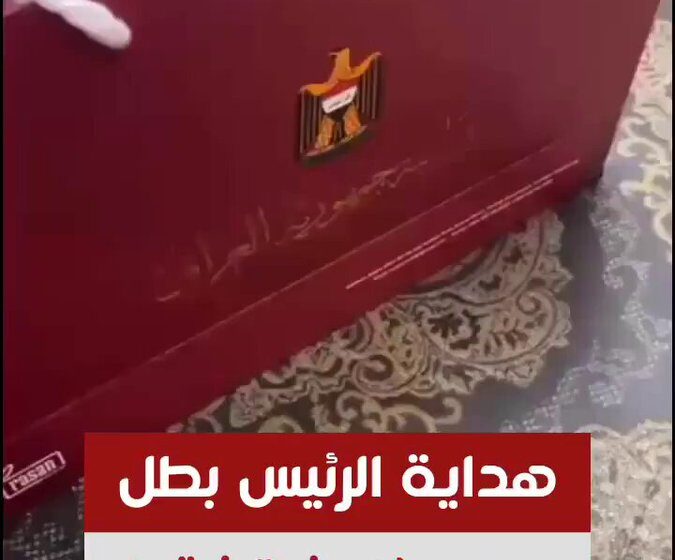
A video showing the Iraqi President’s office gifting a visitor a bottle of olive oil and another of pomegranate molasses triggered a wave of criticism and ridicule across Iraqi social media. Accounts like Rusly Al-Maliki (Post Impact: 100%) strongly condemned the gift, exclaiming, “Are you not ashamed? Are you not embarrassed!?” He argued that the presidency should offer more dignified presents like luxury watches or important books, concluding that such actions prove Iraq “will not become a state.” Similarly, Hiba Alnnayib (Post Impact: 34%) sarcastically questioned if the president works as a chef and used the hashtag #دبس_السيادة (#Sovereignty_Molasses). The account Haider (Post Impact: 15%) also shared the video, highlighting the unusual nature of the official gift.
2. Tensions With Kuwait Over History and Khor Abdullah
Discussions surrounding Iraq-Kuwait relations were prominent, fueled by historical anniversaries and ongoing maritime disputes. Rusly Al-Maliki (Post Impact: 51%) shared a news clipping dated August 1, 1990, noting it was published “hours before the invasion of Kuwait.” In response to perceived insults against an Iraqi woman, Zina Al Saab (Post Impact: 30%) drew a parallel between the “honor” that allegedly triggered the 1990 invasion and what she sees as the current government’s failure to defend an Iraqi woman’s honor today. Meanwhile, Bahaa khaleel (Post Impact: 30%) asserted Iraq’s historical precedence over Kuwait, stating, “we have a teaspoon older than Kuwait,” and pointing out that Iraq was founded in 1920 while Kuwait was founded in 1961. Concerns over the Khor Abdullah waterway were raised by Ameer aldaami (Post Impact: 12%), who demanded the government clarify a Kuwaiti official’s statement suggesting confidence in winning a parliamentary vote on the issue.
3. “Tishreen Scandals” and Al-Kadhimi Era Allegations
The legacy of the Tishreen protests and the government of former Prime Minister Mustafa Al-Kadhimi resurfaced amid allegations of foreign funding and corruption. Sarah Khalaf (Post Impact: 47%) shared an image with the hashtag #فضائح_تشرين (#Tishreen_Scandals). This coincided with posts from accounts like Sabereen news (Post Impact: 6%) and Abbas Al-Ardawi (Post Impact: 6%), which circulated alleged confessions from an individual named Dhiaa al-Moussawi regarding Al-Kadhimi and funding for the protests. Ahmad Al-thawaq (Post Impact: 16%) questioned the silence of Tishreen supporters regarding these “scandals,” asking why they were not covering them after having published everything else.
4. Outcry Over Proposed Saudi Investor Protection Law
A proposed “Saudi Investor Protection Law” has become a point of contention, with critics arguing it imposes unfair burdens on Iraq. The account Haider (Post Impact: 30%) shared a statement from Member of Parliament Saud Al-Saadi, who warned that the law “includes exhausting obligations for Iraq and its provisions violate Iraqi legislation.” The post highlights growing parliamentary and public concern that the legislation, which is being considered for a vote, may compromise national interests in favor of foreign investors from Saudi Arabia.
5. Faig al-Sheikh Ali Engages in Political Debates
Prominent political figure Faig al-Sheikh Ali was active, addressing multiple contentious topics. In one post, Faig al-Sheikh Ali (Post Impact: 29%) stated he would use the same harsh response style against pro-militia groups (“Walaiyeen”) as he did against a Kuwaiti who insulted Iraqi activist Zina Al Saab. In another, Faig al-Sheikh Ali (Post Impact: 27%) provided Tishreen activists with a counterargument to pro-militia groups who ask, “What has Faig al-Sheikh Ali given you?” He advised them to reply that while the militias can offer jobs and cars because they are in power, he cannot because he is not in government.
6. Commemoration of the Yazidi Genocide
On the 11th anniversary of the Yazidi genocide, several accounts posted to remember the tragedy and honor the victims. Murad Ismael (Post Impact: 18%) shared photos of commemorations happening worldwide, stating that “Yazidi people gather at hundreds of sites around the world” to mark the event. Essam Hussein (Post Impact: 11%) described the genocide as an act committed by “human monsters” from a “perverted religion” and referred to it as a “complete social slaughter” in a separate post. These posts served to keep the memory of the atrocities alive and condemn the perpetrators.
7. Heightened Sectarian Political Commentary
A series of posts from Essam Hussein (Post Impact: 16%) focused on sectarian political dynamics, expressing a highly critical view of Sunni political actors in Iraq. The user claimed that Sunnis demand Shias adhere to “national” conditions while they themselves support entities like Israel, Turkey, and extremist groups. He characterized the “Sunni terrorist equation” as: “I kill you, I blow you up, I exterminate you, and if you defend yourself, you immediately turn into a criminal.” In another post, he called for halting all oil projects in western provinces to prevent them from becoming funding sources for terrorist organizations, questioning if Sunni politicians are still “captives of the Zionist terrorist project.”
8. Criticism of Pro-Iran Factions and Foreign Influence
Criticism of Iran-aligned militias and foreign influence was another trending topic. Rusly Al-Maliki (Post Impact: 16%) posted a video allegedly showing an armed militia using state vehicles and weapons to forcibly evict residents to seize their homes, linking this to the dwindling resources of “Iranian factions in Iraq.” He urged citizens to defend their rights, claiming the state would not protect them. In a related vein, Tamara Alkhazraji (Post Impact: 19%) posted a video of what she described as “Iraqi tails” welcoming Iranian visitors with chants of “Today we greet the visitor, which makes Israel cry,” criticizing the display of subservience.
9. Former Security Advisor Mowaffak al-Rubaie Seeks Job on LinkedIn
Former Iraqi National Security Advisor Mowaffak al-Rubaie became a subject of online discussion after he posted on LinkedIn seeking employment. Haider (Post Impact: 7%) shared a screenshot of the post, where al-Rubaie wrote, “Hello everyone! I am looking for a new job opportunity as a consultant. If you hear of any job opportunity, please send a message or comment and I appreciate your support.” Yasser Eljuboori (Post Impact: 8%) also commented on the post, sarcastically questioning if al-Rubaie was “offering himself to foreign parties” by writing in English and seeking a consulting role.
10. Syria-Iraq Border and Regional Development Comparisons
Developments in neighboring Syria prompted comparisons and discussions related to Iraq. Haider (Post Impact: 14%) shared a video from the Iraq-Syria border showing 50 Syrian citizens, mostly from Deir ez-Zor, being denied entry into Iraq, despite an official denial from the Ministry of Interior. On the economic front, Ziad Al-Hashimi (Post Impact: 10%) contrasted Syria’s receipt of pipeline gas from Azerbaijan via Turkey with Iraq’s stalled agreement to import gas from Turkmenistan via Iran. This sentiment was echoed by MUNQITH DAGHER (Post Impact: 5%), who lamented that after twenty years, Iraq has failed to solve its gas supply issues.