2025-08-06: NYT: Photos of MBS, Arab Leaders in Epstein’s Home

Based on an analysis of 517 X / Twitter posts by Miqrab AI on August 6, 2025, the primary narratives in Iraq revolve around a New York Times report detailing photos of Arab leaders, including Saudi Crown Prince Mohammed bin Salman, found in Jeffrey Epstein’s home, which generated the highest engagement. Domestically, there was a significant surge in sectarian rhetoric, with prominent commentators viewing it as a deliberate political strategy by ruling parties to mobilize their bases ahead of parliamentary elections. This was accompanied by intense debates over the quality of Sunni political representation and widespread controversy surrounding a proposed law to formalize the Popular Mobilization Forces (PMF), which has drawn warnings of potential US sanctions. Other key discussions included allegations of systematic demographic change through home demolitions in the suburbs of Baghdad and regional events, such as the Lebanese government’s decision to disarm Hezbollah, which resonated with Iraqi concerns about militia power.
Table Of Content
- 1. NYT: Photos of MBS, Arab Leaders in Epstein’s Home
- 2. Sectarian Rhetoric Escalates Ahead of Elections
- 3. Debate Over Sunni Political Leadership and Representation
- 4. Divisions and US Warnings Over New PMF Law
- 5. Home Demolitions in Latifiyah Raise Sectarian Fears
- 6. Lebanon’s Hezbollah Disarmament Decision Echoes in Iraq
- 7. Accounts Allege Khor Abdullah Dispute is Manufactured
- 8. Sectarian Tensions Lead to Physical Fight in Parliament
- 9. Muqtada al-Sadr’s Reception of Bassem Karbalaei
- 10. Khamenei Poster in Diwaniyah Sparks Debate
Today’s Top 10 X (Twitter) Trends in Iraq:
1. NYT: Photos of MBS, Arab Leaders in Epstein’s Home
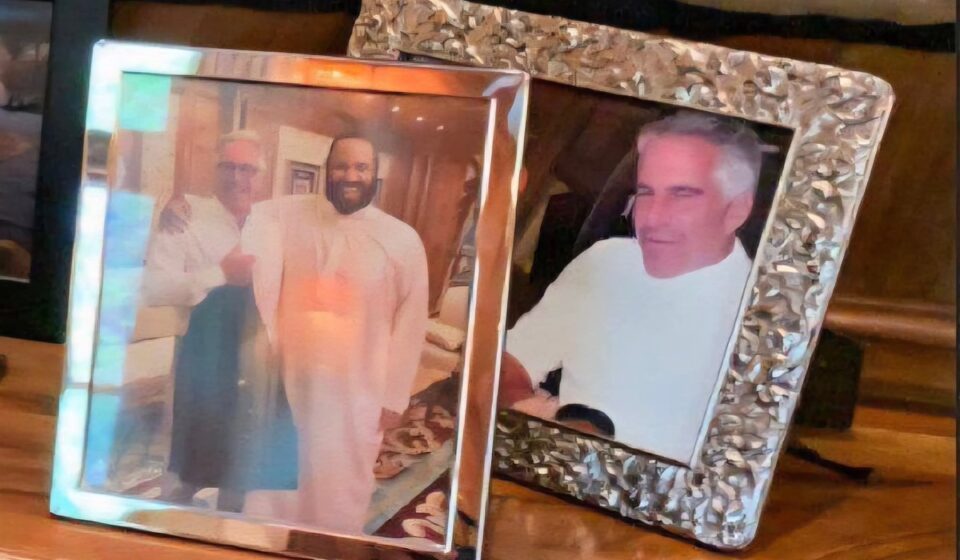
A report by the New York Times revealing that photos of Saudi Crown Prince Mohammed bin Salman were found in the home of convicted sex offender Jeffrey Epstein trended widely across Iraqi X/Twitter. Accounts like Wasan Al-Shaykhli (Post Impact: 100%), ZaidBenjamin (Post Impact: 48%), and Haidar (Post Impact: 29%) shared details from the article. The posts specified that along with MBS, photos of former Qatari Prime Minister Hamad bin Jassim Al Thani and Emirati businessman Sultan bin Sulayem were also discovered in Epstein’s Manhattan mansion. The accounts highlighted that the New York Times did not clarify the nature of the relationships or when the photos were taken, but noted their presence has renewed scrutiny of Epstein’s connections with powerful global figures. The posts also provided background on Epstein’s criminal history involving the sexual exploitation of minors and his death in prison, which was officially ruled a suicide.
2. Sectarian Rhetoric Escalates Ahead of Elections
A sharp increase in sectarian discourse was a dominant theme, with many commentators linking it to the upcoming parliamentary elections. Ahmed Albasheer (Post Impact: 67%) expressed his admiration for the “stupidity of anyone who falls for the tricks of sectarian escalation that coincides with every parliamentary election.” He argued that ruling parties repeatedly use the same “pathetic, trivial, and repetitive theatrical scenes” to their advantage. Similarly, Faig Alsheakh/Kalimati Lil Tarikh (Post Impact: 84%) posted a fiery defense of the Sunni community as the “origin and substance of Iraq,” while fiercely criticizing its current political representatives. On the other side, accounts like Emad Al Musafir (Post Impact: 26%) questioned where Sunni politicians were when ISIS overran their cities in 2014, while Mashaan al-Jubouri (Post Impact: 24%) condemned an insult directed at Sunnis by a Shia MP as a “disgrace” and called on Shia leaders to denounce it.
3. Debate Over Sunni Political Leadership and Representation
Amid rising sectarian tensions, a specific debate emerged regarding the quality and legitimacy of Sunni political representation. Faig Alsheakh/Kalimati Lil Tarikh (Post Impact: 84%) lamented that those representing Sunnis today are largely “cowards, despicable, trivial, base, thieves, partners in your crimes and corruption.” He asked rhetorically, “Where are their men who used to shut your mouths?!” Haider Al Mulla (Post Impact: 78%) stated that representing a component “is not just something said or a slogan raised, but a stance.” In contrast, Dr. Ahmed Al-Abbasi (Post Impact: 22%) questioned the “greatness” of the Sunni component, asking how its men could flee to Erbil and Turkey, leaving women and children behind when ISIS took over their cities. Mustafa Al-Dulaimi (Post Impact: 44%) proudly asserted, “Yes, we are the great Sunni component,” stating this phrase angered sectarian figures.
4. Divisions and US Warnings Over New PMF Law
The proposed law to formalize and expand the powers of the Popular Mobilization Forces (PMF), or Hashd al-Sha’abi, generated significant controversy. Rusly Al-Maliki (Post Impact: 23%) explained that Sunnis, Kurds, and even some Shia politicians refused to vote for the law, sensing danger and heeding a message from Washington. He claimed the US Secretary of State warned Prime Minister Al-Sudani that the law would “officially hand Iraq over to Tehran” and marginalize the Iraqi army, leading to inevitable sanctions if passed. In a separate post, Rusly Al-Maliki (Post Impact: 16%) cited the pro-Hezbollah newspaper Al-Akhbar, which reported that the US Ambassador threatened “decisive international intervention” if the government continues to arm militias. Conversely, Wasan Al-Shaykhli (Post Impact: 15%) quoted PMF leader Hadi al-Amiri, who declared that the PMF’s banner would be handed to Imam Mahdi and that “whoever thinks of dissolving the Hashd should think of how to die before its dissolution.”
5. Home Demolitions in Latifiyah Raise Sectarian Fears
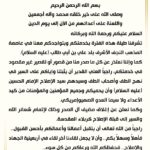
Multiple accounts reported on the demolition of dozens of houses in the Latifiyah area, south of Baghdad, framing the events as a systematic campaign of demographic change. Othman Al-Mukhtar (Post Impact: 36%) shared a video of a resident’s plea and stated the demolitions were occurring under the pretext of proximity to a 1977 oil pipeline, even though the villages have existed since the early 20th century. He described the actions as “blatant sectarian discrimination,” noting that the same pipeline passes through other areas without issue. Dr. Zaid Abdulwahab Al-Adhami (Post Impact: 15%) called the “systematic demolition and displacement” of hundreds of families a crime against humanity. Raad Hashim (Post Impact: 5%) shared a statement from Sheikh Mazhar al-Janabi condemning the demolitions and citing a directive from the Prime Minister’s office forbidding the removal of residential encroachments without providing suitable alternatives.
6. Lebanon’s Hezbollah Disarmament Decision Echoes in Iraq
The Lebanese government’s decision to task its army with a plan to disarm militias, primarily targeting Hezbollah, was a major topic of discussion among Iraqi commentators who drew parallels to their own country. Faig Alsheakh/Kalimati Lil Tarikh (Post Impact: 44%) announced he would be a guest on Sky News Arabia to discuss “Hezbollah’s refusal to hand over its weapons!” Mustafa Al-Dulaimi (Post Impact: 12%) reported that a decision was made to confine weapons to the state in Lebanon by the end of the year, stating “Lebanon is freeing itself from uncontrolled weapons.” In response to these developments, Ahmad Abdulsada (Post Impact: 8%) defended the “Shia weapon” in both Lebanon and Iraq, arguing that calls to disarm it are part of an American-backed plan that ultimately serves terrorist groups and weakens the state. Haidar (Post Impact: 8%) quoted Hezbollah’s official reaction to the decision: “We will deal with this decision as if it does not exist.”
7. Accounts Allege Khor Abdullah Dispute is Manufactured
Politician and commentator Faig Alsheakh made strong accusations regarding the origins of the recent political campaign concerning the Khor Abdullah maritime channel dispute with Kuwait. In two posts, Faig Alsheakh/Kalimati Lil Tarikh (Post Impact: 29%) swore an oath that those who initiated the campaign were “furookh manayeech” (a vulgar insult). He specifically named “Amer Tanaha” and “Ismailof,” alleging the latter was acting through individuals like Ali Al-Zabhawi and Wael Abdul Latif. In a follow-up post (Post Impact: 25%), he claimed Ismailof’s motive was revenge against Kuwait for imprisoning him and seizing his assets. Haidar (Post Impact: 10%) noted that Alsheakh continues to attack MP Amer Abduljabbar, who has been focused on “exposing Kuwait’s transgressions on Iraqi rights and interests.”
8. Sectarian Tensions Lead to Physical Fight in Parliament
The heated political climate manifested in a physical altercation within the Iraqi Parliament. Yasser Eljuboori (Post Impact: 16%) highlighted the inflammatory comment made by MP Alaa Al-Haydari: “I am more honorable than you and more honorable than the Sunnis.” Following this, video of the ensuing fight was shared by several accounts. Hisham Ali (Post Impact: 6%) posted a clip showing the moment the brawl broke out “with fists” between MP Raad Al-Dahlaki and MP Alaa Al-Haydari. Dr. Haidar Al-Barzanji (Post Impact: 10%) shared a video, exclusively reported by Al-Ahad TV, allegedly showing MP Hamam Al-Tamimi striking MP Raad Al-Dahlaki after the latter attempted to assault MP Alaa Al-Haydari.
9. Muqtada al-Sadr’s Reception of Bassem Karbalaei
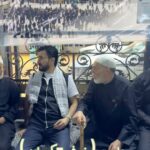
Shia cleric Muqtada al-Sadr hosted and honored prominent Shia eulogist Bassem Karbalaei, an event that drew attention due to their past tensions. Wasan Al-Shaykhli (Post Impact: 16%) recalled that last year, when Karbalaei recited at the guesthouse of the Al-Hakim family, “the Sadrists cursed and insulted him.” She questioned what the Sadrists would say now that Karbalaei was at the Sadr family’s guesthouse. Haidar (Post Impact: 5%) noted this was the first such meeting since Sadr had unfollowed Karbalaei on X/Twitter, which had previously “started a wave of Sadrist criticism against the eulogist.” Hiba Alnnaayib (Post Impact: 6%) also posted about the meeting, questioning if Karbalaei deserved such an honor.
10. Khamenei Poster in Diwaniyah Sparks Debate
The display of a large poster of Iranian Supreme Leader Ali Khamenei in the city of Diwaniyah prompted reactions reflecting the deep divide over Iranian influence in Iraq. Wesam Aziz (Post Impact: 22%) shared a photo of the poster, stating, “Diwaniyah province is adorned with the picture of Imam Khamenei, the deputy of Imam Al-Hujjah, may God hasten his honorable reappearance.” In stark contrast, Ahmad Mulla Talal (Post Impact: 19%) posted a video showing what appears to be the same poster being erected, accompanied by a one-word caption expressing sorrow: “Diwaniyah 😔.” The two posts encapsulate the opposing viewpoints on the role and symbols of Iran within Iraqi public life.