2025-08-11: Contrasting Views on Social Life in Saudi Arabia

Based on an analysis of 559 X / Twitter posts trending on August 11, 2025, Miqrab AI found that conversations in Iraq were dominated by domestic crises and regional tensions. The most prominent narratives included widespread anger over a complete collapse of the national electricity grid, contrasting depictions of social and religious life in Saudi Arabia, and predictions of imminent military escalations involving Lebanon, Syria, and Israel. Other key themes involved heated debates on sectarian identity and national loyalty, growing alarm over Iraq’s severe water scarcity attributed to Turkish dams, and discussions surrounding the ongoing Arbaeen pilgrimage.
Table Of Content
- 1. Contrasting Views on Social Life in Saudi Arabia
- 2. Nationwide Electricity Blackout Sparks Outrage
- 3. Predictions of Escalation in Lebanon and Syria
- 4. Debates on Sectarian Identity and Loyalty in Iraq
- 5. Alarm over Water Scarcity and Turkey’s Role
- 6. Arbaeen Pilgrimage Events and Incidents
- 7. US-Iraq Tensions Over PMF Law and Sanctions
- 8. Condemnation of Israel for Killing Journalists in Gaza
- 9. Syrian Energy Minister Visits Baghdad for Oil Talks
- 10. Criticism of Iraqi Governance and Public Apathy
Today’s Top 10 X (Twitter) Trends in Iraq:
1. Contrasting Views on Social Life in Saudi Arabia
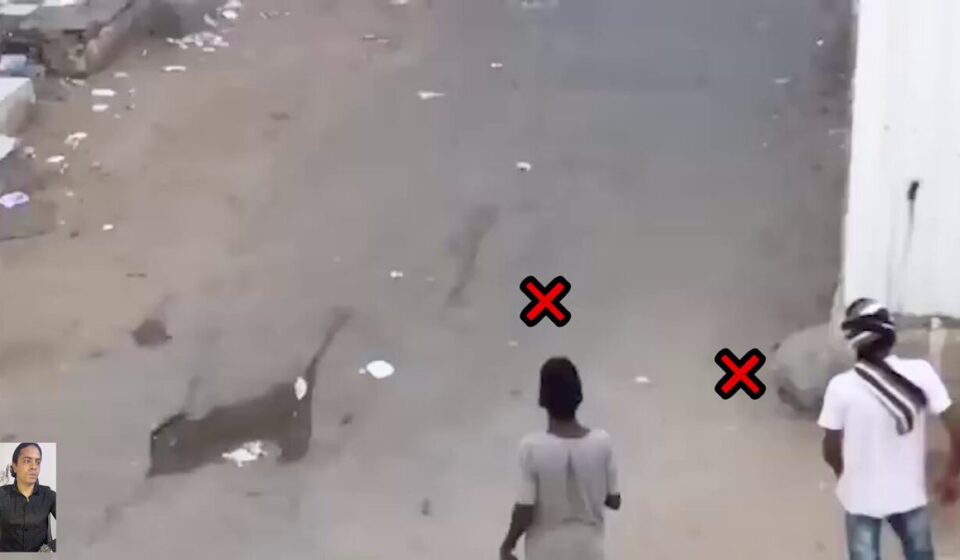
Iraqi social media presented conflicting portrayals of life inside Saudi Arabia. On one hand, Essam Hussein (Post Impact: 100%) shared a video allegedly showing an attempted robbery in Jeddah by destitute youths, commenting that “behind the Kingdom’s trillions and immense wealth lies extreme poverty that gnaws at the edges of its cities and neighborhoods.” He added that the city of Jeddah resembles Iraq’s Diwaniyah province in terms of services. On the other hand, Haider (Post Impact: 42%) reported on a new Saudi initiative to promote a walking pilgrimage route from Mecca to Medina, similar to Iraq’s Arbaeen pilgrimage. The report mentioned that the Saudis plan to establish 52 service processions (Mawakib) and eight overnight camps for pilgrims as a first stage.
2. Nationwide Electricity Blackout Sparks Outrage
A sudden and total collapse of the national power grid across central and southern Iraq dominated online discussions, triggering widespread anger and blame. Dr. Salah Alarbawi (Post Impact: 54%) questioned why successive governments under prime ministers from Al-Maliki to Al-Sudani had all failed to resolve the electricity crisis. Several accounts, including Sabereen News (Post Impact: 11%) and Rusly Al-Maliki (Post Impact: 12%), attributed the blackout to a sudden failure at the Al-Hamdhiya power station in Anbar’s Ramadi. In contrast, Hoshyar Zebari (Post Impact: 14%) pointed out that the Kurdistan Region remained unaffected, presenting it as proof of the KRG’s successful management and offering assistance to the federal government. Hisham Ali (Post Impact: 13%) cited former electricity minister Luay al-Khatib, who claimed that corruption and commissions waste about 50% of the ministry’s $20 billion annual budget.
3. Predictions of Escalation in Lebanon and Syria
A widely circulated post made bold predictions about imminent military escalations in the Levant, signaling a potential regional conflict. Faig Alsheakh/My Word for History (Post Impact: 57%) claimed that Israel was set to occupy a sixth point in southern Lebanon overnight. The account also asserted that forces loyal to Syrian President Ahmed al-Sharaa had completed their military buildup on the Lebanese border. In a significant claim about shifting alliances, the post stated that Hezbollah would have to confront al-Sharaa’s forces alone, without Iranian support, due to “stormy disagreements between the Iranian Revolutionary Guard Corps and the field command of Hezbollah.”
4. Debates on Sectarian Identity and Loyalty in Iraq
Discussions around sectarian identity, security, and the nature of loyalty in Iraq were a prominent theme. Dr. Hussein Al-Safi (Post Impact: 52%) posted a stark warning, stating, “If the Shiites surrender their weapons in the afternoon, they will be slaughtered by evening.” This highlights deep-seated fears about sectarian vulnerability. In a different vein, Wesam Aziz (Post Impact: 38%) argued that loyalty should be to Islam rather than the nation, labeling those who promote Iraqi nationalism as having a “Ba’athist” ideology. Offering a political analysis, Rusly Al-Maliki (Post Impact: 32%) suggested a fundamental divide in the country’s identity politics, observing that “Iraqi Sunnis defend the Arab nationalism of Iraq, while its Shiites defend its sectarian character.”
5. Alarm over Water Scarcity and Turkey’s Role
Multiple accounts expressed severe concern over Iraq’s escalating water crisis, directing strong criticism at Turkey’s water policies. Dr. Hussein Al-Safi (Post Impact: 44%) described Turkey as a “malicious neighbor,” pointing out that despite having a $22 billion trade relationship and military bases in Iraq, its dams are causing the country to go thirsty. Echoing this sentiment, Rusly Al-Maliki (Post Impact: 26%) announced that Iraq is officially moving from a state of “water scarcity” to “water rarity.” In another post, he issued a dire warning that within two decades, the Tigris and Euphrates rivers would disappear, leaving behind a desert without resources and predicting a future of “bloody conflict and terrible migration.”
6. Arbaeen Pilgrimage Events and Incidents
The massive Arbaeen pilgrimage to Karbala was a central topic, with accounts sharing diverse stories related to the event. Haider (Post Impact: 39%) shared a video of an Israeli army spokesperson reacting to an online trend that emerged during the pilgrimage. In a more celebratory post, Dr. Hussein Al-Safi (Post Impact: 17%) suggested that historical figures like Saddam Hussein would have “died of rage” had they witnessed the millions of pilgrims today. On a more disturbing note, Haider (Post Impact: 15%) reported the arrest of a couple in Baghdad, identified as Emad Abdul Kadhim and Fakhriya Abdul Hussein, for allegedly poisoning food with zinc phosphide at a Mawkib (service tent) for pilgrims near the Al-Rasheed market.
7. US-Iraq Tensions Over PMF Law and Sanctions
Tensions between the United States and Iraq over the status of the Popular Mobilization Forces (PMF), or Hashd al-Shaabi, were a significant subject of discussion. Several accounts highlighted Washington’s threats of sanctions in response to a new law integrating the PMF into the state apparatus. Rusly Al-Maliki (Post Impact: 38%) posted an image of PMF members with the caption, “You are provoking America. Period.” Adnan Al-Taie (Post Impact: 12%) claimed that Washington is attempting to counter the PMF law with “Trump’s maximum sanctions.” Furthermore, Hussam Alhaj (Post Impact: 9%) claimed to possess the text of a letter from US Secretary of State Mike Rubio threatening economic sanctions against Iraq if the law was passed.
8. Condemnation of Israel for Killing Journalists in Gaza
Commentators expressed outrage over the killing of Al Jazeera journalists in Gaza, accusing Israel of deliberately targeting the press to conceal its actions. Liqaa Maki (Post Impact: 17%) asserted that Israel’s goal was not just to kill journalists like Anas Al-Sharif but to “silence the witnesses” of events in Gaza, thereby enabling it to continue its “crimes” without consequence. In a similar post, Maki argued that Israel has historically targeted Palestinian intellectuals and journalists to “obliterate the message.” Yasser Al-Maliki (Post Impact: 15%) stated that the world’s conscience “failed the test of Gaza” and that international powers now seek to “obliterate the truth” by targeting the journalists who represent the remaining free voices.
9. Syrian Energy Minister Visits Baghdad for Oil Talks
The visit of Syria’s Minister of Energy to Baghdad sparked discussions about potential energy cooperation between the two neighboring countries. Haider (Post Impact: 18%) reported that the minister’s agenda included asking Iraq to export oil from Kirkuk and other northern fields through the Syrian port of Baniyas on the Mediterranean. A subsequent post by the same account added that Syria is expected to request that Iraq finance the maintenance of the pipeline on both the Iraqi and Syrian sides of the border. In light of Iraq’s own energy failures, Mohammed Jabbar (Post Impact: 6%) sarcastically questioned whether the two ministers would be discussing how to “replicate the collapse of the electrical energy system.”
10. Criticism of Iraqi Governance and Public Apathy
Amid widespread service failures, some commentators criticized both the Iraqi government and the public’s priorities. Mahdi Majeed (Post Impact: 17%) claimed that Iraq’s core issue lies in the “mentality of the people,” whom he described as “lazy, fearful, and preoccupied with others.” He argued that while Iraqis suffer from a lack of water, electricity, and services, they focus their attention on issues in Syria, Yemen, and Gaza instead of demanding change at home. In a similar vein, Aayad Al Twfan (Post Impact: 17%) shared a video of politician Mishaan al-Jubori speaking forcefully about the country’s problems, challenging any other figure in the political process to speak with the same candor, thereby highlighting a perceived lack of courageous leadership.