2025-08-12: Public Anger Over Water and Electricity Crises

Based on an analysis of 509 X / Twitter posts trending on August 12, 2025, Miqrab AI identified several key narratives circulating in Iraq. The most prominent themes include widespread public anger over severe water and electricity shortages, with blame directed at both the Iraqi government for its perceived failures and neighboring Turkey for its dam-building policies. Simultaneously, high-impact accounts are circulating warnings of an impending military conflict and promoting divisive sectarian and historical religious claims. Significant online debate also surrounds Iraq’s new security pact with Iran, with many users highlighting the United States’ disapproval and warning of dangerous geopolitical consequences for the country.
Table Of Content
- 1. Public Anger Over Water and Electricity Crises
- 2. Warnings of Impending Military Conflict
- 3. Sectarian and Historical Religious Narratives
- 4. Controversy Over Iraq-Iran Security Pact
- 5. Helicopter Emergency Landing in Karbala
- 6. Actions Against Political Opposition Figures
- 7. Debate Over Lawyer Zainab Jawad’s Accusations
- 8. Contrasting Electricity Supply in Kurdistan and Iraq
- 9. Reports of Sectarian Tensions in Syria
- 10. Polarized Views on Iranian Influence in Iraq
Today’s Top 10 X (Twitter) Trends in Iraq:
1. Public Anger Over Water and Electricity Crises
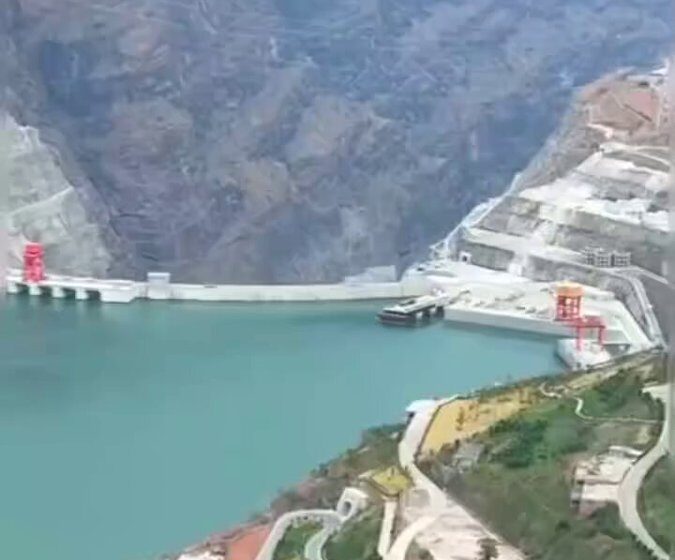
Widespread frustration over the collapse of basic services, particularly water and electricity, is a dominant theme on Iraqi social media. Dr. Hussein Al-Safi (Post Impact: 31%) called on Arbaeen pilgrims to pray for Turkey’s destruction, blaming it for building 579 dams and using water to “thirst Iraq.” The sentiment was shared by Hassan Al-Hammadi (Post Impact: 16%) and Rusly Al-Maliki (Post Impact: 16%), who posted about the drying of the Euphrates River. Meanwhile, Faiq Al-Sheikh Ali (Post Impact: 24%) commented on the Iraqi people’s resilience in the face of these hardships, while Mohammed Jabbar (Post Impact: 6%) decried the “government of service collapses” for providing only “empty promises.”
2. Warnings of Impending Military Conflict
A sense of impending military action is being fueled by influential commentators. Faiq Al-Sheikh Ali (Post Impact: 54%) issued a stark warning, claiming to have information from the “decision-making center” that military buildups on the border are complete and an “imminent invasion will happen.” He asserted, “All of that will certainly and actually happen.” David Yassin (Post Impact: 10%) echoed this sentiment, suggesting that if elections proceed under the control of pro-Tehran militias, the situation will shift to a “path of direct collision,” and warned to “beware of the start of the countdown to the clash.”
3. Sectarian and Historical Religious Narratives
Highly engaged posts are circulating with sectarian and revisionist historical claims, driving a significant portion of online conversation. Wesam Aziz (Post Impact: 100%) shared a post claiming that Libyan resistance leader Omar al-Mukhtar was a Ja’fari Shiite, describing it as “the truth that Sunni media has hidden.” In a similar vein, Hassan Al-Kaabi (Post Impact: 39%) posted about the customs of the Umayyads, alleging that they would curse Imam Ali during wedding ceremonies and urging followers to curse the Umayyads in return.
4. Controversy Over Iraq-Iran Security Pact
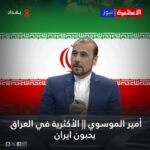
A new security agreement signed between Baghdad and Tehran is sparking significant debate and concern over its geopolitical implications. Rusly Al-Maliki (Post Impact: 8%) criticized the timing, noting the agreement was signed with Ali Larijani just a week after his appointment to an Iranian council tasked with confronting the US and Israel militarily. Multiple accounts, including Omar Abd Al-Sattar Mahmoud (Post Impact: 8%) and Raad Hashim (Post Impact: 5%), shared a statement from the US State Department asserting that the “defense partnership that was signed yesterday conflicts with Baghdad’s relationship with Washington.” Mohammed Jabbar (Post Impact: 6%) described the move as “political and security suicide.”
5. Helicopter Emergency Landing in Karbala
Accounts reported on a military helicopter incident in Karbala during security operations for the Arbaeen pilgrimage. Haider (Post Impact: 24%) shared a statement from the Ministry of Interior explaining that a helicopter suffered a technical malfunction during takeoff, forcing an emergency landing. The helicopter struck an empty vehicle, causing only material damage with no injuries. Aayad Al Twfan (Post Impact: 7%) identified the aircraft as an American-made Bell model from 1996, noting that such models are known for frequent malfunctions.
6. Actions Against Political Opposition Figures
Social media users are discussing actions taken against political figures ahead of upcoming elections. Haider (Post Impact: 15%) reported that the Iraqi High Electoral Commission decided to exclude candidate Talal al-Hariri from the upcoming parliamentary elections. However, Sajjad Salem (Post Impact: 14%) clarified that the judicial decision was to exclude the coalition’s list in Muthanna province for documentation reasons, not its leader. Separately, Srwa Abdulwahid (Post Impact: 5%), of the New Generation Movement, reported that an armed force from the PUK attacked the home of the movement’s head, Shaswar Abdulwahid, and took him to an unknown location, describing the act as “mafia-like.”
7. Debate Over Lawyer Zainab Jawad’s Accusations
A contentious debate is unfolding online regarding lawyer Zainab Jawad, who accused the PMF’s security directorate of leaking her personal photos. Pro-PMF accounts are actively disputing her claims. Ahmad Abdulsada (Post Impact: 7%) posted a detailed rebuttal, alleging she fabricated the story as part of a campaign to tarnish the PMF’s image and was never detained herself. Conversely, _. suhair Al_jumaili (Post Impact: 5%) shared the PMF Security Directorate’s official response, which stated they had no issue with Jawad and that she insisted on accompanying her detained driver. D. Ahmed Al-Abbasi (Post Impact: 3%) highlighted contradictions in her statements about who owned the car she was in, concluding, “The result is you are a liar and must be held accountable.”
8. Contrasting Electricity Supply in Kurdistan and Iraq
Accounts are highlighting the disparity in electricity services between the Kurdistan Region and the rest of Iraq. Dr. Nayif Kurdistani (Post Impact: 9%) reports that the Kurdistan Region is “officially bidding farewell to private generators” through the Ronaki project, which aims to provide 24-hour national electricity. He contrasts this with other Iraqi provinces that are “bidding farewell to the national electricity,” highlighting the difference between a “government of services” and a “government of slogans.” In another post, he (Post Impact: 3%) notes that over $120 billion was spent on the federal electricity sector without solving the problem, while the KRG’s ninth cabinet succeeded.
9. Reports of Sectarian Tensions in Syria
Users are sharing reports of rising sectarian tensions in Syria following recent political changes. Ibrahim Al-Maliki (Post Impact: 6%) posted a video allegedly showing Damascus University students preventing Alawite students from entering campus. In a similar post, Ghaith Al-Tamimi (Post Impact: 5%) shared a video of engineering students in Damascus declaring that “our university does not have room for two identities, it’s either us or us!”, attributing this to the rise of the “Jolani Damascene Islamic Caliphate state.”
10. Polarized Views on Iranian Influence in Iraq
Online discourse reflects deeply divided opinions on Iran’s role in Iraq. Zina Al Saab (Post Impact: 14%) strongly condemned a conference for the Bahraini opposition held in Iraq and inaugurated by Khamenei’s representative, asking, “How long will you remain tails for Iran?” Similarly, Mahdi Majeed (Post Impact: 8%) blamed Iran’s “tails” for the collapse of Iraq’s water and electricity sectors and the spread of corruption. In stark contrast, Wesam Aziz (Post Impact: 7%) expressed a pro-Iran stance, stating that “anyone who hates Iran is a Ba’athist in belief and origin.”