2025-08-25: Candidate Exclusions Spark Election Boycott Calls

Based on an analysis of 522 X/Twitter posts by Miqrab AI on August 25, 2025, the primary narratives circulating in Iraq revolve around the upcoming parliamentary elections, marked by significant controversy over the exclusion of candidates which has prompted widespread calls for a boycott. A parallel major theme is the concern over freedom of speech, highlighted by the arrest of political critic Muhammad Na’naa. Discussions also frequently touch upon Iraq’s foreign relations, particularly with Saudi Arabia concerning detained Iraqi citizens and with the United States following the appointment of a new diplomat. Regionally, tensions involving Iran, Israel, and Hezbollah in Lebanon are a prominent topic, alongside internal debates about the legacy of figures like Qasem Soleimani, which expose ongoing sectarian divisions. Finally, there is a palpable undercurrent of anxiety fueled by speculation about potential foreign military action within Iraq and domestic political maneuvering around key legislation like the Popular Mobilization Forces law.
Table Of Content
- 1. Candidate Exclusions Spark Election Boycott Calls
- 2. Outcry Over Arrest of Critic Muhammad Na’naa
- 3. Faig Alsheakh Criticizes Hezbollah Leader Naim Qassem
- 4. Iraq Demands Release of Detainees from Saudi Arabia
- 5. Praising Qasem Soleimani as a Shia Leader
- 6. Warnings of Imminent Military Action in Iraq
- 7. Controversy Over New US Diplomat Joshua Harris
- 8. Nechirvan Barzani Describes Baghdad as “Our Capital”
- 9. Debate on Soleimani’s Legacy and Sectarianism
- 10. Calls to Pass Popular Mobilization Forces Law
Today’s Top 10 X (Twitter) Trends in Iraq:
1. Candidate Exclusions Spark Election Boycott Calls
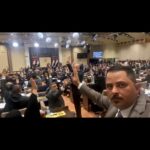
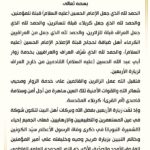
The exclusion of several candidates from the upcoming elections is the most dominant topic. Faig Alsheakh/My Word for History (Post Impact: 100%) points to the exclusion of Sajjad Salem, whom he calls an “icon of civility, integrity, and honesty,” as a reason for all “civil, nationalist Iraqis” to boycott the elections, claiming those who still run are following orders from the Iranian Revolutionary Guard. Mulla Abood AlKarkhi (Post Impact: 27%) echoes this, stating Faig Alsheakh has now launched a national campaign to boycott the elections in retaliation for Sajjad Salem’s exclusion. Candidate Rusly Al-Maliki (Post Impact: 41%) announces his own disqualification, sarcastically stating it was for “insulting Dothraki personalities.” Mashan al-Jabouri (Post Impact: 13%) condemns the exclusion of a “brave civil voice like Sajjad Salem” and warns that the political system is becoming totalitarian.
2. Outcry Over Arrest of Critic Muhammad Na’naa
The arrest of Dr. Muhammad Na’naa has generated significant backlash, with users questioning the state of free speech in Iraq. Adnan Al-Taie (Post Impact: 95%) shares a picture of Na’naa, stating he “does not deserve what is happening to him” and questioning if imprisonment is the fate of anyone who speaks out. He asks, “Do you want to prevent speech??” Safaa Al-Asadi (Post Impact: 16%) also demands his freedom, asking “For what sin was he imprisoned?” under the hashtag #اصوات_الحق_لا_تكمم (Voices of truth are not silenced). Meanwhile, Zaidon Samir (Post Impact: 12%) reports that MP Mustafa Sanad has dropped his complaint against Na’naa following a reconciliation initiative led by political figures.
3. Faig Alsheakh Criticizes Hezbollah Leader Naim Qassem
Political commentator Faig Alsheakh heavily criticized statements by Hezbollah’s Deputy Secretary-General, Sheikh Naim Qassem. In one post, Faig Alsheakh/My Word for History (Post Impact: 77%) points out that Qassem admitted Israel now occupies seven points in Lebanon, not five or six, and urges Arab media to correct their news. In another highly critical post, he quotes Qassem as saying, “(Resistance does not prevent aggression, وإنما المقاومة تواجه العدوان) ‘Resistance does not prevent aggression, but rather confronts it’,” and responds with a vulgar dismissal, arguing there is no aggression and that such “resistance” only brings suffering to families while leaders “play with billions!” In contrast, Haidar (Post Impact: 21%) reports Qassem’s claim that without the resistance, Israel would have reached Beirut.
4. Iraq Demands Release of Detainees from Saudi Arabia
There is significant online discussion about Iraqis detained in Saudi Arabia. Haidar (Post Impact: 59%) reports that Iraq has formally sent a letter to Saudi Arabia demanding the release of young Iraqis who were allegedly “kidnapped by Al Saud militias.” The case of Major Asaad Hamid Shabaj Al-Harishawi is highlighted by Wasan Al-Shaikhli (Post Impact: 49%), who calls his five-and-a-half-year imprisonment a “scandal.” She notes he is an officer who fought against ISIS and was arrested during an Umrah pilgrimage because of photos on his personal phone. Abu Drandesh Alaskree (Post Impact: 9%) also shares details of the Major’s case, directing his message to the “separatist foreign minister and his cowardly government.”
5. Praising Qasem Soleimani as a Shia Leader
Several accounts are commemorating the late Iranian general Qasem Soleimani. With high engagement, Dr. Hussein Al-Safi (Post Impact: 70%) posted a tribute to Soleimani, referring to him by his title “Knight of Kerman” and quoting his famous words, “I will not allow Baghdad to fall.” The post describes Soleimani as the “greatest Shia leader in the modern era.” Similarly, Wasan Al-Shaikhli (Post Impact: 11%) posted a picture of Soleimani with the caption, “Peace be upon Soleimani whenever the voice of the cowards rises.”
6. Warnings of Imminent Military Action in Iraq
A narrative of impending military conflict is being pushed by several commentators. Omar Abdul Sattar Mahmoud (Post Impact: 32%) claims to have “dangerous information” that, if true, suggests Iraq could witness “major military movements (in the form of surgical strikes) in the near future.” In a follow-up video post, he reiterates that “military action against Iraq is imminent.” Mustafa Aldulaimi (Post Impact: 19%) sarcastically criticizes this narrative, noting that the prediction of a “US-Israeli ground military operation to occupy Iraq” comes from someone whose specialty is “pediatrics,” remarking on the “mentalities that rule the country.”
7. Controversy Over New US Diplomat Joshua Harris
The appointment of Joshua Harris as the new acting head of the US embassy in Iraq is causing a stir. Mahdi Majeed (Post Impact: 35%) describes Harris as “of Jewish origin and a Zionist who supports Netanyahu to destroy Iran and its tails in the Arab world.” He challenges “Iran’s tails in Iraq” to prevent him from working, questioning their manhood. Raad Hashim (Post Impact: 12%) refers to Harris as “America’s new man in Iraq” but dismisses the idea that his presence will change anything, rhetorically asking what will happen if he knows Iraq well and answering, “Nothing.”
8. Nechirvan Barzani Describes Baghdad as “Our Capital”
Statements from Kurdistan Region President Nechirvan Barzani are being shared and discussed. Haidar (Post Impact: 33%) reports Barzani’s comments about his intention to visit Baghdad soon to discuss salaries. Barzani is quoted as saying, “The Kurdistan Region is part of Iraq, and Baghdad is our capital, and I will go to Baghdad at any time.” The statement is also highlighted by Dr. Zaid Abdulwahab Al-Adhami (Post Impact: 9%), who simply posted the quote, “Nechirvan Barzani: Baghdad is our capital.”
9. Debate on Soleimani’s Legacy and Sectarianism
A heated online exchange reveals deep sectarian divisions over the legacy of Qasem Soleimani. Both Hiba Alnnaayib (Post Impact: 28%) and Zina Al Saab (Post Impact: 11%) shared a clip of a debate where Sheikh Raad Al-Suleiman confronts Imad Al-Musafir. Al-Suleiman demands that Al-Musafir condemn Al-Jolani as a criminal, but when Al-Musafir deflects and praises Soleimani, Al-Suleiman retorts that “Soleimani is the one who killed the Sunnis,” and proceeds to curse him. The exchange highlights the opposing views on Soleimani’s role in Iraq, with some viewing him as a hero and others as a sectarian killer.
10. Calls to Pass Popular Mobilization Forces Law
The legislation concerning the Popular Mobilization Forces (PMF), or Hashd al-Sha’abi, is a point of contention. Several accounts, including Zina Al Saab (Post Impact: 14%), are demanding that the majority in parliament pass the PMF law. Mohammad Jabbar (Post Impact: 20%) states that passing the law requires “tough men like the Sadrist MPs.” Conversely, Najeh Abbas Al-Mizan (Post Impact: 23%) accuses politicians of breaking the quorum to avoid the vote, suggesting it’s a way to evade angering the US. He refers to Nouri al-Maliki’s past description of them as a “nation of cowards.” Hiba Alnnaayib (Post Impact: 15%) mocks this, saying the “nation of cowards are afraid to approve the Hashd law.”