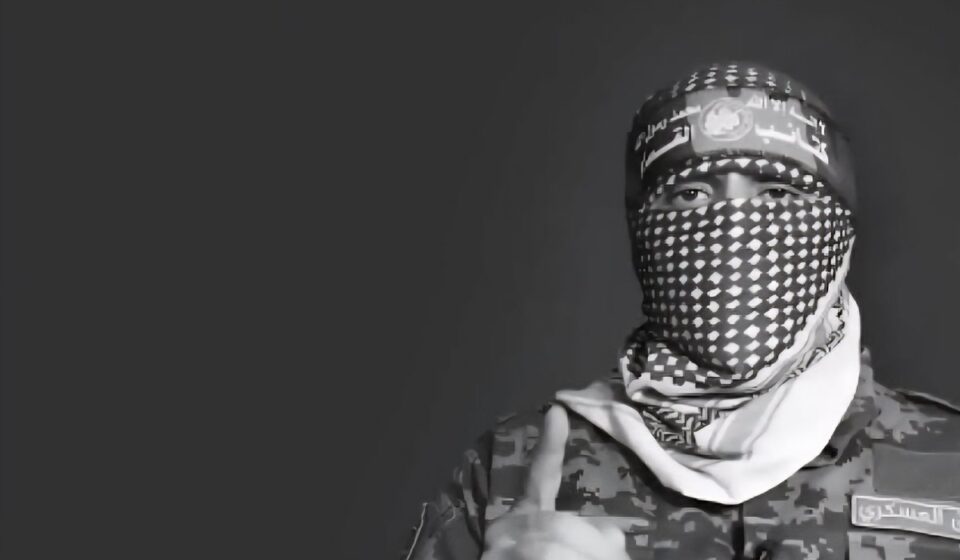
2025-08-31: Assassination of Hamas Spokesman Abu Obeida

Based on an analysis of 494 X / Twitter posts by Miqrab AI, the primary narratives trending in Iraq on August 31, 2025, revolve around major regional escalations, particularly the reported assassinations of Hamas spokesman Abu Obeida and the Houthi government leadership in Yemen. These events have triggered a wide spectrum of reactions, from mourning and praise for the “martyrs” of the resistance to sharp criticism of the “Axis of Resistance” for its perceived failures and vulnerability to Israeli intelligence. Discussions are heavily tinged with sectarian undertones, contrasting Shia and Sunni reactions, and feature commentary on the perceived hypocrisy of various regional actors. Alongside these geopolitical events, domestic topics such as the launch of a new national 5G telecommunications company and debates over sectarian personal status laws also garnered significant attention.
Table Of Content
- 1. Assassination of Hamas Spokesman Abu Obeida
- 2. Assassination of Houthi Government in Yemen
- 3. Critique of the “Axis of Resistance” and Iraqi Militias
- 4. Sectarian Narratives in Response to Assassinations
- 5. Allegations of Israeli Intelligence Infiltration
- 6. Israel’s Regional Escalation and Netanyahu’s Threats
- 7. Launch of National 5G Telecom Company in Iraq
- 8. Former PM Adel Abdul Mahdi’s Message to Houthis
- 9. Debate Over Sectarian Personal Status Laws
- 10. Criticism of Egyptian Cleric Al-Sha’rawi’s Statements
Today’s Top 10 X (Twitter) Trends in Iraq:
1. Assassination of Hamas Spokesman Abu Obeida
The reported assassination of Abu Obeida, the masked spokesman for Hamas’s Al-Qassam Brigades, dominated Iraqi social media. Israel officially announced the killing, as reported by accounts like Haidar (Post Impact: 35%). Reactions were deeply divided. Issam Hussein (Post Impact: 100%) noted reading hundreds of Shia tweets mourning Abu Obeida and praying for his safety, highlighting his status as a “Sunni mujahid who fights the Zionists.” Others, such as Mulla Aboud Al-Karkhi (Post Impact: 49%), questioned the narrative of martyrdom, asking sarcastically, “Why didn’t you choose victory and leave martyrdom and death to Israel, what is this stupidity?” Meanwhile, Mahdi Majeed (Post Impact: 56%) criticized the praise for Abu Obeida, pointing out that he openly thanked Iran, a country he claims has destroyed Arab nations, and called the Arab public’s sadness an example of “strange and wonderful hypocrisy and duality.” Rusly Al-Maliki (Post Impact: 67%) simply posted an image of Abu Obeida with the caption, “His martyrdom is confirmed..”
2. Assassination of Houthi Government in Yemen
A second major event driving conversation was the assassination of nearly the entire Houthi government in Yemen by an Israeli airstrike. Omar Abdul Sattar Mahmoud (Post Impact: 10%) listed the names of the killed officials, including the prime minister and various ministers. The attack was framed as a massive intelligence failure for the “Axis of Resistance.” Aayad Al-Twfan (Post Impact: 31%) analyzed the event, suggesting it demonstrated “very significant activity by the Israeli Mossad on the ground and a major breach in the Houthi presidential leadership.” Similarly, Sufian Al-Samarrai (Post Impact: 50%) claimed Mossad deceived the Houthi leaders into gathering in one house. Najeh Abbas Al-Mizan (Post Impact: 39%) mocked the silence from the Iraqi government and its aligned factions, asking, “Where is the unity of the fronts? Where is the axis? Where is the resistance?”
3. Critique of the “Axis of Resistance” and Iraqi Militias
The assassinations in Gaza and Yemen fueled intense criticism of the broader Iran-led “Axis of Resistance” and its associated Iraqi militias. Mahdi Majeed (Post Impact: 91%) described the Shia resistance axis as “stupid to the utmost degree” for being infiltrated, suggesting they were compromised by figures like American personality Jackson Hinkle. Faiq Al-Sheikh Ali/My Word for History (Post Impact: 68%) issued a sarcastic “billion-dollar piece of advice” to the militias, noting that their usual response of threats and accusations has proven useless. He challenged them directly: “..use the battlefield, and show us what you will do to Israel.” Steven Nabil (Post Impact: 19%) stated that the condemnation-filled statements from faction leaders confirm that the so-called “‘unity of fronts’ does not exist.”
4. Sectarian Narratives in Response to Assassinations
The reactions to the assassinations were often framed through a sectarian lens. Issam Hussein (Post Impact: 100%) drew a sharp contrast between what he termed “Shia Islam,” which mourns the Sunni Abu Obeida, and “Takfiri, Ba’athist, and sectarian groups” who, he claims, wish for the death of Shia fighters. He concluded that this shows the difference between the legacy of Ali, which fosters life and dignity, and that of Muawiyah, which brings only death and betrayal. Conversely, Abu Drandish Al-Askari (Post Impact: 35%) accused Sunni figure Adai Al-Ghurairi of inciting the Sunni street with “lies and racism against Shiites without any action from the government.” These posts illustrate how regional conflicts are often interpreted and debated along sectarian lines within Iraq.
5. Allegations of Israeli Intelligence Infiltration
A prominent narrative suggested that recent assassinations were the result of successful infiltration by Israeli intelligence. Mahdi Majeed (Post Impact: 91%) claimed that American influencer Jackson Hinkle was an asset who met with Houthi and Iraqi leaders, after which they were killed, questioning how the US allows him to meet with designated terrorists without consequence. Related to Abu Obeida, Sufian Al-Samarrai (Post Impact: 36%) alleged that Mossad and Shin Bet tricked the Hamas spokesman into a trap by luring him to a location to film a video with fake Israeli prisoners. Aayad Al-Twfan (Post Impact: 31%) also pointed to a massive intelligence breach within the Houthi leadership as the only explanation for the precise strike that wiped out their government.
6. Israel’s Regional Escalation and Netanyahu’s Threats
Multiple accounts aggregated recent Israeli military actions into a narrative of a major, widening regional conflict. Rusly Al-Maliki (Post Impact: 27%) provided a summary of developments, including Israel’s ground invasion of Gaza, the strike on the Houthi government, attacks in Lebanon, and plans for settlements in Syria, concluding that these are signals ahead of “The great confrontation, Tel Aviv versus Tehran.” This was echoed in posts from Sufian Al-Samarrai (Post Impact: 27%), who shared a video of Prime Minister Netanyahu stating, “we have done miracles,” and promising to reach the Houthi leadership next. Haidar (Post Impact: 13%) also quoted Netanyahu boasting about targeting Hamas, the Houthis, and Hezbollah.
7. Launch of National 5G Telecom Company in Iraq
Amid the regional turmoil, a significant domestic development gained traction: the announcement of a new state-owned telecommunications company. ahmedmeckya (Post Impact: 42%) reported that Prime Minister Al-Sudani sponsored the birth of the “National Mobile Phone Company,” which promises to radically change service in Iraq by offering 5G and ending the “monopoly of poor services.” Haidar (Post Impact: 23%) also covered the announcement, noting that the new company will be established in cooperation with the global telecommunications company Vodafone. The news was met with optimistic headlines like “Bye bye Zain, Bye bye Asiacell.”
8. Former PM Adel Abdul Mahdi’s Message to Houthis
Former Iraqi Prime Minister Adel Abdul Mahdi publicly commented on the killing of the Houthi government, offering a message of defiance. Shaho Al-Qaradaghi (Post Impact: 13%) quoted a message from Abdul Mahdi to Houthi leader Abdul-Malik al-Houthi, which stated, “We are not defeated, when we win we win, and when we are martyred we win.” Adel Abdul Mahdi‘s own account (Post Impact: 38%) posted an image with this quote, signaling solidarity with the Houthi movement and the broader “Axis of Resistance” in the face of the Israeli strike. His statement was framed as an articulation of the axis’s ideology of victory through martyrdom.
9. Debate Over Sectarian Personal Status Laws
Domestic political debate surfaced regarding sectarian personal status laws. Muna Sami (Post Impact: 9%) and Adnan Al-Taie (Post Impact: 15%) both referenced the “Ja’fari Code,” indicating it was a topic of media discussion. Reacting to this, Mashaan Al-Jubouri (Post Impact: 9%) criticized calls for a parallel “Sunni code,” arguing it would be a mistake that would “link society to clerics and entrench the sectarianism of the state.” He asserted that the majority of Sunnis believe in the state’s civil laws and do not accept the guardianship of jurists, warning that such legislation would drag Iraq further into the “abyss of sectarianism.”
10. Criticism of Egyptian Cleric Al-Sha’rawi’s Statements
A video clip of the late Egyptian cleric Mohamed Metwali Al-Sha’rawi sparked controversy and condemnation. Sufian Al-Samarrai (Post Impact: 57%) shared the clip, in which Al-Sha’rawi appears to justify sexual relations with female servants as a way to achieve “sexual justice.” Al-Samarrai strongly criticized this viewpoint, describing it as emerging from a “carnal, animalistic mentality” and a “mockery in the name of religion.” The high engagement on this post indicates that discussions about the legacy and interpretations of prominent religious figures remain a sensitive and debated topic among Iraqi social media users.