2025-09-03: Nostalgia for Past Military Leadership

Based on an analysis of 498 X / Twitter posts trending on September 3, 2025, Miqrab AI identified several key narratives dominating Iraqi online discourse. The most prominent themes included a strong sense of nostalgia for the perceived strength and integrity of Iraq’s former Ba’athist military leadership, contrasted with current regional conflicts. Alongside this, a powerful cultural and religious trend emerged celebrating the “Zainabi Abaya” as a symbol of chastity and identity. There was also significant public anger and criticism directed at the government over its failure to pay retiree salaries and its mismanagement of urban development projects. Concurrently, discussions around rising sectarian rhetoric, particularly concerning comments attributed to politician Khamis al-Khanjar, highlighted deep political polarization. Debates also intensified over the role of media personalities like Ahmed Al-Bashir in shaping the opposition, alongside ongoing commentary on military operations and the strategic positioning of the “Resistance Axis.”
Table Of Content
- 1. Nostalgia for Past Military Leadership
- 2. Praise for the “Zainabi Abaya”
- 3. Outcry Over Delayed Retiree Salaries
- 4. Sectarian Tensions and “Rabble-Rousers” Controversy
- 5. Debate Surrounds Ahmed Al-Bashir’s Political Role
- 6. “Resistance Axis” Concessions Criticized
- 7. Military Displays and Operations in Wadi Huran
- 8. Prophet Muhammad’s Birthday Celebrated
- 9. Urban Destruction and Environmental Concerns
- 10. New AI and Excellence Colleges Inaugurated
Today’s Top 10 X (Twitter) Trends in Iraq:
1. Nostalgia for Past Military Leadership
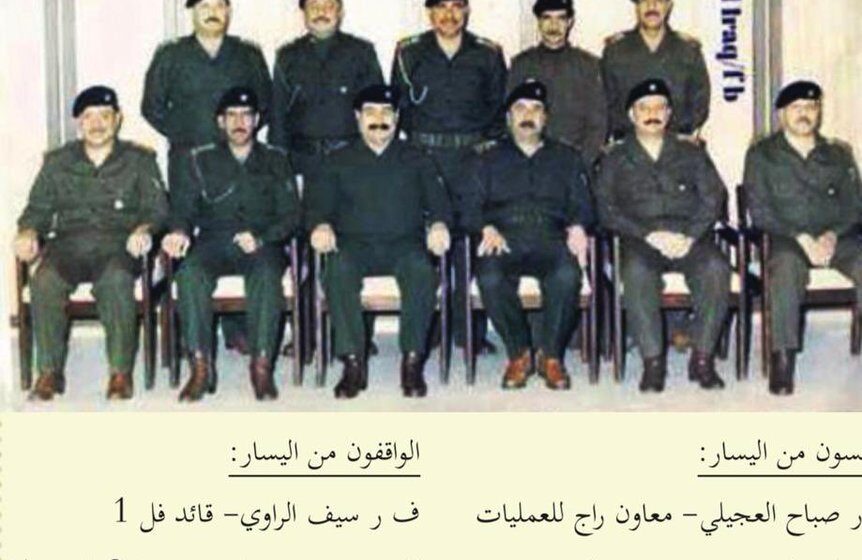
A highly engaged narrative on Iraqi X / Twitter expresses nostalgia and pride for the military leadership under the former Ba’athist regime. Aayad Al Twfan – أعياد الطوفان (Post Impact: 100%) shared photos of former military commanders, stating, “These are my leaders, bring me the likes of them if you can.” The account boasts that during the Iran-Iraq War and the 1991 and 2003 invasions, no high-ranking Iraqi commanders were killed or command centers destroyed, because “we did not know in our military dictionary or our morals something called ‘treason’ and ‘collaboration’.” This is contrasted with the recent killing of commanders in Iran, Lebanon, and Yemen. In a similar vein, Iyad Al-Dulaimi – إياد الدليمي (Post Impact: 13%) reflects on the sacrifices of the “martyrs of the Iraqi resistance” after the U.S. invasion, expressing bitterness that those who were “servants of the occupier” now rule the country.
2. Praise for the “Zainabi Abaya”
A significant cultural and religious trend celebrated the Abaya, a traditional Islamic cloak, as a symbol of modesty and identity. The hashtag #العباءة_الزينبية (The_Zainabi_Abaya) trended widely. Ahmed Al-Thawaq – احمد الذواق (Post Impact: 97%) shared a popular image with the simple caption, “The Zainabi Abaya ❤️.” Similarly, Emad Al Musafir – عماد آل مسافر (Post Impact: 66%) posted a picture of women in abayas with the comment, “When chastity rises on the shoulders of the world.” Dr. Hussein Al-Safi – د.حسين الصافي (Post Impact: 59%) contributed by sharing an image of a woman wearing the abaya in a Western setting, giving it two titles: “The world is not America” and “The Zainabi Abaya.”
3. Outcry Over Delayed Retiree Salaries
There is growing anger over the government’s inability to pay pensions, which multiple accounts attribute to mismanagement and corruption rather than a lack of funds. Omar Abdul Sattar Mahmoud – عمر عبد الستار محمود (Post Impact: 40%) made the direct claim that “The Iraqi government is unable to pay the salaries of retirees.” Providing a more detailed explanation, sh.j.Al-adhami – شامل الأعظمي🇮🇶 (Post Impact: 34%) alleges that the real reason for the delay is Prime Minister Al-Sudani’s “arbitrary, unjust, and suspicious” decision to dissolve the Iraqi employee pension fund, a claim he supports with a document from the official Iraqi gazette. Rusly Al-Maliki – رسلي المالكي (Post Impact: 28%) framed the issue as a systemic failure, arguing that the policy of mass government hiring, started by Nouri al-Maliki to secure votes, has now become the very thing that could cause the system to collapse.
4. Sectarian Tensions and “Rabble-Rousers” Controversy
Political rhetoric has taken a sectarian turn following alleged comments by Sunni politician Khamis al-Khanjar describing Shiites as “rabble-rousers” (ghawgha’iyin). The term has been defiantly co-opted by some Shiite accounts. Emad Al Musafir – عماد آل مسافر (Post Impact: 85%) posted an image with the caption “Rabble-rousers, and we like it that way 😎😎.” Meanwhile, Haidar – حيدر (Post Impact: 30%) reported on the continued “popular anger” and the filing of lawsuits against al-Khanjar over his statement. On the other side of the sectarian discourse, Mahdi Majeed – مهدي مجيد (Post Impact: 47%) questioned why some Shiites “provoke” Sunnis in their areas by cursing historical Islamic figures, arguing that religious leaders should teach coexistence instead of “immorality and rudeness.”
5. Debate Surrounds Ahmed Al-Bashir’s Political Role
Prominent satirist and TV host Ahmed Al-Bashir is at the center of a debate regarding his influence and alleged shift in political stance. Mazen Al-Zaidi – مازن الزيدي (Post Impact: 69%) argues that opposition figures who once used Al-Bashir’s platform to gain credibility have now been exposed by him as collaborators with “corrupt forces.” Al-Zaidi calls on Al-Bashir to be more assertive in his criticism. In contrast, Ahmad Abdulsada – احمد عبد السادة (Post Impact: 18%) views Al-Bashir’s recent moderate tone as a paid performance, suggesting he was “hired by a government party” to promote a specific narrative ahead of the elections, possibly in support of Prime Minister Al-Sudani. Others, like Ahmed Alwishah – احمد الوشاح (Post Impact: 27%), continue to see him as a “brave voice against corruption and militias” who should be supported by all opponents of the current system.
6. “Resistance Axis” Concessions Criticized
The political strategies of the “Resistance Axis” are being scrutinized, with some commentators claiming its leaders have compromised on key principles. Sajad Salem – سجاد سالم (Post Impact: 74%) asserts that the “Resistance Axis” conceded on passing the Hashd (PMF) law in a bid for a friendship with the United States that he believes will never materialize. He dismisses the justifications for this move as “pathetic slogans marketed to simple people,” arguing that holding onto the wrong slogans at the wrong time harms the country. Relatedly, David Yassin (Post Impact: 37%) predicts an imminent Israeli military operation against Houthi forces in Yemen, describing it as a strike designed to “break the leadership structure and begin dismantling the Yemeni arm” of the resistance.
7. Military Displays and Operations in Wadi Huran
Several accounts focused on showcasing the capabilities and recent activities of Iraqi security forces. Abu Darandash Al-Askari – ابو درندش العسكري (Post Impact: 93%) shared a video of a military parade, claiming it was not just for show but was “the announcement of new types of missiles.” The same account posted multiple videos of recent operations, including Iraqi Army forces raising the flag in Wadi Huran (Post Impact: 30%) and PMF paratroopers conducting an airdrop in the same region (Post Impact: 30%). Wesam Aziz – وسام عزيز (Post Impact: 24%) also shared videos of the military operations in Wadi Huran, referring to the action as “sacred trampling.”
8. Prophet Muhammad’s Birthday Celebrated
The birthday of the Prophet Muhammad was a major topic of discussion, with posts ranging from celebratory greetings to historical and political commentary. Raghad Saddam Hussein – رغد صدام حسين (Post Impact: 48%) sent congratulations and prayed for God to “protect Iraq and its people, and grant victory to our steadfast brothers in Palestine.” Haidar – حيدر (Post Impact: 39%) shared a video showing celebrations in the Adhamiya district of Baghdad as part of the city’s heritage. In a lengthy post, Rusly Al-Maliki – رسلي المالكي (Post Impact: 56%) narrated the story of the Prophet’s birth, linking it to the historical fall of the Persian Sassanian Empire and predicting the downfall of its modern successors, stating, “if Kisra dies, there is no Kisra after him.”
9. Urban Destruction and Environmental Concerns
Users expressed frustration over urban and environmental mismanagement in major Iraqi cities. Rusly Al-Maliki – رسلي المالكي (Post Impact: 69%) posted photos of Al-Rabiei Street in Baghdad’s Zayouna neighborhood, where trees and sidewalks were completely removed, labeling the act as the work of “rabble and savages.” This sentiment was echoed by A. D. Ghalib Al-Da’ami – أ. د غالب الدعمي (Post Impact: 15%), who noted that the post-2003 regime seems to hate the color green, turning green areas into barren land. Separately, Haidar – حيدر (Post Impact: 16%) reported that the Basra Provincial Council voted to build a dam on the Shatt al-Arab, a move intended to stop saltwater intrusion but which would also cut off fresh water from historic palm groves from Al-Ashar to Abu Al-Khasib and Al-Faw.
10. New AI and Excellence Colleges Inaugurated
In a development focused on education and technology, Minister of Higher Education Naeim Al-Aboudi announced a new government initiative. In a post from his official account, Naeim Al-Aboudi – نعيم العبودي (Post Impact: 59%) celebrated the opening of the Colleges of Excellence and Artificial Intelligence at the University of Baghdad. He stated that this step places a “new building block in the path of higher education” and paves the way for Iraqi universities to become part of the knowledge economy. The goal, he added, is to create a “new generation that carries the message of excellence and leads the future.”