2025-09-18: Saudi Arabia-Pakistan Defense Pact Signals Regional Shift

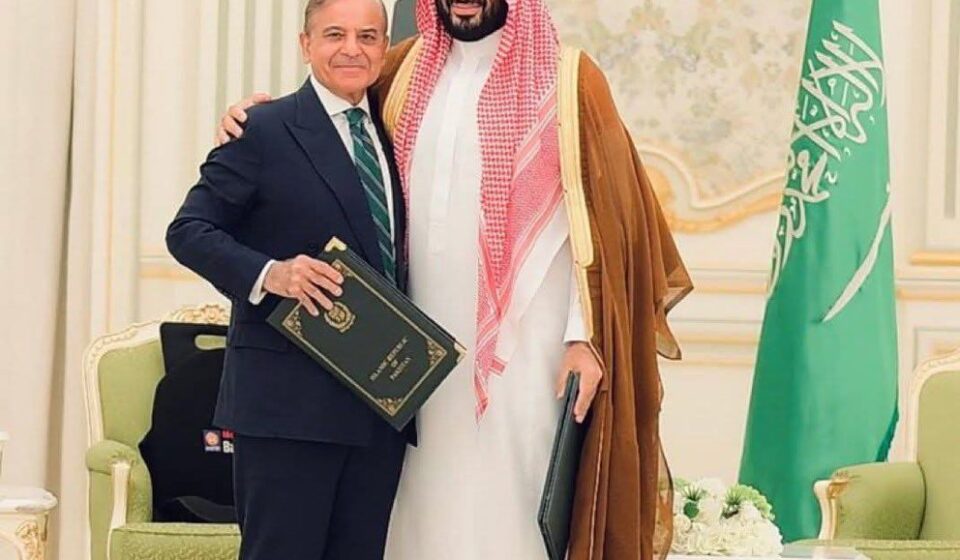
Based on an analysis of 467 X / Twitter posts by Miqrab AI on September 18, 2025, the dominant narrative in Iraq revolves around significant regional geopolitical shifts and domestic political turmoil. The most engaging topic was the new Saudi-Pakistani defense pact, widely interpreted as Saudi Arabia securing a nuclear deterrent and signaling a move away from reliance on the United States. Domestically, conversations focused on political purges and accountability, including the government’s legal action against pro-Iran commentator Salam Adel, the electoral exclusion of politician Yazan al-Jubouri over corruption allegations, and the dismissal of the Sunni Endowment head. These events fueled a broader debate about foreign influence, particularly from Iran, and the loyalty of Iraqi political actors. Other key themes included critiques of government corruption, religious debates used to frame regional conflicts, and concerns over the state of governance in southern Iraq.
Table Of Content
- 1. Saudi Arabia-Pakistan Defense Pact Signals Regional Shift
- 2. Government Action Against Pro-Iran Commentator Salam Adel
- 3. Exclusion of Yazan Al-Jubouri from Elections Over Leaked Audio
- 4. Debate Over Iranian Influence and Sectarian Loyalty
- 5. Dismissal of Sunni Endowment Head Mishaan Al-Khazraji
- 6. Historical and Religious Debates Framing Regional Conflicts
- 7. Allegations of Corruption and Nepotism in Politics
- 8. Iraq’s Balancing Act Between Global and Regional Powers
- 9. Critique of Governance in Southern Shiite-Majority Provinces
- 10. Story of a Martyr’s Piety Amidst Conflict
Today’s Top 10 X (Twitter) Trends in Iraq:
1. Saudi Arabia-Pakistan Defense Pact Signals Regional Shift
The mutual defense agreement between Saudi Arabia and Pakistan dominated online discussion, with many commentators viewing it as a pivotal geopolitical development. Rusly Al-Maliki (Post Impact: 100%) declared, “Saudi Arabia is a nuclear state,” arguing the pact means Pakistan’s nuclear bomb, which he claims was developed with Saudi help, now protects Riyadh. Multiple accounts linked the agreement to diminishing trust in the US as a reliable security partner. ZaidBenjamin (Post Impact: 10%), citing CNN, noted the timing, coming just a week after an Israeli attack on Qatar, suggests Riyadh is looking beyond Washington for its defense. Similarly, Ezzat Alshabandar (Post Impact: 10%) called it the “first step in the region’s loss of trust in the United States.” Analysts like Salim Al-Jamili (Post Impact: 9%) and Omar Abd Al Sattar Mahmoud (Post Impact: 28%) emphasized that the deal provides Saudi Arabia with a nuclear deterrent and strengthens its military-industrial capabilities.
2. Government Action Against Pro-Iran Commentator Salam Adel
A significant topic was Prime Minister Al-Sudani’s directive to take legal action against commentator Salam Adel for remarks deemed a threat to national security. According to Shaho Al-Qaradaghi (Post Impact: 10%) and Yasser Eljuboori (Post Impact: 5%), the move was prompted by Adel’s controversial statements suggesting Iranian military intervention in Iraq if Shiite rule were threatened. Adel’s reaction drew further attention, as he appeared on television afterward wearing a yellow suit, an act interpreted as defiance by accounts like Hiba Al-Naiib (Post Impact: 9%) and Tamara Alkhazraji (Post Impact: 6%). Many users, such as ahmedmeckya (Post Impact: 6%) and Sajad Al-Jubouri (Post Impact: 3%), supported the government’s decision, viewing Adel’s comments as incitement and a betrayal of national sovereignty.
3. Exclusion of Yazan Al-Jubouri from Elections Over Leaked Audio
The decision by Iraq’s electoral judiciary to disqualify candidate Yazan Mashaan al-Jubouri was widely reported and analyzed. The exclusion was based on the authentication of a leaked audio recording in which he allegedly solicited a bribe, as reported by Hisham Ali (Post Impact: 9%) and Ahmed Abdul Sada (Post Impact: 6%). The latter framed the decision as preventing the “inheritance” of corruption. Othman Al-Mukhtar (Post Impact: 11%) placed the event in a broader context, comparing Yazan’s fate to that of other Sunni politicians allegedly used and then discarded by powerful militias. In response, Yazan’s father, Mashaan Al-Jubouri (Post Impact: 8%), issued a statement vowing that their “voice will not be silenced.”
4. Debate Over Iranian Influence and Sectarian Loyalty
A recurring theme was the intense debate surrounding Iranian influence in Iraq and the nature of national versus sectarian loyalty. Aayad Al Twfan (Post Impact: 14%) strongly criticized Iraqis who appeal to Iran for support, stating, “He who sold his homeland to Iran… is like one who wears two faces.” This sentiment was echoed by Shaho Al-Qaradaghi (Post Impact: 12%), who questioned why media personalities close to pro-Iran militias often produce “vulgar content” instead of engaging in rational discourse. Conversely, a pro-Iran viewpoint was shared by Wesam Aziz (Post Impact: 10%), who posted a quote advocating for supporting the “Iranian presence in the region to create a Shiite empire to stand against the project of Greater Israel.”
5. Dismissal of Sunni Endowment Head Mishaan Al-Khazraji
The dismissal of Mishaan al-Khazraji, the head of the Sunni Endowment Diwan, by Prime Minister Al-Sudani sparked considerable commentary. Several accounts framed this as a political blow against the powerful Asa’ib Ahl al-Haq militia, led by Qais Khazali. Hiba Al-Naiib (Post Impact: 9%) and Othman Al-Mukhtar (Post Impact: 7%) both interpreted the move this way, with the latter accusing Khazraji of directing endowment contracts and investments to Khazali. The decision was met with approval from commentators like Mustafa Al-Dulaimi (Post Impact: 4%), who celebrated the “purging” of the endowment and called for Khazraji’s prosecution for corruption. The official reason for the dismissal, according to Dr. Zaid Abdulwahab Al-Azami (Post Impact: 3%), was a recommendation from the Iraqi Fiqh Council of Senior Scholars.
6. Historical and Religious Debates Framing Regional Conflicts
Discussions also delved into historical and religious arguments to justify contemporary political stances, particularly concerning regional conflicts. Issam Hussein (Post Impact: 22%) defended Hezbollah’s Hassan Nasrallah against takfiri accusations, drawing a parallel between the historical conflict of Ali vs. Muawiyah and Nasrallah’s current fight against groups he claims are backed by Zionism and American capitalism. He argued that accusations against Nasrallah for insulting the Prophet’s companions are a tool used against anyone who resists Israel. On the other side of the regional ideological spectrum, Sufian Al-Samarrai (Post Impact: 10%) argued against the historical basis of the Palestinian cause, calling it a “forged, criminal, and imaginary issue” used to incite conflict and stating there is no archaeological evidence for a Palestinian presence in the land of Israel.
7. Allegations of Corruption and Nepotism in Politics
Users expressed frustration over perceived corruption and questionable appointments within the Iraqi government. Mohammad Jabbar (Post Impact: 12%) shared a video highlighting the immense wealth of politician Rayan Al-Kildani, including a $10 million palace, sarcastically calling him a “model of the honorable citizen!” The appointment and political candidacy of Ethar Saeed, a former Tishreen protest activist, also drew scrutiny. Dr. Qusay Shafiq (Post Impact: 10%) questioned how someone so young could become an advisor in the Prime Minister’s office and then a candidate for the Al-Hasm Alliance, implying a lack of experience and raising questions about her rapid political ascent.
8. Iraq’s Balancing Act Between Global and Regional Powers
Iraq’s complex foreign policy and its position between competing global and regional powers were a key topic of discussion. Haidar (Post Impact: 9%) reported on the US State Department’s reaction to the visit of Russian Security Council Secretary Sergey Shoygu to Baghdad. The US warned of potential sanctions under the CAATSA law and stressed that it should be Iraq’s “partner of choice.” In another post, Haidar (Post Impact: 8%) highlighted a joint Iraqi-French military exercise involving Rafale and F-16 jets, noting that Iraq is in advanced talks to purchase the French aircraft amidst what he described as Israeli pressure to block the deal. These posts underscore Iraq’s efforts to navigate its strategic partnerships with Russia, France, and the United States while managing regional tensions.
9. Critique of Governance in Southern Shiite-Majority Provinces
A highly engaged post from Mujtahid al-Iraq (Post Impact: 64%) offered a sharp critique of the state of governance in Iraq’s Shiite-majority south. The post featured a video of a young woman, described as a model, posing for photos against a backdrop of urban decay in the city of Diwaniyah, which the user notes is the best background she could find. The account used this visual to argue that Shiite political leadership has failed, stating, “The Shiites are for lamentation, not for governance.” The post also criticized comments made by Salam Adel, an advisor to the Prime Minister, regarding potential Iranian intervention to protect “Shiite governance,” tying the critique of local failure to broader concerns about foreign dependency.
10. Story of a Martyr’s Piety Amidst Conflict
A story celebrating the piety and character of a fallen fighter, identified as Martyr Commander Mohammed Rasheed Skafi (Hajj Musab), resonated widely. Wesam Aziz (Post Impact: 47%) recounted an anecdote where the commander, mortally wounded by a pager bomb explosion and bleeding profusely in the back of a car rushing to the hospital, insisted that his companions record the license plates of cars they accidentally hit along the way. Despite his grave condition, his primary concern was to find and compensate the owners of the other vehicles. The narrator adds, “What pained me was that he said this while his mouth was bleeding!”, presenting the story as a testament to the righteousness of “the people of God.”