2025-09-21: Sadrists Announce and Justify Election Boycott

Based on an analysis of (580) X / Twitter posts by Miqrab AI, the primary narratives trending in Iraq on September 21, 2025, revolve around the escalating political debate over the upcoming elections. The dominant story is the Sadrist movement’s detailed justification for boycotting the polls, which has sparked a counter-narrative from those advocating for participation to prevent a political vacuum. Alongside this domestic political friction, there is significant discussion of international affairs, including widespread praise for the recognition of Palestinian statehood by several Western nations and keen interest in the rising international profile of Syrian leader Ahmed al-Sharaa. Other key topics include concerns over freedom of expression following the banning of an author’s book, counter-terrorism operations, and commentary on the start of the new academic year.
Table Of Content
- 1. Sadrists Announce and Justify Election Boycott
- 2. International Recognition of Palestinian Statehood
- 3. Syrian Leader Ahmed al-Sharaa’s Global Engagement
- 4. Arguments for Participating in Elections
- 5. Banning of Author Rusly Al-Maliki’s Book
- 6. Start of the 2025-2026 Academic Year
- 7. Saudi Arabia Releases Detained Iraqi Youth
- 8. Counter-Terrorism Operations and Casualties
- 9. Discussions on Government Corruption and Failures
- 10. Praise for the Sadrist Movement’s Stance and Integrity
Today’s Top 10 X (Twitter) Trends in Iraq:
1. Sadrists Announce and Justify Election Boycott
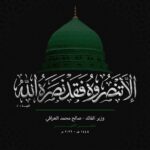
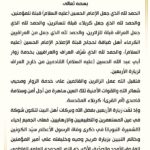
A highly influential statement from Wazir Al-Qaid – Saleh Mohammed Al-Iraqi (Post Impact: 100%), a mouthpiece for Muqtada al-Sadr, provided a detailed rationale for boycotting the upcoming elections. The statement argues that reform from within the political process has failed and that their absence is necessary to avoid “obstructing government formation, continuing disputes, burning hospitals and ballot boxes.” It questions how they could vote for those implicated in corruption, such as the one who “dismantled the Baiji refinery,” or for those whose leaked recordings allegedly revealed intentions to attack them. The post concludes that the only alternative to boycotting is a “(comprehensive reform) and changing the current faces.” This call to boycott was echoed by figures like Faig Alsheakh/Kalimati Lil Tarikh (Post Impact: 20%) who called for a sustained “#Boycott_the_elections” campaign. Analysts such as Mohammed Jabbar (Post Impact: 4%) and Salam Al-Husseini (Post Impact: 4%) interpreted the move as a calculated political strategy to redefine legitimacy outside of parliamentary seats.
2. International Recognition of Palestinian Statehood
A major topic of discussion was the formal recognition of a Palestinian state by several Western countries, including the UK, Canada, and Australia. Dr. Ihssan Al-Shamri (Post Impact: 25%) credited this development to the global diplomatic efforts of the Kingdom of Saudi Arabia. Laithaa Maki (Post Impact: 8%) described the recognition by Commonwealth countries as a “major qualitative development in favor of the rights of the Palestinian people,” especially given the UK’s historical role in the region. Other accounts, including Rusly Al-Maliki (Post Impact: 4%) and Rafid Jaboori (Post Impact: 3%), also shared the news, highlighting its historic significance.
3. Syrian Leader Ahmed al-Sharaa’s Global Engagement
The increasing international prominence of Syrian leader Ahmed al-Sharaa (formerly known as Abu Mohammad al-Jolani) garnered significant attention. Tamara Alkhazraji (Post Impact: 17%) praised his statement in an interview with “CBS” that he had removed Iranian militias and Hezbollah from the region, calling him a man of “word and deed.” Laithaa Maki (Post Impact: 12%) noted the great irony of his journey “from an American prison in Iraq to the United Nations platform.” Similarly, Dr. Qusay Shafiq (Post Impact: 11%) shared a photo of al-Sharaa in Washington, highlighting his newfound international access.
4. Arguments for Participating in Elections
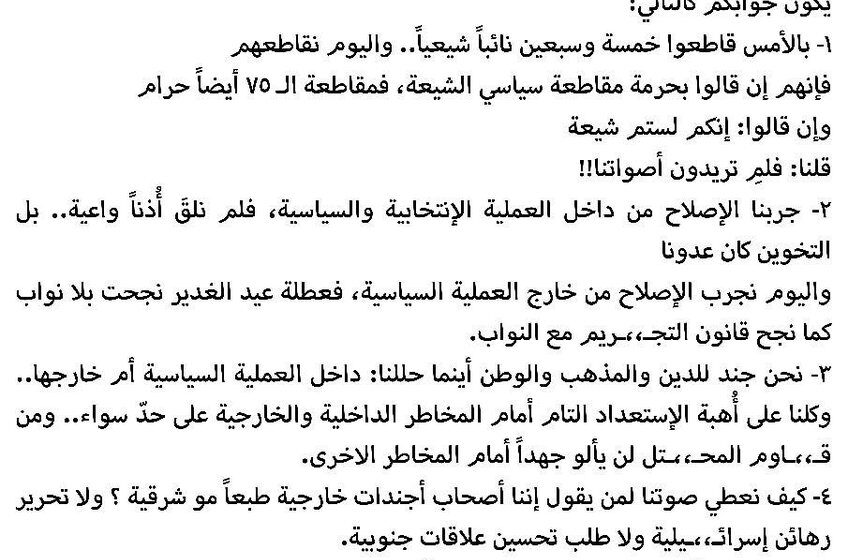
In response to the boycott calls, several accounts argued in favor of participating in the elections. Ahmad Abdulsada (Post Impact: 5%) reassured those worried about Shiite representation, stating that any seats vacated by boycotters will simply be filled by other Shiite candidates, as happened after the Sadrist withdrawal from parliament. Dr. Hussein Al-Safi (Post Impact: 7%) challenged the idea that there are no honest candidates, listing laws like the Ghadir holiday and the anti-normalization law as achievements of the current parliament. Dr. Ghalib Al-Daami (Post Impact: 10%) noted that God did not command him to elect the corrupt, but he also criticized the Sadrist withdrawal from parliament as a move that “helped expose” other parties.
5. Banning of Author Rusly Al-Maliki’s Book
Author Rusly Al-Maliki (Post Impact: 13%) announced that his book, “A Year of Decadence,” was banned from being displayed at a book fair without a judicial order. In a later post, he noted the irony of this happening on the same day as a celebration of “Democracy Day” was held. The news was also shared by Haider (Post Impact: 3%), who commented on the book’s sudden scarcity and subsequent value among collectors. Al-Maliki promised to release a video addressing the “arbitrary measures against freedom of expression in Iraq.”
6. Start of the 2025-2026 Academic Year
Several officials and public figures commented on the commencement of the new academic year in Iraq. Minister of Higher Education and Scientific Research Naeem Al-Aboudi (Post Impact: 11%) expressed confidence in universities to achieve their goals, emphasizing a strategy focused on quality, scientific research, and digital transformation. Political leader Ammar Al-Hakim (Post Impact: 5%) addressed students directly, stating, “You are the generation of the future, and there is no room for the country’s development except through you.” Masrour Barzani (Post Impact: 3%) also wished students in Kurdistan a happy new school year.
7. Saudi Arabia Releases Detained Iraqi Youth
Multiple accounts reported on the release of young Iraqis who had been detained by Saudi authorities. Haider (Post Impact: 9%) stated that the Saudi regime had freed the youths who were “kidnapped near the Grand Mosque in Mecca during their performance of the Umrah rituals.” Wasan Al-Shaikhli (Post Impact: 3%) also shared the news, suggesting that while the official reason was negotiations, the real cause was external pressure.
8. Counter-Terrorism Operations and Casualties
The ongoing fight against ISIS remnants was highlighted by official and unofficial sources. The Iraqi Counter-Terrorism Service (ICTS) (Post Impact: 7%) published a Quranic verse honoring martyrs who are “alive with their Lord, receiving provision,” suggesting recent losses. Providing more detail, Haider (Post Impact: 4%) shared preliminary reports of two ICTS members being killed and a third wounded after an ISIS hideout they were raiding in the Anbar desert was detonated.
9. Discussions on Government Corruption and Failures
Allegations of widespread government corruption and incompetence were a recurring theme. The Sadrist statement, amplified by Dr. Zaid Abdulwahab Al-Adhami (Post Impact: 3%) and analyzed by Mohammed Jabbar (Post Impact: 4%), used the unresolved case of the “dismantled Baiji refinery” as a symbol of systemic failure. In a separate discussion, Omar Abdul Sattar Mahmoud (Post Impact: 8%) cited a catastrophic claim from the Central Bank that there are 1.6 million “ghost employees” out of a total of 5 million on the government payroll, resulting in a massive waste of public funds.
10. Praise for the Sadrist Movement’s Stance and Integrity
Amid the political debates, some commentators expressed admiration for the principles of the Sadrist movement. Dr. Ghalib Al-Daami (Post Impact: 10%) stated that despite not always agreeing with their decisions, he “did not find the concept of lying in their dictionary, nor a place for treachery among their vocabulary.” This sentiment was shared by Azeez Sahib Alrubaye (Post Impact: 3%), who posted the concise praise, “The man is a word and Al-Sadr is a stance.”