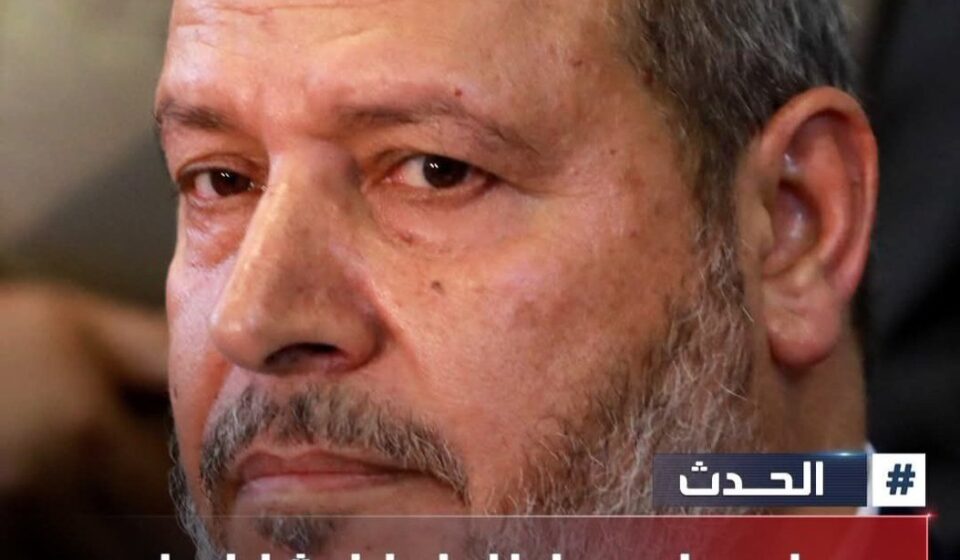
2025-10-12: Nouri al-Maliki’s State of Law Coalition Holds Major Election Rally

Based on an analysis of 257 X / Twitter posts trending on October 12, 2025, Miqrab AI found that the primary narratives in Iraq are dominated by the upcoming elections, significant regional diplomatic events, and internal political controversies. Discussions are heavily focused on the electoral campaigns of major political blocs, particularly a large rally by the State of Law coalition and widespread accusations of sectarian rhetoric being used by its candidates. Simultaneously, considerable attention is being given to former U.S. President Donald Trump’s visit to the region and a peace summit in Sharm El-Sheikh concerning the situation in Gaza. These major events are complemented by domestic debates over Kurdistan’s role, the controversial return of political figures, and general public cynicism towards the political process.
Table Of Content
- 1. Nouri al-Maliki’s State of Law Coalition Holds Major Election Rally
- 2. Former U.S. President Trump’s Visit and Sharm El-Sheikh Peace Summit
- 3. State of Law Candidate Accused of Inciting Sectarian Hate Speech
- 4. Praise for Political Analyst Dr. Ihsan Al-Shammari
- 5. Kurdistan Region Promotes Coexistence Amidst Election Season
- 6. Conflicting Reports on the Death of a Palestinian Journalist in Gaza
- 7. Widespread Criticism of Political Parties’ Election Campaigns
- 8. Controversy Surrounding the Return of Rafi Al-Rifaie
- 9. Albasheer Show Satirizes Political Incidents and Campaigns
- 10. Government Touts Development and Economic Projects
Today’s Top 10 X (Twitter) Trends in Iraq:
1. Nouri al-Maliki’s State of Law Coalition Holds Major Election Rally
A significant election rally held by the State of Law coalition, led by former Prime Minister Nouri al-Maliki, generated major engagement and polarizing commentary. The account Faig Alsheakh/My Word for History (Post Impact: 100%) shared a picture of the large crowd with the critical comment, “This is how victory is, or not at all! May you be in a worse state, God willing.” The official account of Nouri Al-Maliki (Post Impact: 33%) also posted a video from the event, showcasing the gathering as part of their campaign efforts. The high impact of the commentary suggests the rally is a key, yet divisive, event in the current election cycle, highlighting the mobilization of the coalition’s base while also drawing sharp criticism from opponents.
2. Former U.S. President Trump’s Visit and Sharm El-Sheikh Peace Summit
A planned visit by former U.S. President Donald Trump to the Middle East for a peace summit in Sharm El-Sheikh, Egypt, is a major topic of discussion. Mazin AlEshaiker (Post Impact: 64%) posted a detailed itinerary for Trump’s visit, which includes stops in Tel Aviv and attendance at the “Middle East Peace Celebration.” The summit has prompted questions about Iraq’s participation and its geopolitical implications. Ahmad Mulla Talal (Post Impact: 23%) questioned whether Prime Minister Al-Sudani or President Rashid would represent Iraq and if participation implies acceptance of a two-state solution. Other accounts, such as Sheikh Thaer Al-Bayati (Post Impact: 22%) and Yasser Eljuboori (Post Impact: 15%), discussed the potential diplomatic pressures and outcomes of the summit, noting that Iraq’s attendance was confirmed after reports that Israel would not participate.
3. State of Law Candidate Accused of Inciting Sectarian Hate Speech
Multiple accounts have strongly condemned the electoral rhetoric of Youssef Al-Kalabi, a candidate for Nouri al-Maliki’s State of Law coalition, accusing him of using dangerous sectarian language. Salim Aljomaili (Post Impact: 57%) questioned if this was “election campaign language or a statement of sectarian war,” stating that Al-Kalabi wants to take “revenge” for the deaths of al-Muhandis and Soleimani from Sunnis. Similarly, Shaho Al-Qaradaghi (Post Impact: 23%) asked why the election commission is ignoring such blatant sectarian discourse. This sentiment was echoed by Majahid Al-Taee (Post Impact: 9%) and Bahaa khaleel Bahaa khaleel (Post Impact: 9%), who see the rhetoric as a desperate attempt to gain votes by reviving sectarian divisions.
4. Praise for Political Analyst Dr. Ihsan Al-Shammari
Political analyst Dr. Ihsan Al-Shammari received high praise for his performance during an appearance on the Al Arabiya program “Saat Hiwar” (Hour of Dialogue). In a post with significant engagement, Faig Alsheakh/My Word for History (Post Impact: 74%) described Al-Shammari as a “juggernaut among a group of Arab political analysis juggernauts.” The post favorably contrasts him with other Iraqi analysts, whom it disparagingly refers to as “stones in a latrine drain!” This commentary highlights a desire among some viewers for a higher caliber of political analysis in media, celebrating Al-Shammari’s articulate and reasoned approach.
5. Kurdistan Region Promotes Coexistence Amidst Election Season
Leaders in the Kurdistan Region have been promoting a message of inter-communal coexistence. Kurdistan Regional Government Prime Minister Masrour Barzani (Post Impact: 54%) affirmed that “Kurdistan will remain the land of coexistence in the region” while highlighting the opening of a new church and the laying of a foundation stone for an Islamic studies institute in Erbil. Complementing this, Dr.Nayif Kurdistani (Post Impact: 22%) shared a statement from President Masoud Barzani expressing happiness over the inclusion of Arab and Turkmen candidates on the Kurdistan Democratic Party’s (KDP) electoral list, framing it as a practical application of their commitment to diversity.
6. Conflicting Reports on the Death of a Palestinian Journalist in Gaza
The death of Palestinian journalist and activist Saleh Al-Jafrawi in Gaza has been reported with conflicting narratives. An initial post by Haider (Post Impact: 32%) stated that Al-Jafrawi was assassinated by “Palestinian elements collaborating with Israel.” However, a different account emerged from Rusly Al-Maliki (Post Impact: 23%), who, citing Palestinian media, reported that Al-Jafrawi was killed during armed clashes in Gaza between the “Dughmush” family and Hamas elements. Further commentary from Sufian Al-Samarrai (Post Impact: 13%) and Najah Mohammed Ali (Post Impact: 20%) provided additional, opposing viewpoints on internal strife within Gaza, with some accusing Al-Jafrawi of being a collaborator and others framing his death as part of Hamas reasserting control by eliminating rivals.
7. Widespread Criticism of Political Parties’ Election Campaigns
There is a prevailing sense of cynicism and criticism directed at the election campaigns of various Iraqi political parties. Dr. Salah Alarbawi (Post Impact: 45%) posted a poll asking which slogan—from Asa’ib, Badr, Al-Sudani, or Al-Hikma—was most expressive, before concluding, “None of them.” This sentiment is shared by Rusly Al-Maliki (Post Impact: 37%), who listed and mocked what he sees as tired electoral tactics like sectarian rhetoric and staged arrests. Ezzat Alshabandar | Ezzat Alshabandar (Post Impact: 19%) also criticized campaigns that focus on discrediting opponents without offering better alternatives, calling it an “early declaration of loss.” These posts collectively paint a picture of a populace unimpressed with the substance of the political discourse.
8. Controversy Surrounding the Return of Rafi Al-Rifaie
The return of cleric Rafi Al-Rifaie to Iraq has sparked significant controversy and debate. National Security Advisor Qasim al-Araji, as reported by Hussam Alhaj (Post Impact: 24%), stated there was “no political deal” involved in his return and that any objections should be taken to the judiciary. However, other accounts linked the event to the current political climate. Shaho Al-Qaradaghi (Post Impact: 23%) questioned whether sectarian rhetoric from Youssef Al-Kalabi was a threat against the judiciary that acquitted Al-Rifaie. Meanwhile, Dr. Ahmed Al-Abbasi (Post Impact: 11%) criticized Prime Minister Al-Sudani for welcoming Al-Rifaie after having previously accused him of terrorism when he was Minister of Human Rights.
9. Albasheer Show Satirizes Political Incidents and Campaigns
The popular satirical program Albasheer Show is actively commenting on current political events, using humor to critique the powerful. In one segment highlighted on their official page, Jamhouriyat Al Basheer (Post Impact: 42%) focused on a traffic incident involving armed men led by someone who “very, very much” resembles Sajjad Laith Al-Khazali. In another post, the show (Post Impact: 12%) sarcastically asked for suggestions on what else politicians could base their election campaigns on, implying a lack of substantive ideas. These posts demonstrate the role of satire in Iraq’s political discourse as a means of holding figures accountable and highlighting absurdities.
10. Government Touts Development and Economic Projects
Amidst the political noise of the election season, there is a counter-narrative focusing on governmental achievements and economic development. The Prime Minister’s Media Office (Post Impact: 6%) released a detailed summary of Prime Minister Al-Sudani’s meeting with tribal leaders, listing numerous accomplishments such as completing 511 projects, tackling stalled projects, and fostering a safe environment for investment. This narrative is supported by specific project announcements shared by other accounts. Haider (Post Impact: 20%) reported on the launch of a massive pharmaceutical city south of Baghdad, a $500 million project involving British, American, and German companies. In another post, Haider (Post Impact: 11%) highlighted the Ministry of Oil’s announcement of a third oil pipeline to be completed by 2027, significantly boosting Iraq’s export capacity.